
23 Things Frugal Grandmothers Never Threw Away

This post may contain affiliate links. We may earn a commission at no extra cost to you. See our full disclosure.
Every family has the stories. The drawer of rubber bands, the bag of bags, the butter cookie tin that has not contained a cookie since the Reagan administration. We told these stories like they were quirks, little grandmother eccentricities to smile about.
They were not quirks. They were a system. A household that had lived through lean years knew exactly which “trash” still had work left in it, and that knowledge ran the house on a fraction of what we spend now.
Here are 23 things frugal grandmothers reliably refused to throw away, counted down to the most famous one of all. Each one gets what it became and the easiest modern way to run the same play. Fair warning: by the end of this list you will start hesitating at the trash can, and that’s sort of the point.
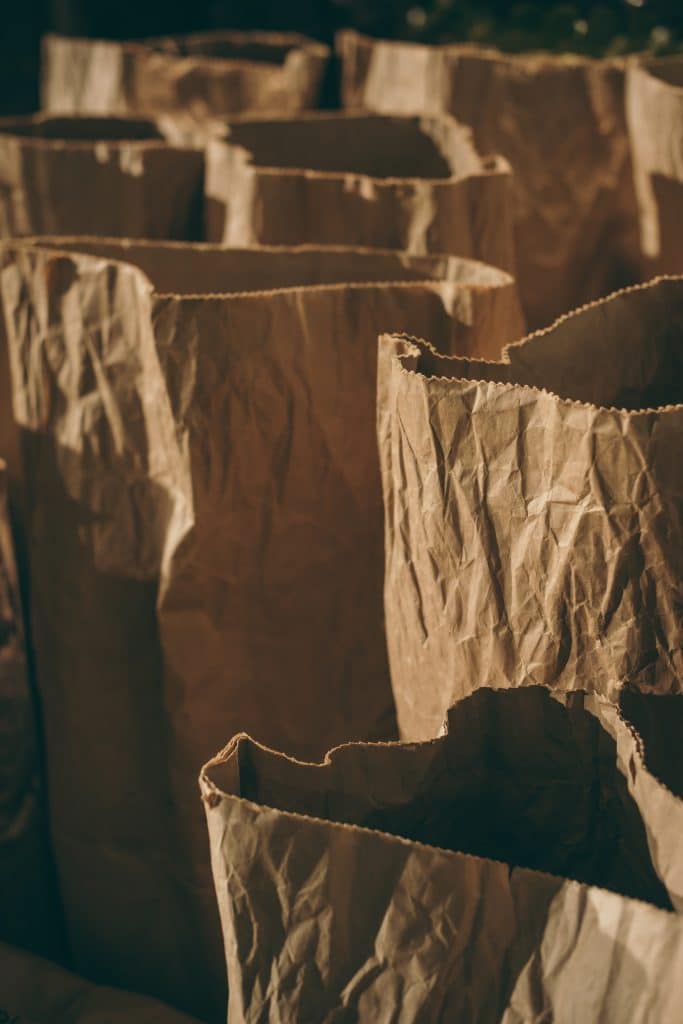
23. Paper Bags
The paper grocery bag had two or three careers in a frugal household before it became recycling. Covering textbooks was the classic use: a free book cover that lasted a semester and cost nothing but five minutes with scissors and tape. Wrapping packages for mailing, lining the compost bin, starting fires, holding recycling on the way to the bin.
The inside-out surface is plain enough to use as butcher paper for wrapping gifts, which closes the loop neatly: the bag that carried your groceries home wraps the birthday present you give next week. Nobody pays for that paper in a household that keeps its head.
The payoff: One paper bag is a book cover, a gift wrap, a fire starter, and a compost liner. It becomes trash when you run out of ideas, not before.

22. Takeout Containers and Deli Tubs
The plastic tub that held potato salad from the deli was, in a frugal kitchen, a storage container that hadn’t been unpacked yet. Same for the hinged takeout box, the soup container, the quart tub from the ice cream that got finished last Tuesday. All of them went through the dishwasher and back into rotation.
The name-brand container aisle at the store sells the same function at a significant markup. The frugal household’s version arrived pre-filled with something good to eat and costs nothing on the second use, or the fifteenth.
The reasonable limit: plastic eventually scratches and stains in ways that make replacement sensible. But reaching for the trash on the first use is the habit the store depends on, and it’s the one worth breaking first.
The payoff: Free storage containers, delivered with food. The aisle selling the name-brand version is optional once you start noticing.

21. Wine Corks
Natural cork is a genuinely useful material: soft enough to carve, grippy enough to hold, and insulating enough to protect a hot pan from a cold counter. Grandmothers who kept them found uses automatically: a handful in a jar became trivets, a row glued together became a bulletin board, a single one became the knife-tip guard for the good paring knife.
The craft-store version of this sells cork sheets and cork rolls for prices that would surprise anyone who remembers throwing the free source away. Keep a small jar, let it fill slowly, and the material appears without effort or cost.
The payoff: A free supply of a versatile material most people pay for in craft stores. The jar fills on its own.

20. Mesh Produce Bags
The thin mesh bag that held the onions or the oranges was flexible netting with plenty of work left when the produce was gone. Bunched up, it makes a non-scratch pot scrubber that outlasts the sponge at zero cost, and it also stores more produce, hangs garlic to dry, or holds bath toys.
The zero-waste supply market sells reusable mesh bags for several dollars each. The produce section ships them in for free, full of something you were already buying. The only difference between the product and the packaging in this case is who noticed.
The payoff: A free pot scrubber and produce bag that arrives with the groceries. The sponge budget has a competitor it doesn’t know about.

19. Newspaper and Packing Paper
Before it was read and after, newspaper had jobs: window cleaner that leaves glass streak-free in a way paper towels don’t match, drawer liner, packing material, garden mulch layer, and shoe-shaper stuffed inside wet boots to hold their form while they dried.
Keep Reading
If this list is your kind of thing:
→ the 90s foods nobody realized were budget moves
→ the small fall details that instantly feel like being a kid again
Households that received the paper daily had an effectively infinite supply of these uses. The shoe trick alone saves the shape of every pair of leather boots you own through a wet season, which is the kind of maintenance habit behind things frugal people stopped buying because they learned to make what they owned last longer instead.
The payoff: Window cleaner, packing material, boot stuffer, and mulch layer, all arriving with the morning paper. Or the delivery box. Both count.

18. Empty Glass Jars
The pasta sauce jar never left the house. It came back as a drinking glass, a leftover container, a screw organizer, a vase, a piggy bank, and a lunch vessel decades before mason jar salads had a hashtag. A jar is a free container in a world that sells containers, and grandma recognized a rigged game when she saw one.
The modern version of this habit is picking up real steam under zero-waste framing, but the logic hasn’t changed since the Depression: the same kitchen instinct that turned jars into storage vessels also turned vegetable scraps into stock and stale bread into croutons. It’s a system, not a series of individual tricks.
The payoff: Free storage, free glasses, free organizers. Soak the label off in warm soapy water and the jar is ready in ten minutes.

17. The Bread Bag and the Twist Tie
The bread bag was the original resealable bag: produce storage, a mitten liner for snowy days, a small trash liner, packing material. The twist ties held cords, plants, and half the garage together. One box of bread bags saved over a year quietly replaces a whole purchase category.
The ties alone organize every charging cable you own. That’s not an exaggeration. Three twist ties handle the cable situation most households pay ten dollars to solve with a product specifically sold for the purpose.
The payoff: Free storage bags and cord organizers, delivered with every loaf. One drawer-corner bin and that’s the whole system.

16. Every Rubber Band That Came Through the Door
Off the newspaper, off the broccoli, off the mail, into the drawer. The rubber band ball wasn’t a joke; it was inventory: jar-opening grip, bag clip, pencil grip, chip closure, hair emergency. Nobody in the history of that drawer ever bought a bag of rubber bands, and that was the entire achievement, small and permanent.
They arrive free on half your groceries if you pay attention. A doorknob or a drawer knob works as collection point. The habit takes about two seconds per rubber band and produces something genuinely useful every time it’s needed.
The payoff: Grips, clips, closures, fasteners, all free and always arriving. The bag of rubber bands at the office supply store is a purchase nobody in this household needs to make.

15. The Spare Button Envelope
Every grandmother had the button tin, and the button tin had everything: spares from shirts long gone, mismatched treasures, and the extra buttons that come stapled to new clothes that everyone else throws out. When a button popped, the fix took ninety seconds and cost nothing. The shirt lived on.
While You're Here
29 Halloween Traditions From Around the World
The traditions most Halloween parties never think to borrow.
The modern version of that shirt gets donated over a missing button that shipped with its own replacement, which is in the trash, meaning the shirt follows it unnecessarily because of a small paper envelope most people don’t read before discarding.
The payoff: A free repair kit for your whole closet. One small jar and the envelope taped inside the closet door is the entire setup.

14. The Grease Jar by the Stove
The grease jar was liquid gold: strained through a coffee filter into a jar, kept cool, and spooned out to cook eggs, greens, cornbread, and roasted vegetables with more flavor than any oil in the store. This one never actually left Southern kitchens, and the cast iron crowd guards it proudly.
Strain it through a fine filter, keep it in the fridge, use it within a reasonable stretch. Breakfast pays for dinner’s flavor, and the jar by the stove is a piece of kitchen equipment that costs nothing to acquire and delivers something genuinely better than what the store sells in its place.
The payoff: The best cooking fat you didn’t pay for. You were about to throw away flavor. Strain it into a jar and put it in the fridge instead.
The Insider Move: The frugal household’s default ran backward from the modern one: prove something is trash before it leaves, rather than prove it’s worth keeping. Most items on this list cost zero extra effort to save: a drawer bin for rubber bands, a jar for bacon grease, a button envelope taped inside the closet door. The system runs on setup, not willpower, which is why it lasted through decades and still works now.

13. Worn-Out T-Shirts
No worn-out shirt ever went to the trash. It went to the rag pile, and the rag pile ran the household: dusting, spills, polishing, paint days, garage messes, all handled by retired laundry. One pair of scissors converts a dead shirt into eight rags in two minutes, and the paper towel budget drops accordingly.
The shirt’s second career often outlasts its first, because cotton washed a hundred times is the ideal cleaning cloth: soft, absorbent, and lint-free in the ways that matter. The store sells microfiber versions of this. The laundry basket makes them for free.
The payoff: A lifetime supply of cleaning rags. One bin in the laundry room, scissors nearby, and the paper towel bill notices the difference.

12. Saved Gift Wrap and Ribbon
The holiday morning ritual had rules: open carefully, fold the good paper, roll the ribbon. Watching a grandmother iron wrapping paper flat sounds like satire until you calculate what wrapping paper costs per square foot and realize she was right the whole time.
Bows especially are a pure racket: a saved bow performs its job identically the fourth time as the first, and the recipient has never once checked. The gift inside the wrapping is the point, and grandma never confused the two.
The payoff: Next year’s gift wrap, free. One flat under-bed box filled every December is the entire system.

11. Empty Egg Cartons
The egg carton had three careers waiting: seed starter in spring, paint palette and craft bin for kids, and drawer organizer for small hardware, jewelry, and the mystery screws every house accumulates. Cardboard ones even go into the garden at planting time, cup and all.
We Think You'll Also Like
A container this useful, delivered free every week or two, would be a subscription product if someone could figure out how to charge for it. The seed-starter use alone saves real money in spring: individual cell trays sell for several dollars at garden centers, and the egg carton does the same job on the same timeline.
The payoff: Seed trays, organizers, and craft supplies, free and arriving regularly. The cardboard cups plant directly into the soil at transplant time.

10. Orange and Lemon Peels
The orange was two products. The fruit, and then the peel: dropped in vinegar to make cleaning spray smell like citrus instead of salad, zested into sugar, candied for the fancy tin, or run through the disposal to freshen it. Peels-in-vinegar remains the single easiest entry point on this whole list.
Two weeks of steeping, strain, dilute, and the all-purpose cleaner budget shrinks on its own. The spray that results smells genuinely good and costs almost nothing. It’s the same formula frugal habits that save real money keep returning to: replace a purchase with a process that uses what you already have.
The payoff: Citrus cleaner, zest, and a fresher disposal. A jar of vinegar in the cabinet and peels added as they appear is the whole recipe.

9. The Freezer Bag of Vegetable Scraps
Onion ends, carrot tops, celery butts, herb stems: none of it was garbage. It was soup that hadn’t happened yet, collected in the freezer until there was enough for a pot of stock, and free stock beats the boxed version on flavor and infinitely on price.
One gallon freezer bag, filled as you cook, simmered when it’s full. The habit takes zero extra minutes beyond the decision to use the bag instead of the trash. The result is something the gut-friendly properties of homemade broth make worth keeping around regularly anyway.
The payoff: Better-than-store broth, free. You’re saving the exact flavor the box charges for. One freezer bag is the whole setup.

8. The Bread That Went Stale
Bread never died in grandma’s kitchen: it transformed into breadcrumbs, croutons, French toast, bread pudding, stuffing, panzanella. Half those dishes exist specifically because thrifty cooks refused to waste a loaf, and stale bread is better than fresh for most of them, making the “bad” loaf the premium ingredient.
Cube it, freeze it, crouton it on a sheet pan in ten minutes when needed. The freezer holds the transformation until the moment calls for it, and no bread in this system ever becomes a loss. It just waits for the right recipe, which is one of the pantry habits with the longest shelf life in practice.
The payoff: Breadcrumbs, croutons, and better French toast, all free. Stale is the correct texture for the recipes. The trash can never had a claim.

7. Old Towels Past Their Prime
Towels in a frugal house had a career ladder and it only went down: bath towel, then hand towel, then beach towel, then dog towel, then car-washing cloth, then rag. Retirement took fifteen years and every stage did real work. The system means never buying cleaning cloths, shop towels, or pet towels, ever.
Dig Deeper
The Lost Art of Sending Mail People Keep: A Practical Guide to Letters and Tiny Gifts
Why it mattered, and how to actually do it well.
The linen closet is a farm team, and everything eventually gets called down. Scissors and a permanent marker label the tiers if that helps the household run the system, and the only real requirement is not jumping straight from “slightly thin” to “trash.”
The payoff: Five successive tools from one purchase. Each demotion replaces a product you’d otherwise buy. The towel earns its keep across a decade and a half.

6. Lone Socks With No Match
The dryer takes one sock and the modern household throws out its partner. Grandma put it to work: dust mitt worn on the hand, jar cozy, drawstring bag, draft stopper filled with rice, doll clothes if a child asked nicely. The hand-mitt dusting trick in particular deserves its comeback.
It does blinds, railings, and baseboards faster than any product sold for the purpose, because it’s shaped exactly like the hand doing the cleaning. Keep two by the cleaning supplies, wash and repeat. The dryer’s theft now has an upside.
The payoff: The best dusting tool in the house, free. Shaped exactly like the hand doing the cleaning. Nothing sold for the purpose improves on it.

5. The Last Inch of Every Candle
The last inch of every candle went in a box, and when the box filled, the stubs melted down into a new candle in a teacup, or got their second life as fire starters, drawer-slide wax, and squeaky-hinge fixes. Wax is wax to the end.
A product that’s still 100 percent functional at the moment most people discard it is this list’s whole philosophy in one object. Melt stubs gently in a jar set in warm water, add a craft-store wick, and the new candle costs only as much as the wick.
The payoff: New candles, fire starters, and fix-it wax, all from the part everyone throws away. The discarded piece is identical to the purchased piece.

4. Used Coffee Grounds
The morning grounds had an afternoon schedule: into the garden for acid-loving plants, into the compost, into a jar in the fridge as an odor absorber, onto icy steps for traction, into a scrub for greasy pans. Used grounds are one of those rare items with more jobs after their first use than before it.
Garden centers sell bags of soil amendment made from grounds. The coffee maker gives it away daily. That’s the whole comparison, and it’s the kind of kitchen-to-garden thinking that runs a household like a closed loop rather than a pipeline.
The payoff: Garden feed, deodorizer, and scrubbing grit, free every morning. A container by the coffee maker is the entire system.

3. The Last Sliver of the Soap Bar
The last sliver of the bar never got rinsed down the drain. It got pressed onto the new bar, or collected in a jar until there were enough to make a whole new bar, or dropped into an old sock to become a soap-on-a-rope for the garage sink.
Readers Can't Stop Opening These
★ 37 Foods You Must Always Stockpile Before Winter Hits
★ 30 Pantry Foods With the Longest Shelf Life, Ranked
★ 23 Ways to Slash Your Household Bills That Most People Never Try
Five percent of every bar, saved across every bar, is a free bar every twenty. Small math, but it was never really about the soap. It was the principle that nothing useful leaves, and that principle is the money habit from that generation that compounds the most quietly across a lifetime.
The payoff: Whole new bars, garage soap, sock scrubbers, all from the piece everyone rinses away. Press the sliver onto the new wet bar and it’s done in five seconds.

2. Kids’ Clothes That Still Had Life Left
Kids’ clothes moved through frugal families like library books: cousin to cousin, sibling to sibling, neighbor to neighbor, patched and hemmed at each stop. A single good winter coat could serve five children across a decade. The system is roaring back through Buy Nothing groups and neighborhood exchanges, because kids’ clothing outgrows itself long before it wears out.
The coat has more childhoods in it, and grandma just made sure they happened. One labeled bin per size, passed along when outgrown, is the whole infrastructure, and the same frugal instinct that kept the clothing pipeline running also kept the pantry stocked in ways that made the household genuinely resilient.
The payoff: A family clothing pipeline that stretches one purchase across five winters. Kids outgrow clothes at triple the rate they destroy them.

1. The Butter Cookie Tin
You knew it would be this one. The sturdy tin that contains, and has always contained, the sewing kit. The joke is so universal it spans continents, generations, and languages, and everyone who opens one hoping for cookies learns the same lesson at the same age.
Look past the joke and it’s the crown jewel of the whole philosophy: a beautiful, durable, airtight container arrived in the house holding cookies, and a frugal household simply refused to pretend it was garbage once the cookies were gone. Tins, sturdy boxes, good jars with good lids. The packaging was part of the purchase, and grandma collected her whole payment.
Sixty years later the tin is still on duty, the sewing kit is still inside, and somewhere a grandchild is still falling for it. That’s not hoarding. That’s winning, slowly, forever.
The habit it represents underlies this entire list: durable packaging is a free product hiding in plain sight, and the household that notices it gets to keep it. Every good tin or jar that enters the house now is a storage decision waiting to be made, and the old-fashioned money habits quietly coming back include exactly this kind of thinking because it works.
The payoff: The eternal sewing kit, and every storage job that follows. Keep the next great tin that enters the house, and see how long it stays useful.

Before You Toss It
If you only take three things from this list: the system ran on a default setting the modern house reversed, prove it’s trash before it leaves rather than prove it’s worth keeping.
Most of the items above require a single small container to collect, and the habit forms in a week. And the savings aren’t dramatic per item but they compound, because each thing you don’t buy is money you didn’t spend, and each thing you kept working is equipment you didn’t replace.
The frugal food habits that ran alongside these household habits form the other half of the same system. The math on what this saves annually across food, cleaning supplies, storage, and clothing adds up faster than most people expect, because the amounts look small per item and large per year.
None of this was ever really about rubber bands. The households that saved everything had a different relationship with the word “done.” Nothing was done until it was actually finished. Most of what we throw away is still in the middle of that sentence.
Enjoyed this article? Here are more fun reads:
