31 “Junk” Cereals That Are Secretly Better For You Than You Think
This post may contain affiliate links. We may earn a commission at no extra cost to you. See our full disclosure.
There’s a specific kind of shame that happens in the cereal aisle. You reach for the box with the cartoon character on it, glance at the label, and quietly put it back in favor of something with “ancient grains” in the name and a color palette that screams wellness.
Here’s the thing though. The story on those colorful boxes is more complicated than it looks. A lot of cereals that get written off as pure sugar tend to have more going on underneath, whole grains, fiber, a fortification list longer than you’d expect, and it shows up in boxes you’d never suspect.
This is a countdown of 31 cereals ranked from “at least it’s not a total wash” to “wait, this one’s actually kind of solid.” The ranking looks at whole grain content, fiber, protein, sugar, and fortification straight off the label, not the marketing. And the one at #1 is the cereal you’d least expect to earn the top spot.
Quick honest note before we start: “better than you think” doesn’t mean health food. Most of these still have added sugar, and none of them beat plain oats or an egg. Read the current label, especially if you’re watching sugar or gluten.
31. Kix
You know the pitch. “Kid tested, mother approved.” What that old slogan never mentioned is what’s actually in the box.
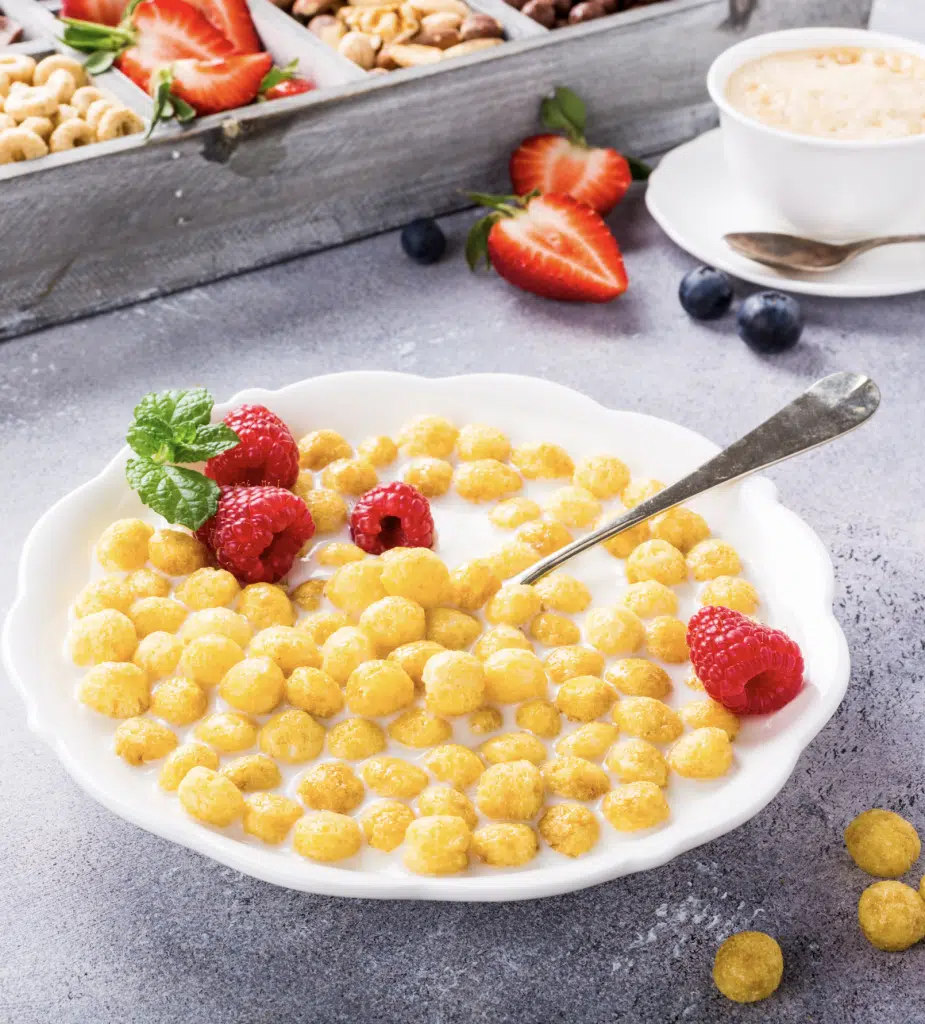
Kix runs on a whole grain corn base, and it’s one of the lower-sugar options in the kids’ cereal lineup, usually sitting around 3 grams per serving. That’s a fraction of what most of its shelf neighbors carry, which is wild for something marketed straight at children.
Add the standard fortification package on top, iron, B vitamins, the usual General Mills lineup, and you’ve got a cereal that’s a lot plainer, in the good way, than the bright box suggests. It’s basically a puffed corn ball that skipped the sugar bath most of its peers went through.
 — Photo by madvideos.gmail.com / depositphotos
30. Corn Chex
Chex has this reputation as the cereal you only think about when someone’s making party mix in December. Which is a shame, because the plain bowl deserves more credit than that.
Corn Chex is built on whole grain corn as the first ingredient, and it’s gluten free, which matters if that’s something you’re navigating. Sugar sits low, usually around 3 to 4 grams, and the fortification is the standard heavy General Mills package.
The little woven squares look almost too plain to be interesting, and that’s kind of the point. There’s not a lot hiding in here. Simple grain, low sugar, fortified. Not much to argue with.
 — Photo by scukrov / depositphotos
29. Wheat Chex
If Corn Chex is the plain one, Wheat Chex is the one quietly doing the heavy lifting on fiber.
Made from whole grain wheat, a serving lands around 5 grams of fiber, which is genuinely high for something sitting in the mainstream cereal aisle rather than the “health food” section. Sugar stays modest, usually around 5 grams, and it carries the same fortification as the rest of the Chex family.
Most people have never bought a box of Wheat Chex on purpose in their lives. It’s almost always a party mix ingredient. But on fiber alone, the plain bowl outperforms a shelf full of cereals that market themselves way harder.
28. Multi-Grain Cheerios
Original Cheerios gets all the attention, but the multi-grain version quietly does its own thing, and the “multi-grain” part isn’t just a label flourish.
It’s built from five whole grains, oats, corn, rice, wheat, and barley, which is more grain variety than almost anything else on the shelf. Fiber comes in around 3 grams, sugar sits at roughly 6 grams, and the fortification is the full General Mills spread.
The reason this one flies under the radar is that it looks almost identical to a bowl of the original. Same little O shape. But the grain lineup underneath is doing something a bit different, and the sugar’s still on the lower end for a flavored cereal.
27. Life Cereal
Quaker makes this one, and once you know that, the whole thing makes more sense.
Life runs on a whole grain oat base, which is the same grain that gives oatmeal its reputation. Fiber and protein both come in a little higher than most of the flavored cereals around it, and the sugar stays moderate rather than sky-high. The cinnamon version adds cinnamon flavor without a huge jump in sugar.
The famous “Mikey likes it” commercial from 1972 sold the taste angle so hard that basically nobody thinks of Life as a grain-forward cereal. But that oat base has been the actual foundation the whole time, sitting there quietly under the marketing.
26. Grape-Nuts
Let’s clear up the obvious first. There are no grapes, and there are no nuts. Never have been. The name is one of the great misnomers in breakfast history.
What’s actually in the box is whole grain wheat and malted barley, and the fiber number is genuinely high, around 7 grams per serving, with a solid protein count to go with it. Sugar is low, usually around 5 grams. Those little pebbles are dense, which is why the box lasts what feels like a year.
The name apparently came from a mix of the manufacturing process and an old belief about grape sugar. It made no sense then and makes no sense now, but the cereal itself has quietly been one of the higher-fiber options on the shelf for well over a century.
25. Honey Bunches of Oats
This one wins on assembly. It’s less a single cereal and more a mix of flakes, crunchy oat clusters, and sometimes a scattering of other grains all in one box.
The base combines whole grain wheat and whole grain oats with corn and rice, so you’re getting more than one grain doing work in every bite. Fiber lands around 2 to 3 grams, sugar sits in the 6 to 8 gram range depending on the variety, and it’s fortified across the board.
The appeal was always the texture, those toasted oat clusters mixed into the flakes. What gets overlooked is that the oats and wheat in there give it a bit more grain substance than a plain flake cereal working with just corn.
 — Photo by PBT / depositphotos
24. Total
Here’s the cereal built almost entirely around one flex. Total’s whole selling point, for decades, was that a single serving delivers 100% of the daily value for a long list of vitamins and minerals.
That’s the fortification turned up to the maximum. Iron, B vitamins, the whole roster, all at 100% in one bowl, which is more than almost anything else on this list can say. The base is whole grain wheat, so there’s real fiber in there too, and the sugar stays on the lower side at around 5 grams.
đź‘• Loved this post? You might also like:
17 Insanely Funny Food Shirts Every Foodie Needs to Own
Perfect for food lovers with a sense of humor.
It’s a plain-looking flake cereal that never got a cartoon mascot or a catchy jingle. Its entire identity was the nutrition panel. And on fortification numbers alone, nothing else here really touches it.
23. Cracklin’ Oat Bran
The name tells you most of what you need to know, and for once it’s not lying.
This is oat bran, plus whole grain oats, formed into those little ridged rings. Fiber comes in high, often around 6 grams per serving, which is up near the top of the whole list. It’s got a richer, almost baked flavor because there’s oil and a bit more sugar involved, usually landing around 15 grams, which is the honest tradeoff here.
So it’s a split decision. The fiber is excellent and the oat content is real, but the sugar runs higher than the plainer options below it. Worth knowing both numbers before you pour a giant bowl. Still, on grain and fiber, this is a legitimately hearty cereal wearing a slightly indulgent coat.
— Illustration by dbvirago / depositphotos
22. Lucky Charms
The marshmallows are mostly air. That part’s true. But the base underneath them is doing more than the rainbow packaging lets on.
Lucky Charms is fortified with iron, B vitamins, and a stack of other micronutrients, and the cereal piece underneath the marbits uses whole grain oats. So there’s actual fiber down there alongside all the sugary marshmallow bits. General Mills lists it at somewhere between 25 and 100% of the daily value for several vitamins and minerals per serving.
The sugar is real, around 10 to 12 grams, so nobody’s calling this a light option. But compared to a sugary cereal with no fortification and no whole grain at all, the base here is quietly better built than it looks. It launched back in 1964, and those marshmallow “marbits” were a brand new idea at the time.
 — Photo by Wirestock / depositphotos
21. Froot Loops
It’s not fruit. You know it’s not fruit. The colors don’t even match different flavors, they’re all the same flavor, which is a fun little lie the box has told since 1963.
Underneath the coloring, the modern recipe includes whole grain corn, wheat, and oats, and it’s fortified with iron and B vitamins at levels that make a real dent in a day’s worth of those. Those happen to be the nutrients kids tend to run short on, which is the whole reason cereals get fortified in the first place.
At 10 to 12 grams of sugar per serving it’s still a sweet cereal, and the 2 to 3 grams of fiber won’t rival a bowl of oats. But there’s more grain scaffolding in here than the neon rings suggest.
20. Trix
The rabbit still can’t have any. But the joke about it being nutritionally empty doesn’t totally hold up.
Trix carries the standard General Mills fortification, meaning a serving hands you a legit chunk of the daily iron and B vitamins, and some versions include whole grain corn. It’s high in sugar, and nobody’s building a balanced breakfast around it. That part’s honest.
What’s interesting is the gap between how it looks and what’s actually in it. Most people assume a cereal this bright has zero nutritional purpose, when it’s really working as a fortification vehicle in a shape kids will actually eat. The “silly rabbit” campaign has been running since the late 1950s, which makes it one of the longest ad runs in cereal history.
19. Cocoa Puffs and Cocoa Krispies
The chocolate flavor here brings a little something extra to the bowl, beyond just making kids want it.
Both cereals use whole grain bases in a lot of their formulations and come fortified with iron and B vitamins. And the cocoa itself adds trace polyphenol compounds, the same family of things you’ll hear about with dark chocolate. The amount in a bowl of cereal isn’t going to match a square of 80% dark, obviously, but it’s more than the zero you’d get from a non-cocoa cereal at the same sugar level.
Sugar runs 10 to 12 grams a serving and fiber’s modest at 2 to 3 grams. If the chocolate flavor is the only thing getting a kid to eat breakfast at all, the whole grain and fortification riding along are a real bonus.
18. Cap’n Crunch
The Cap’n has a secret, and it’s Quaker Oats. That’s the parent company, which means the oat heritage runs deeper than the cartoon captain lets on.
Some Cap’n Crunch varieties include oats in the mix, which ties them to the same grain oatmeal’s built on. The fortification is solid across the board, with meaningful daily value numbers for iron and B vitamins. The sugar, in fairness, sits on the higher end even by kid-cereal standards, so this one comes with a bigger asterisk than most.
The oat-containing versions are the interesting ones. It’s easy to forget a cereal this candy-adjacent has any grain story at all, but Quaker’s been making it since 1963 and the oats are genuinely in there.
17. Cinnamon Toast Crunch
Cinnamon isn’t just there for flavor. It’s actually one of the more studied spices out there, which is a strange thing to be able to say about a kid’s cereal ingredient.
The cereal runs on a whole grain wheat and corn base and comes fortified. But the cinnamon is the fun part, it contains cinnamaldehyde and various polyphenol compounds that have been looked at plenty for their chemical activity. The amount in a serving is modest, sure. It’s not the same as eating cinnamon by the spoonful. But it’s a real ingredient with real properties, not just brown dust for looks.
General Mills lists it around 8 to 10 grams of sugar and 2 to 3 grams of fiber. The thing most people miss is that the flavor ingredient itself, the cinnamon, is something with an actual body of literature behind it.
16. Reese’s Puffs
Peanut butter in cereal form is a genuinely different proposition than plain sugar and grain. That’s not a marketing line, it’s just what peanut butter is.
Reese’s Puffs picks up some protein and some unsaturated fat from its peanut butter flavoring, which sets it apart from cereals that are basically just carbs and sugar with nothing else going on. Peanuts bring fat, protein, and niacin, and even in flavoring form some of that character carries through. The fat and protein numbers here run a touch higher than a plain corn or rice cereal.
It’s still sweetened, 8 to 10 grams of sugar a serving, and anyone with a peanut or tree nut allergy has to skip it entirely. But between the whole grain base, the fortification, and that peanut butter contribution, there’s more going on than the candy-collab branding suggests.
🛋️ While you're here, check this out:
69 of the Most Insane Things Found on Facebook Marketplace
You won't believe what people are selling!
 — Illustration by Bellanoche / depositphotos
15. Apple Jacks
Better fortified than the name would ever lead you to guess.
Apple Jacks comes loaded with a real array of vitamins and minerals, big daily value percentages for iron and B vitamins, and uses a whole grain base in its modern recipe. The apple flavoring brings trace apple-derived compounds, though honestly that part’s minor and shouldn’t be oversold. The fortification and the whole grain are the real story.
Sugar is higher than you’d want in an everyday breakfast, and the fiber’s modest. But as a way to get micronutrients into a kid who’d otherwise skip breakfast, it does the job. Fun footnote, the “apple” flavor is really apple-cinnamon, not squeezed from actual apples.
14. Count Chocula, Boo Berry, and Franken Berry
The Halloween branding is a great disguise. Underneath the monster theme, these are doing the exact same nutritional work as their year-round cousins.
The whole General Mills monster lineup carries the same vitamin and mineral fortification as the rest of the portfolio. Count Chocula’s chocolate base has that same trace cocoa polyphenol angle as Cocoa Puffs. Boo Berry and Franken Berry bring minor berry-flavor compounds. None of it’s a big amount, but it’s there, and the fortification per serving matches the standard kid cereals that don’t get slapped with the “junk” label.
These are higher-sugar, show up once a year, enjoy it while it lasts kind of cereals. The seasonal scarcity is half the fun. Count Chocula and Franken Berry launched in 1971, with Boo Berry joining in 1973.
13. Golden Grahams
The name is basically a nutrition hint hiding in plain sight, once you know what “graham” actually means.
Golden Grahams uses a whole grain graham base, and graham, in food terms, historically means whole wheat flour, the coarsely ground kind that keeps the bran and germ. So the whole grain foundation here has real roots, not just a marketing gloss. General Mills lists reasonable fiber alongside the usual fortification, with sugar landing moderate to high like most flavored cereals.
The genuinely cool part is the history. “Graham” comes from Sylvester Graham, a 19th century guy who pushed whole wheat hard as a digestive food. So the whole grain angle is baked into the very concept of the product, going back nearly two hundred years.
 — Photo by Sheilaf2002
12. Rice Krispies
The simplest cereal on this whole list is also one of the most effectively fortified. Funny how that works.
Rice Krispies has carried iron and B vitamin fortification since way back in its history, and while the plain rice base is low in fiber, it makes a clean little canvas for delivering those micronutrients. A serving hands you a meaningful chunk of the daily value for iron and several B vitamins. The famous snap, crackle, pop was always about that light, airy texture, which is part of what made it such a blank slate.
Whole grain versions exist and bump up the fiber. But even the original is quietly doing work its plain reputation doesn’t get across. Pour milk on it and you add protein and calcium to round things out. It’s been around since 1928, one of the earliest large-scale fortified cereals in the country.
11. Corn Flakes
This one literally started as a health food back in the 1890s, and that original intent never fully disappeared.
Corn Flakes was invented by John Harvey Kellogg in the late 1800s as a plain, simple food. It’s been sweetened and refined over the decades since, but the modern box is still fortified and still carries a shorter ingredient list than most cereals here. Sugar’s moderate in the plain version, and the corn base is fairly refined, so grabbing a whole grain version when you can see one bumps up the fiber.
The historical piece is the interesting part. The whole Kellogg’s origin was genuinely about plain nutrition, not candy-adjacent breakfast. That early fortification, iron and B vitamins that a lot of American diets ran short on, is still sitting in the formula today.
— Illustration by MikeEdwards / depositphotos
10. Frosted Flakes
More sugar than plain Corn Flakes, no getting around that. But the fortification’s solid and the whole grain story has quietly gotten better.
Frosted Flakes is sweeter than the original, but it’s carried iron and B vitamin fortification since it launched, and some versions now list whole grain corn as the first ingredient, which puts actual fiber next to the added sugar. That changes the math a little.
The “they’re grrreat” thing was always about taste over nutrition, sure. But for a kid who won’t touch a plainer cereal, a fortified, partly whole grain bowl with milk beats skipping breakfast entirely, and that’s usually the realistic comparison in a busy house. It launched in 1952, and Tony the Tiger’s been on the box since day one.
9. Corn Flakes with Raisins / Raisin Bran
The raisins are pulling serious weight here, in both directions at once.
Raisin Bran lands somewhere around 5 to 8 grams of fiber a serving, from the combination of wheat bran and the raisins themselves. That’s one of the higher fiber counts you’ll find in a normal cereal aisle. Both Kellogg’s and Post make a version, and both lean on wheat bran as the fiber base. The raisins add natural polyphenols along with their sweetness.
The sugar runs moderate to high, because raisins are naturally sweet, but there’s a real difference between naturally occurring sugar from dried fruit and straight added refined sugar, they show up with different company attached. That old “two scoops of raisins” campaign was pointing at something genuinely real.
8. Wheaties
The “Breakfast of Champions” line was actually grounded in something from the very start, which you can’t say about every cereal slogan.
Wheaties is made from 100% whole grain wheat and has been since 1924, making it one of the original whole grain cereals in the American market. General Mills lists whole grain wheat as the first ingredient, and the fiber and protein numbers come in meaningfully better than most cereals on this list. The sugar is lower than nearly any flavored kid cereal, so the plain bowl has a genuinely clean panel.
For a cereal with such a modest presence on the shelf these days, the nutrition holds up. It launched in 1924, Babe Ruth was one of the earliest athletes to endorse it, and the “Breakfast of Champions” tagline dates back to the 1930s.
 — Photo by PBT / depositphotos
7. Frosted Mini-Wheats
The frosting fooled everybody. Because underneath it, this is one of the highest-fiber cereals sitting on any shelf.
Frosted Mini-Wheats lands around 5 to 6 grams of fiber or more per serving, all from that whole wheat base, which rivals cereals that market themselves specifically as high-fiber. The frosting adds sugar, usually 5 to 7 grams, but that’s a much lower number than most kids’ cereals, and the fiber count is genuinely excellent by comparison.
📦 Crazy useful stuff on Amazon:
71 Weird Amazon Finds That Are Surprisingly Useful
Things you didn't know you needed… until now.
The part people miss is that Mini-Wheats often out-fibers cereals that dress themselves up as the healthy option. The frosted coating makes it feel like a compromise, when nutritionally it’s one of the stronger mainstream picks. That shredded wheat structure underneath is also one of the least-processed whole grain formats in the whole aisle.
6. Shredded Wheat (Plain or Lightly Frosted)
One ingredient. No additives. Just whole wheat, compressed into a little pillow.
Plain Shredded Wheat is made from 100% whole grain wheat with no added sugar in the unfrosted version, which makes it one of the simplest, least-processed cereals you can find in any regular grocery store. Fiber comes in at 6 grams or more per serving, the protein’s solid, and there’s no added sugar or artificial flavoring in the plain box at all. The whole grain wheat research base behind it is enormous.
The frosted versions add a bit of sugar but keep the whole grain core and most of the fiber. Plain can taste kind of neutral to some people, that’s an honest heads up, but a little fruit or nuts or a drizzle of honey fixes the flavor while keeping everything that makes it worth eating. It’s basically whole wheat and water, and that’s the entire ingredient list.
5. Life Cereal (Original or Cinnamon)
Now we’re into the top five, and this is where Quaker’s oat heritage really starts to matter.
Life uses whole grain oats as its base, the same grain that gives oatmeal its whole reputation. The fiber and protein figures land better than most of Life’s neighbors in the aisle, and Quaker lists moderate sugar with solid fiber. The cinnamon version brings the cinnamon compounds mentioned earlier in this list along for the ride.
The “Mikey likes it” campaign from 1972 sold taste so hard that Life basically vanished from the health conversation. But the oat base has been the real foundation the entire time, sitting quietly under one of the most-remembered cereal ads ever made. Quaker’s been making it since 1961.
 — Photo by PBT / depositphotos
4. Quaker Oatmeal Squares
Oats in cereal form, and this time with the fiber and protein numbers to actually back up the claim.
Quaker Oatmeal Squares lands around 3 to 5 grams of fiber and a real chunk of protein per serving, off that whole grain oat base. Those numbers hold up against cereals that specifically market themselves as high-fiber or high-protein. The denser, more substantial square shape also just feels more filling than the light, airy cereals do.
The connection to Quaker’s core oat-milling history is genuine here. This isn’t oat flavoring dusted onto a corn base, it’s actual whole grain oats processed into a different shape, which keeps the grain character intact. Quaker’s oat heritage goes back to the 1880s, and these squares are a direct line from that tradition.
— Photo by dbvirago / depositphotos
3. Special K (High-Protein or High-Fiber Varieties)
The “diet cereal” grew up. And the newer versions have numbers the original never bothered to claim.
Modern Special K includes some varieties with 10 grams or more of protein per serving, pulled from added grains and legumes. Kellogg’s lists protein figures on the high-protein version that genuinely rival protein-shake territory, all while keeping the fortification and fiber the broader line is known for.
The original Special K was sold as a “diet” cereal based mostly on being low in calories, which is a totally different pitch. The high-protein versions are making a more substantial case for themselves. Just check the label, because some varieties run higher on sugar than others. Kellogg’s introduced Special K back in 1955, and these protein-forward versions are a much more recent development.
 — Photo by jetcityimage2 / depositphotos
2. Honey Nut Cheerios
Second place, and here’s the twist people don’t expect. The sweetened version keeps the single most important thing about the original.
Honey Nut Cheerios holds onto the whole grain oat base, and General Mills lists it at 0.75 grams of beta-glucan per serving. That’s less than the original’s 1.5 grams, but it’s the same oat fiber family, still in there doing its thing. The sugar comes in at 9.6 grams per serving per the confirmed label. Honey brings some minor compounds of its own from its floral sources.
What makes this notable is that everyone assumes the sweetened version of a “healthy” cereal is a total step down. But the oat fiber doesn’t vanish when you add honey, it’s still present, just at a smaller amount. It launched in 1979, first outsold the original Cheerios in 2009, and the plain version has since climbed back on top in sales.
 — Photo by vijay.fang@outlook.com / depositphotos
1. Original Cheerios (Plain)
And here’s the one that takes the whole thing. The cereal you’d probably never guess would land at number one, sitting right at the top of a list full of chocolate and marshmallows and neon rings.
Plain Cheerios is made from 100% whole grain oats, carries only about 1 gram of sugar per serving, and lists roughly 1.5 grams of beta-glucan, the soluble fiber that comes from whole oats. That’s a genuinely rare combination in the mainstream cereal aisle, low sugar, whole grain, and real fiber, all in one plain little box that’s been around since before most of the other cereals on this list existed.
The thing that puts Cheerios at number one is that its case doesn’t lean on “better than the other sugary ones” comparisons. It’s just plainly, straightforwardly a solid bowl on its own terms. Whole grain oats as the one and only grain, almost no sugar, and a fiber number that holds up against anything here. General Mills also lists strong fortification alongside all that, real daily value percentages for iron, calcium, and B vitamins.
Most of the cereals on this list turned out to be better than you thought. Cheerios is the one that’s just genuinely good, no grading on a curve required. It launched in 1941 as “CheeriOats,” got renamed in 1945, and it’s quietly been doing the same thing ever since. Funny that the least flashy box on the shelf is the one that earns the top spot.
What’s Actually in Your Cereal
None of this is a permission slip to pour giant bowls of sugar every morning. The sugar is real in most of these, and plain oats, eggs, or fruit still win from a whole-food standpoint. What this is, is a more honest picture than the “healthy versus junk” split most people use.
The cereal aisle is more complicated than the boxes make it look, in both directions. Some cereals dressed up as health food are more processed and sweeter than they let on, and some cereals with cartoon mascots are quietly doing real work.
Read the label, check the first ingredient, glance at the fiber and sugar, and pair whatever you pick with a little protein. That’s the whole framework.
Enjoyed this article? Here are more fun reads: