
31 Cheap Dinners Every 90s Kid Remembers Their Mom Making

There was a whole category of dinner in the 90s that nobody called budget cooking at the time. It was just Tuesday. Just what happened when it was time to eat and the fridge had what it had and somebody needed to feed the family before everyone’s patience ran out entirely.
Looking back now, a lot of those meals were actually kind of brilliant. One pan, thirty minutes, under five dollars, and somehow everyone ate without complaining. Some of them have made a quiet comeback as food costs have climbed high enough that the logic behind them makes complete sense again.
We ranked 31 of them, from solid weeknight nostalgia all the way down to the one that was basically invented to solve a national food emergency. That last one might surprise you.
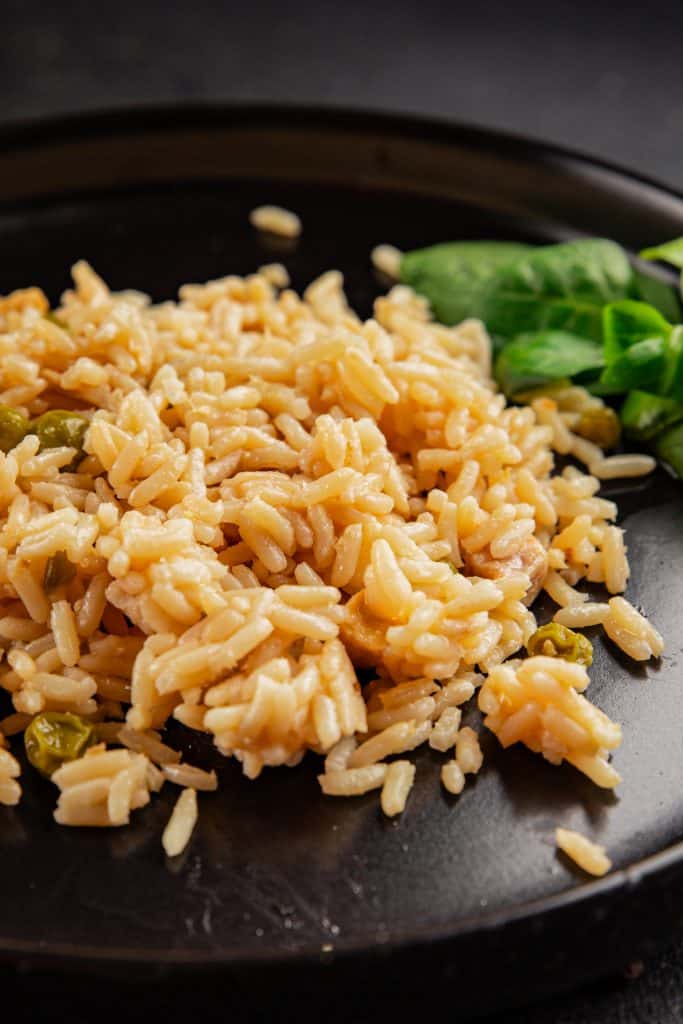
31. Rice-A-Roni with Chicken
The San Francisco Treat, according to the jingle, which played on enough televisions during the 90s that most people can still hear it without trying. Introduced in 1958, it became a legitimate pantry staple in a lot of households by the time the 90s rolled around.
The appeal was the math: a box cost around a dollar, it cooked in one pan, and it stretched even further if you added canned chicken or whatever protein happened to be in the house. Fast enough for a weeknight, filling enough that nobody asked for more.
Not fancy. Not trying to be. Just dinner that showed up reliably and never made anyone unhappy.

30. Cream of Mushroom Soup on Spaghetti
This one shows up in a specific kind of nostalgia conversation, the kind that starts with “wait, we weren’t poor, right?” And then someone else goes “no, we definitely had that too,” and suddenly it turns out a lot of people grew up eating this.
A can of Campbell’s condensed cream of mushroom soup, some water, and whatever pasta was in the cabinet. Stir it together and that’s dinner. No meat required, no real prep, total cost somewhere around two dollars, and it tasted like something a kitchen had actually been involved in making.
A lot of people didn’t realize until adulthood that it was a budget move. At the time it was just a creamy pasta night, and that felt completely normal.

29. Beanie Weenies
Baked beans from a can, a pack of hot dogs sliced into rounds, simmered together until everything was sweet and a little smoky and the hot dogs had soaked up some of the bean sauce. Total cost well under three dollars. Total prep time not much longer than it took to open both packages.
The thing about Beanie Weenies is that kids actually liked this meal. It wasn’t a compromise they tolerated, it was something they asked for. The sweetness of the beans and the salt of the hot dogs did something together that worked in a way that was hard to explain but easy to eat.
One pot. No complaints. Done.

28. Pigs in a Blanket
A tube of crescent roll dough from the refrigerated section, a pack of hot dogs, and an oven set to whatever temperature the tube said. Wrap each hot dog in a triangle of dough, put it on a baking sheet, wait about twelve minutes, and somehow the cheapest possible protein had become party food.
That transformation is the whole trick. A hot dog wrapped in pastry reads completely differently than a plain hot dog on a bun. It looks like an effort was made. It looks like maybe this was planned. Kids especially never questioned it, they just considered it a very good dinner night.
Serve with mustard for dipping and nobody in the house is sad about what’s for dinner.

27. Velveeta and Rotel Dip as Dinner (With Chips)
This requires honesty about what was happening here, which is that sometimes dinner was a bowl of queso and a bag of chips and everyone understood that this was the arrangement for tonight.
Velveeta melted with a can of Rotel diced tomatoes and green chiles, either on the stove or in the microwave, stirred until it became a smooth orange sauce that went with everything and could be remade in about four minutes. It was shelf stable, it was cheap, and it was genuinely hard to stop eating.
The part that aged interestingly is that this combo, the Velveeta Rotel dip, is now a party staple that people serve as an appetizer. In the 90s it was sometimes just what the adults threw together when the planning hadn’t exactly happened.

26. Frozen Salisbury Steak TV Dinner
The frozen TV dinner had its whole era, and the Salisbury steak version was the one that showed up most often in a lot of 90s households. A small oval of seasoned ground beef in a gravy, some kind of potato situation on the side, maybe a little compartment of corn, and all of it heated in the oven or the microwave in about fifteen minutes.
Nobody was under any illusions about what this was. But it was hot, it was complete in a compartmentalized tray way, and it meant no dishes beyond the fork. On a certain kind of tired weeknight, that combination had real appeal.
Family-size packs made it viable for more than one person, and paired with instant mashed potatoes it stretched further than it looked like it would.

25. Chicken Pot Pie (Frozen)
The frozen chicken pot pie was convenience food doing its absolute best work. A flaky crust on top, a thick filling underneath with chicken and peas and carrots in that creamy sauce, and all you had to do was put it in the oven and wait.
For a certain kind of busy 90s household, this was a legitimate solution to the “nobody has had time to think about dinner” problem that hit mid-week with regularity. Kids liked it. It reheated fine. It cost very little.
The individual size made it a personal dinner. The family size meant everyone could have a piece of the same pie, which was somehow a slightly fancier version of the same basic idea.

24. Dorito Casserole
Ground beef, canned beans, some cheese, maybe some sour cream, maybe some tomato sauce, and then the move that made it a different dinner from all the other ground beef situations: a full layer of crushed Doritos on top.
That crunchy top changed the experience completely. It added something that a regular casserole didn’t have, which was texture and a slightly nacho-flavored finish to every bite. It made Tuesday feel a little bit like a party.
The other thing about Doritos Casserole is that it’s technically a taco casserole and it didn’t need to be invented, it just needed someone to reach for the chip bag and commit to the idea.

23. Ritz Cracker Chicken
One sleeve of Ritz crackers, crushed. One stick of butter, melted. Chicken breasts, dipped and coated, put in the oven. That’s it. That’s the whole recipe.
What came out was chicken with a buttery, salty, crumbly coating that had the spirit of fried chicken without the oil or the effort. It tasted like something more complicated than it was, which is exactly what you’re going for on a weeknight when you have thirty-five minutes and a cabinet full of crackers.
The Ritz cracker coating trick is one of those things that still works exactly as advertised, and it cost almost nothing on top of whatever the chicken itself cost.

22. Baked Ziti
A big pan of pasta, jarred tomato sauce, cheese across the top, and however much meat the budget allowed for, which on some nights was a full pound of ground beef and on other nights was none at all, and honestly it was good either way.
Baked ziti fed a crowd, it reheated the next day, and it looked like something substantial had happened in the kitchen even when the actual process was pretty much dump everything in a pan and let the oven do the rest. That combination of ease and apparent effort is basically the definition of the ideal 90s weeknight dinner.
Double the pan and you had enough for two nights, which was the kind of forward planning that kept a household running.

21. Shepherd’s Pie
Ground beef browned with frozen vegetables, some kind of tomato or gravy situation to hold it together, and then a layer of mashed potatoes across the top that got slightly golden in the oven. Comfort food in the most literal sense, layers of filling things baked into something you could scoop out of a pan.
The 90s version often used instant mashed potatoes for the top layer because why make this harder than it had to be. The result was functionally identical to the from-scratch version and arrived about forty-five minutes faster.
It was also one of those dinners that worked better the second night than the first, which meant the effort of making a big pan paid off twice.

20. Pork Chops with Applesauce
Pan-fried or oven-baked pork chops, served with a jar of applesauce on the side. That sweet-savory pairing has been around long enough that nobody remembers who decided it was a thing, but in the 90s it was a regular enough rotation dinner that most families just had it without thinking about why.
Pork was cheap, applesauce came in giant jars, and the two together needed almost nothing else to make a complete plate. Add something starchy, a baked potato or rice, and dinner was handled without anything being difficult.
It’s one of those combinations that would sound completely foreign to someone who didn’t grow up with it and immediately familiar to everyone who did.

19. Chicken and Rice Casserole
Chicken pieces, uncooked rice, a can of cream of mushroom soup, some broth, maybe cheese on top. Mix everything in a baking dish, cover it, put it in the oven for an hour, and come back to a casserole where the rice had absorbed everything and the chicken had cooked through on its own schedule.
This was dump-and-bake in its purest form. There was almost no active cooking involved, just assembly and then waiting. The oven did the work. The working parent did the not thinking about it for an hour.
The result was filling and hot and smelled like something had been made, which was really all it needed to do on most nights.

18. Beef Stroganoff (Helper or Homemade)
The Hamburger Helper version had a box with a cartoon hand and a packet of seasoning that did most of the work. The homemade version had beef, sour cream, mushrooms, and egg noodles. Both landed in roughly the same place, which was a creamy, savory noodle situation that sounded fancier than it ate.
Beef Stroganoff had the advantage of sounding like something from a restaurant menu, which made it feel like a slightly elevated weeknight despite being achievable with a pound of ground beef and thirty minutes.
The boxed version was one of the original Hamburger Helper flavors, which tells you something about how central this dish was to the whole concept of stretching meat into something satisfying.

17. Cabbage Casserole
Ground beef and rice and cabbage, braised together with canned tomatoes and whatever seasoning made sense, until everything was soft and unified. Not a glamorous dish at any point in its history, but a filling one, and cabbage was cheap enough that it stretched the rest of the ingredients significantly.
It was the kind of dinner that didn’t photograph well but delivered fully on the actual experience of being hungry and wanting something hot. The cabbage disappeared into the dish, lending bulk and a subtle sweetness to the meat and tomato base.
A lot of people who grew up eating this didn’t know it had a name. It was just “that cabbage thing,” and it showed up when the budget was tight and a lot of people needed to eat. From here the list gets into the meals that didn’t just feed the family, they became the family’s whole identity around the dinner table.

16. Frozen Fried Chicken
The frozen breaded chicken from a bag or a box, baked in the oven until it got its version of crispy, served with whatever sides were convenient. Not the same as actual fried chicken from a restaurant or a grandmother’s kitchen, and nobody claimed it was. But it was chicken, it was hot, it had a coating on it, and it cost a fraction of takeout.
For a household with kids who wanted chicken nuggets or something in that general territory, the frozen fried chicken option existed in a practical middle ground between fast food and the real thing.
It remains one of the freezer staples that survived from the 90s basically unchanged, which is its own kind of endorsement.

15. Lasagna (Stouffer’s or Homemade)
Making lasagna from scratch was a project, the kind of thing that happened on a weekend when time was available. Stouffer’s frozen lasagna solved the problem of wanting the experience without the project, and in a lot of 90s households it was the more common version by a significant margin.
The family-size pan went in the oven for about an hour and came out bubbling and layered and looked surprisingly impressive on the table despite involving zero labor. It’s one of the more successful frozen food illusions of the era.
Homemade was reserved for special occasions. Stouffer’s was reserved for every other Thursday.

14. Tacos with Ground Beef and Hard Shells
Taco night had a specific format in the 90s: a pound of ground beef seasoned with a packet from the store, hard shells from a box with Ortega or Old El Paso on the label, shredded cheese from a bag, a bottle of salsa, maybe some sour cream, and whatever else happened to be on hand.
The customization was the whole appeal. Everyone could build their own, which meant nobody was complaining about what was in theirs, and the process of assembly at the table created a small event out of what was functionally just ground beef and toppings.
Taco Tuesday is a concept that exists now in part because it worked so reliably then.

13. Chicken Divan
Chicken and broccoli under a creamy, cheesy sauce, topped with crushed crackers that got golden in the oven. It was a casserole that sounded like it came from somewhere more sophisticated than a 90s kitchen, and the name alone made it feel like an upgrade from a regular bake.
The base was cream of mushroom or cream of chicken soup, which made it a first cousin of approximately twelve other casseroles on this list, but the broccoli and the specific topping gave it enough of its own identity that it felt distinct.
This was the dinner that showed up when a parent was trying to get vegetables into the meal without anyone noticing they were there.

12. Meatloaf
A pound or two of ground beef, mixed with breadcrumbs or oats, an egg, some ketchup inside and some ketchup on top, and baked in a loaf pan for about an hour. The fillers were the whole point economically, they made a limited amount of meat feed more people by adding bulk without adding much cost.
Meatloaf has a reputation problem it didn’t entirely deserve. Done right, with a caramelized ketchup glaze on top and sliced thick, it was a deeply satisfying dinner, and the leftovers made exceptional sandwiches the next day.
The meatloaf sandwich the day after was, for many people, actually the better meal.

11. Hot Dogs and Kraft Mac & Cheese
The blue Kraft box had its own cultural moment in the 90s, and it’s still around for a reason. Boil the noodles, drain them, add the powder and the butter and the milk, stir until it turned that specific shade of orange. That shade of orange is a flavor now, which is an accomplishment for a color.
Slicing hot dogs into the mac was the move that turned a side dish into a complete dinner. The hot dogs absorbed the cheese sauce slightly and the whole thing became something unified rather than two separate items in the same bowl.
This meal had no pretensions and required none. It was exactly what it was and kids loved it without reservation.

10. Chili
A pound of ground beef, a couple cans of beans, a can of crushed tomatoes, and a combination of chili powder, cumin, and whatever else the spice cabinet offered. Simmer for as long as time allowed, which could be twenty minutes or two hours, and either way it turned into something that tasted like it had been cooking all day.
The thing about chili is that it got better as leftovers. The first night was good. The second night was better. The third day in a thermos for lunch was arguably the peak of the whole experience.
It also happened to be one of the more nutritionally complete cheap dinners of the era, with protein from multiple sources and vegetables in the tomatoes and whatever else went in, which may or may not have been anyone’s intention at the time.

9. Pot Roast with Onion Soup Mix
A chuck roast, a packet of Lipton onion soup mix, some carrots and potatoes, and enough water to get things going. Put it all in a pan or a slow cooker and leave it for hours. That’s the whole thing.
The onion soup packet was doing enormous work here. It turned a cheap, tough cut of beef into something that tasted seasoned and intentional, like a recipe had been followed rather than a packet been torn open. The gravy that formed in the pan was one of the better things to happen to a potato in the entire decade.
Set it in the morning, come home to dinner already made. That equation was the reason slow cookers sold the way they did in the 90s.

8. Grilled Cheese and Tomato Soup
A can of Campbell’s tomato soup, thinned with milk instead of water for extra creaminess, and two slices of bread with American cheese melted between them in a buttered pan. This is not a complicated thing to describe or to make, and it has been exactly right for longer than most people have been alive.
The dunking was mandatory. The grilled cheese went into the soup corner-first and came out slightly softened on the dipped end, and that was the correct way to eat this meal. Anyone who claims otherwise is incorrect.
On a cold night, with nothing else required from the evening, this was the dinner that delivered precisely what it promised and nothing less. And if you think this is as iconic as the list gets, the next seven are going to make you text someone about your childhood.

7. Sloppy Joes
Ground beef, a can of Manwich sauce or a homemade version that was basically ketchup and Worcestershire and brown sugar, ladled onto hamburger buns and eaten in a way that accepted the mess as part of the experience. The name was accurate. It was a sloppy situation and everyone knew going in.
Sloppy Joes had a specific 90s pop culture moment courtesy of a Saturday Night Live sketch that made the word “sloppy” the funniest word in the English language for an entire school year. Every cafeteria that served them afterward had to deal with that context, which was a lot of context for a sandwich.
Kids loved them, they cost almost nothing to make, and the Manwich can has barely changed its label since before most people reading this were born.

6. Shake ‘n Bake Pork Chops or Chicken
The bag. The shake. The “and I helped!” that became one of the more remembered advertising lines of the era precisely because it was true. Kids actually could help with this one, which was the genius of it, and the pride of having shaken the bag and contributed to dinner was a real thing that made the meal taste better.
Shake ‘n Bake had been around since 1965 but it found its peak cultural moment somewhere in the 70s and 80s and then coasted through the 90s on pure momentum and a catchphrase. The result was crispy, well-seasoned chicken or pork that came out of the oven looking like it had been fried in something, when in fact it had just been shaken in a bag by someone whose arm was tired.
No oil. No mess. No one upset about what was for dinner.

5. Tater Tot Casserole (Hotdish)
Ground beef and frozen vegetables and a can of cream of mushroom soup, topped with a single layer of frozen tater tots across the entire surface of the baking dish, baked until the tots were crispy and everything underneath was bubbling. This is the hotdish, a Midwest institution that spread considerably further during the casserole era.
The tater tot itself has an origin story worth knowing: invented in 1953 by the Ore-Ida company to use up the potato fragments left over from cutting french fries. Scraps, essentially, formed into cylinders and frozen. That those scraps ended up as the celebrated crunchy topping of a beloved family dinner is one of the better accidental food stories of the 20th century.
Church suppers. Potlucks. Tuesday. It worked everywhere.

4. Spaghetti with Meat Sauce (Ragu Jar)
Brown a pound of ground beef, pour a jar of Ragu on top, let it simmer for a few minutes, put it over pasta. That’s the 90s version of Italian night, and it was on the rotation in a lot of households every single week without anyone getting tired of it.
Ragu was everywhere in the 90s. The bottle with the portrait label was as recognizable a kitchen object as the Campbell’s can, and for the same reason, it was cheap, it was reliable, and it turned a basic ingredient into a complete dinner without any real cooking knowledge required.
There was a version of this meal where you added mushrooms or bell pepper or whatever vegetables needed to be used up, and there was a version where you just opened the jar and called it done. Both versions fed the family. That was the goal.

3. Tuna Noodle Casserole
Canned tuna, egg noodles, a can of cream of mushroom soup, frozen peas, and either crushed potato chips or shredded cheese across the top. Mix it together in a baking dish, put it in the oven, come back half an hour later to something bubbling and complete.
This one goes back further than the 90s. Tuna noodle casserole was a mid-century American institution that survived into the 90s because the logic behind it never stopped working: canned tuna was cheap protein, noodles were cheap carbohydrates, soup was cheap sauce, and the whole thing together cost less than almost any other complete dinner available.
The crunchy chip topping was the detail that elevated it from functional to actually good, and whoever thought to put potato chips on top of a casserole understood something important about how texture changes a dish.

2. Frito Pie
Chili, either homemade or from a can, poured directly over a pile of Fritos corn chips, with shredded cheese melted across the top and whatever else seemed reasonable. In its most famous form, the chili went right into the open bag of Fritos and you ate it with a plastic fork, which is called a walking taco and exists as a legitimate concept.
Frito Pie is a Texas institution that made it into school cafeterias across the South and Midwest and then spread further because the concept is honestly hard to argue with. Warm chili over crunchy salty chips with cheese is not a complicated pleasure, but it’s a real one.
The other thing about Frito Pie is that it required exactly two purchased ingredients beyond whatever was already in the pantry, which made it a genuine emergency dinner option on the nights when the planning had not occurred.

1. Hamburger Helper
Here’s the origin story, because it earns the top spot in part because of it. In 1971, beef prices spiked sharply enough that a lot of American families couldn’t afford to put a full pound of ground beef on the table without stretching it somehow. General Mills responded by launching Hamburger Helper: a box with pasta or rice and a seasoning packet that transformed one pound of beef into a skillet dinner that could feed four or five people.
It was designed for a food emergency, and it worked, and then it kept working for the next several decades because the logic behind it never stopped being true. The Helping Hand mascot waved from the box. The varieties multiplied. Cheeseburger Macaroni became arguably the definitive 90s flavor, the one most people name when someone asks which one they grew up eating.
One pan. One pound of beef. Thirty minutes. Done.
Sales of Hamburger Helper reliably tick upward during economic downturns, which makes it something close to a food industry economic indicator. When times get hard, the Hand comes back out of the cabinet. It happened in 2026 the same way it happened in 1971, which tells you everything about why it’s number one on this list.
Every other dinner on this list fed people on a budget. This one was invented specifically to solve that problem. That’s the difference.
If half of these sent you straight back to a kitchen you grew up in, save this one for later. And drop in the comments which one was on your table the most.
