Best Prebiotic Fiber Supplements for Gut Health (2026)
Probiotics get most of the attention in gut health conversations, but prebiotics are equally important—they’re the fuel that feeds your beneficial bacteria. Without adequate prebiotic fiber, even the best probiotic supplements can’t thrive in your gut. The right prebiotic supplement creates an environment where good bacteria flourish, supporting everything from digestion to immunity to mental clarity.
Whether you’re looking to enhance your probiotic routine, support digestive regularity, or optimize your gut microbiome, prebiotic fiber supplements offer foundational support for the trillions of beneficial microorganisms calling your gut home.

Best Prebiotic Fiber Supplements at a Glance
| Product | Best For | Fiber Type | Form |
|---|---|---|---|
| Organic Inulin Powder | Overall Prebiotic | Agave Inulin | Powder |
| Acacia Fiber Powder | Sensitive Digestion | Acacia Senegal | Powder |
| Prebiotic Fiber Capsules | Convenience | FOS/Inulin Blend | Capsules |
Understanding Prebiotics
What Are Prebiotics?
Prebiotics are non-digestible fibers that selectively feed beneficial gut bacteria. Unlike probiotics (live bacteria), prebiotics are the food source that allows good bacteria to multiply and thrive.
Think of it this way:
- Probiotics = adding new workers to a factory
- Prebiotics = providing food and resources so workers can do their jobs
How Prebiotics Work
When you consume prebiotic fiber:
- It passes through your stomach and small intestine undigested
- It reaches your large intestine intact
- Beneficial bacteria ferment it
- Fermentation produces short-chain fatty acids (SCFAs)
- SCFAs nourish colon cells and provide systemic benefits
This fermentation process is what creates prebiotic benefits—and why the type of fiber matters.
Types of Prebiotic Fibers
Inulin: Found in chicory root, agave, Jerusalem artichoke. Most common and well-studied.
FOS (Fructooligosaccharides): Shorter chain than inulin. Found in bananas, onions, garlic.
GOS (Galactooligosaccharides): Found in legumes and some root vegetables.
Acacia Fiber: From acacia tree sap. Very gentle and well-tolerated.
Resistant Starch: Found in green bananas, cooked-then-cooled potatoes and rice.
1. Organic Inulin Powder — Best Overall Prebiotic
For comprehensive prebiotic support, organic inulin from agave delivers effective gut bacteria nourishment with research-backed benefits.
Why It Stands Out:
Inulin is the most-studied prebiotic fiber, with extensive research showing it selectively feeds beneficial Bifidobacteria and Lactobacillus species. Agave-derived inulin is particularly gentle compared to some chicory sources.
The powder format allows flexible dosing—important because prebiotic tolerance varies by individual. You can start low and gradually increase to find your optimal dose.
Key Features:
- USDA Organic certified
- Agave-derived inulin
- Gentle on digestion
- Flexible powder dosing
- Neutral taste
Pros:
- Well-researched prebiotic
- Organic quality
- Mixes easily in liquids
- Cost-effective per serving
- Flexible dosing
Cons:
- Can cause gas/bloating if started too high
- Requires measuring
- Not as convenient as capsules
Best For: Those wanting effective, economical prebiotic support with the flexibility to customize their dose.

2. Acacia Fiber Powder — Best for Sensitive Digestion
For those who experience bloating or discomfort with other fibers, acacia fiber offers prebiotic benefits with exceptional gentleness.
Why It Stands Out:
Acacia fiber (from Acacia senegal) ferments more slowly than inulin, producing less gas during the process. This makes it ideal for people with sensitive digestion or conditions like IBS who want prebiotic benefits without digestive upset.
It’s also fully soluble and has virtually no taste or texture, making it easy to add to any beverage without changing the experience.
Key Features:
- Slow fermentation (less gas)
- 100% soluble
- Tasteless and textureless
- Gentle on sensitive stomachs
- Organic options available
Pros:
- Extremely well-tolerated
- No bloating for most people
- Invisible in beverages
- Good for IBS and sensitive digestion
- Can be used at higher doses
Cons:
- More expensive than inulin
- Less research than inulin
- May be slower to show benefits
Best For: Those with sensitive digestion, IBS, or anyone who has experienced bloating with other fiber supplements.

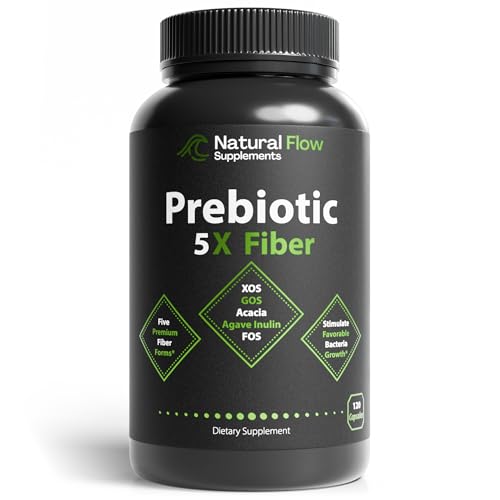
3. Prebiotic Fiber Capsules — Best for Convenience
For those who want prebiotic benefits without powders or mixing, capsule formulas offer straightforward daily supplementation.
Why It Stands Out:
Capsules provide consistent dosing without the need to measure or mix anything. They’re ideal for travel, office use, or anyone who prefers the simplicity of swallowing pills to mixing powders.
Many capsule formulas combine multiple prebiotic types (inulin + FOS, for example) for broader gut bacteria support.
Key Features:
- No measuring or mixing
- Consistent dosing
- Travel-friendly
- Often multi-fiber formulas
- Easy to incorporate into routine
Pros:
- Maximum convenience
- Easy to travel with
- No taste concerns
- Consistent daily dose
- Simple routine
Cons:
- More expensive per gram of fiber
- Lower fiber amount per serving
- Less flexibility in dosing
- More capsules needed for therapeutic dose
Best For: Those who value convenience over cost, frequent travelers, or anyone who prefers capsules to powders.
The Science of Prebiotics
Short-Chain Fatty Acids (SCFAs)
When gut bacteria ferment prebiotic fiber, they produce SCFAs—particularly:
Butyrate: Primary fuel for colon cells. Supports gut barrier integrity, reduces inflammation, may support healthy cell turnover.
Acetate: Provides energy, may support appetite regulation.
Propionate: May support healthy cholesterol metabolism and glucose regulation.
These SCFAs provide benefits far beyond the gut, influencing metabolism, immunity, and even brain function.
Microbiome Effects
Research shows prebiotics:
- Increase Bifidobacteria populations
- Support Lactobacillus growth
- Improve microbial diversity
- May reduce harmful bacteria
- Support a healthier overall gut environment
Beyond Digestion
Emerging research connects prebiotics to:
- Immune function (70% of immune system is in gut)
- Mineral absorption (calcium, magnesium)
- Mood and cognition (gut-brain axis)
- Metabolic health
- Inflammation reduction
How to Use Prebiotic Supplements
Starting Slowly
This is crucial—starting too fast causes discomfort:
Week 1: Start with 1/4 recommended dose Week 2: Increase to 1/2 dose Week 3: Increase to 3/4 dose Week 4: Full dose
This gradual increase allows your gut bacteria to adjust without excessive gas and bloating.
Optimal Timing
- Can be taken any time of day
- Some prefer morning for regularity
- Can be taken with or without food
- Consistency matters more than timing
Combining with Probiotics
Prebiotics and probiotics work synergistically:
- Take together or at different times
- Prebiotics “feed” the probiotics
- The combination is called a “synbiotic”
- May enhance probiotic survival and colonization
Signs Your Gut May Need Prebiotic Support
Digestive Indicators
- Irregular bowel movements
- Bloating after meals
- Gas and discomfort
- Feeling like digestion is “sluggish”
Beyond the Gut
- Frequent colds or infections
- Low energy despite adequate sleep
- Sugar/carb cravings
- Skin issues
- Mood fluctuations
Lifestyle Factors
You may especially benefit if you:
- Eat a low-fiber diet
- Take or have taken antibiotics
- Experience chronic stress
- Eat mostly processed foods
- Don’t consume fermented foods
Food Sources of Prebiotics
While supplements are convenient, food sources offer additional benefits:
High-Prebiotic Foods:
- Chicory root (highest inulin content)
- Jerusalem artichoke
- Garlic
- Onions
- Leeks
- Asparagus
- Bananas (especially green)
- Oats
- Apples
- Flaxseed
Aim for variety—different prebiotic fibers feed different bacterial species.
Frequently Asked Questions
What’s the difference between prebiotics and probiotics?
Probiotics are live beneficial bacteria. Prebiotics are fibers that feed those bacteria. Both are important—prebiotics provide the food source that allows probiotics (and your existing good bacteria) to thrive.
Why do prebiotics cause gas?
Gas is a natural byproduct of fermentation. When bacteria digest prebiotic fiber, they produce gas. This usually decreases as your microbiome adapts—which is why starting slowly is important.
Can I take prebiotics with probiotics?
Yes—they work well together. The combination is called a “synbiotic.” Prebiotics may help probiotics survive and colonize your gut more effectively.
How long until I notice benefits?
Digestive improvements often appear within 1-2 weeks. Full microbiome benefits may take 4-8 weeks of consistent use. Be patient and consistent.
The Bottom Line
Prebiotic fiber is foundational to gut health—it’s the fuel that powers your beneficial bacteria. Organic inulin powder provides effective, economical prebiotic support with flexible dosing. Acacia fiber offers exceptional gentleness for sensitive digestion. And prebiotic capsules deliver convenience for those who prefer pills to powders.
Whichever you choose, start slowly, be consistent, and consider combining prebiotics with probiotic foods or supplements for comprehensive gut support. Your trillion bacterial partners will thank you.