
Best Bloating Relief Supplements (2026) – Top 10 Reviewed
Bloating affects nearly everyone at some point, whether from food sensitivities, digestive inefficiency, or gut imbalances. The right supplement can provide fast relief while addressing underlying causes like enzyme deficiencies or dysbiosis.
We evaluated dozens of bloating relief supplements based on ingredient quality, clinical backing, and real user results. Here are our top 10 picks for 2026.
Quick Comparison
| Product | Key Ingredients | Servings | Form | Best For |
|---|---|---|---|---|
| Synbiotic 3-in-1 | Pre/Pro/Postbiotics, 50B CFU | 30 | Capsules | Best Overall |
| Metagenics UltraFlora Acute Care | L. acidophilus, B. lactis | 30 | Capsules | Best for Rapid Relief |
| Lemme Debloat | Probiotics, Prebiotic | 60 | Gummies | Best Gummy Option |
| Houston Enzymes TriEnza | DPP-IV, Proteases, Lipase | 180 | Chewables | Best for Food Sensitivities |
| Metagenics SpectraZyme | Plant Enzymes, Amylase | 60 | Capsules | Best Plant-Based Enzymes |
| Enjoy Dairy Again | Lactase-Producing Probiotics | 30 | Capsules | Best for Dairy Bloating |
| Double Wood Digestive Enzymes | 10-Enzyme Blend, 800mg | 60 | Capsules | Best Budget Option |
| Psyllium Husk Fiber Powder | Psyllium Husk, 6g per serving | 30 | Powder | Best Fiber-Based Option |
| 15-in-1 Detox Binder | Activated Charcoal, Zeolite, Clay | 60 | Capsules | Best for Gas & Toxin Binding |
| Peak Performance Ginger Root | Organic Ginger Root | 60 | Capsules | Best Natural/Traditional |
1. Synbiotic 3-in-1 – Best Overall
Why it stands out: This formula combines prebiotics, probiotics, and postbiotics in one supplement—addressing bloating from multiple angles. With 50 billion CFU per serving, it delivers serious gut support while remaining gentle enough for daily use.
The synbiotic approach works because it feeds your good bacteria (prebiotics), adds beneficial strains (probiotics), and includes the metabolites those bacteria produce (postbiotics). This three-pronged strategy helps restore gut balance faster than probiotics alone. Research suggests that postbiotics—the beneficial compounds produced by probiotics—may actually be responsible for many of the gut health benefits we attribute to live bacteria. By including them directly, this formula doesn’t rely solely on colonization.
The 50 billion CFU count puts this in the higher-potency category, which can be beneficial for those with significant gut imbalances. The vegan formula is shelf-stable and doesn’t require refrigeration, making it travel-friendly and easy to keep at your desk or in your bag. The capsules are designed to survive stomach acid and deliver their payload to your intestines where they’re needed most.
Pros:
- Complete gut support with pre/pro/postbiotics
- High 50 billion CFU count
- Vegan and shelf-stable
- Specifically formulated for bloating relief
Cons:
- Premium price point
- Two capsules per serving
Best for: Anyone wanting comprehensive gut support to address chronic bloating and digestive discomfort.

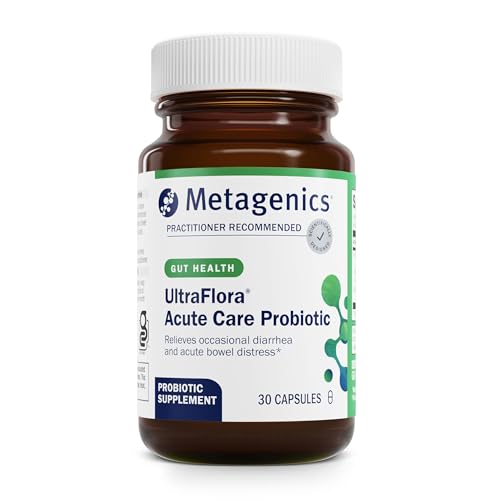
2. Metagenics UltraFlora Acute Care – Best for Rapid Relief
Why it stands out: When you need fast relief from sudden bloating, gas, or digestive distress, this clinical-grade probiotic delivers. Metagenics designed this specifically for acute symptoms rather than maintenance, making it your go-to for digestive emergencies.
UltraFlora Acute Care uses clinically-studied Lactobacillus acidophilus and Bifidobacterium lactis strains selected for their ability to quickly colonize the gut and reduce gas production. Unlike maintenance probiotics that take weeks to show results, this formula is designed to provide noticeable relief within days. It’s particularly effective after travel, dietary indiscretions, antibiotic use, or when bloating strikes suddenly without an obvious cause.
The professional-grade formula comes from Metagenics, a brand trusted by healthcare practitioners for decades. They manufacture under strict quality controls that exceed industry standards, and each batch is tested for potency and purity. The strains in this formula have been studied specifically for their ability to normalize bowel function and reduce bloating and gas, not just general gut health claims.
Pros:
- Designed specifically for acute symptoms
- Fast-acting formula with clinically-studied strains
- Clinical-grade quality from trusted brand
- Non-GMO verified
Cons:
- Higher cost per serving than mainstream brands
- 30-count supply only
Best for: Those experiencing sudden bloating episodes who need quick relief.
3. Lemme Debloat – Best Gummy Option
Why it stands out: Founded by Kourtney Kardashian, Lemme brings celebrity wellness credibility to digestive health with a tasty gummy format. These contain two clinically-studied probiotic strains plus prebiotic fiber for bloating relief you’ll actually look forward to taking.
The blackberry-flavored gummies make daily supplementation enjoyable while delivering real digestive benefits. The formula includes DE111 Bacillus subtilis, a spore-forming probiotic that survives stomach acid better than many strains—an important consideration since gummies can’t use protective enteric coatings. Spore-forming probiotics are essentially dormant until they reach your intestines, where they activate and begin colonizing.
The prebiotic component feeds your existing gut bacteria to amplify the anti-bloating effect. This creates a synergistic approach where you’re both adding beneficial bacteria and giving them the food they need to thrive. The formula is vegetarian, gluten-free, and non-GMO. While gummies generally have lower CFU counts than capsules, the spore-forming strains used here may offer equivalent effectiveness due to better survival rates.
Pros:
- Delicious blackberry flavor
- Clinically-studied spore-forming probiotic strains
- Easy gummy format
- No refrigeration needed
Cons:
- Lower CFU count than capsule options
- Contains added sugars (though minimal)
Best for: People who struggle with swallowing pills or want a more enjoyable supplement experience.

4. Houston Enzymes TriEnza – Best for Food Sensitivities
Why it stands out: TriEnza is specifically formulated for people who react to gluten, casein, soy, and other problematic proteins. It includes DPP-IV, the enzyme that breaks down gluten and casein peptides that cause so many digestive issues for sensitive individuals.
This comprehensive enzyme blend handles proteins, carbohydrates, fats, and polyphenols—essentially anything that might cause bloating. The star ingredient is DPP-IV (dipeptidyl peptidase IV), which specifically targets the proline-rich bonds in gluten and casein that are notoriously difficult to digest. For those with non-celiac gluten sensitivity or casein intolerance, this enzyme can mean the difference between a normal dinner and hours of misery.
The chewable tablet format means enzymes start working in your mouth for faster action—you’re getting a head start on digestion before food even reaches your stomach. Houston Enzymes has been a leader in digestive enzymes since 2001, founded by a biochemist father whose son had autism and food sensitivities. That personal connection shows in the thoughtful formulation. The 180-count bottle provides exceptional value for an enzyme of this quality.
Pros:
- Contains DPP-IV for gluten/casein breakdown
- Chewable for faster absorption
- Handles multiple food types including polyphenols
- 180-count bottle offers excellent value
Cons:
- Not a substitute for avoiding allergens (celiac disease still requires strict avoidance)
- Larger chewable tablets
Best for: Anyone with food sensitivities who experiences bloating after eating trigger foods.
5. Metagenics SpectraZyme Enzyme Complex – Best Plant-Based Enzymes
Why it stands out: For those wanting a vegan enzyme option without compromising on quality, SpectraZyme delivers plant-based enzymes that break down proteins, fats, and carbohydrates effectively. Metagenics’ professional-grade quality ensures consistent potency batch to batch.
This formula supports indigestion, bloating, and overall colon health using non-animal-derived enzymes—no pancreatin or other animal-sourced ingredients. It includes amylase for starches (including resistant starches that can cause significant gas), protease for proteins, and lipase for fats—covering all the macronutrients that can cause digestive distress when inadequately broken down.
The plant-based enzymes in this formula are derived from Aspergillus fungus and have been shown to work across a wider pH range than animal-derived enzymes. This matters because your digestive tract varies in acidity from very acidic in the stomach to more alkaline in the small intestine. Enzymes that function across this range provide more complete digestion. The gluten-free, vegan formula suits most dietary requirements.
Pros:
- 100% plant-based enzymes
- Professional-grade Metagenics quality
- Gluten-free and vegan
- Works across wide pH range
Cons:
- Premium pricing
- 60-capsule supply goes quickly with daily use
Best for: Vegans and vegetarians seeking effective digestive enzyme support.
6. Enjoy Dairy Again – Best for Dairy Bloating
Why it stands out: Unlike lactase pills you take with each dairy serving, this probiotic approach helps your gut produce its own lactase enzymes. Take it for 7 days monthly and enjoy dairy without popping pills at every meal—a fundamentally different approach to lactose intolerance.
The innovative formula contains probiotic strains specifically selected for their ability to colonize your gut and produce lactase. After a 7-day course each month, your microbiome is primed to handle dairy naturally. This is a game-changer for lactose intolerant individuals tired of carrying enzyme pills everywhere or avoiding dairy entirely.
What makes this different from standard lactase supplements is the long-term benefit. Traditional lactase pills only work for that specific meal—miss a dose and you’re in trouble. This product actually modifies your gut flora to enhance lactose breakdown, providing coverage even when you forget to take something. The high viral score (86) indicates strong user satisfaction, suggesting many people are finding real relief with this approach.
Pros:
- Long-term solution, not just symptom management
- Only need 7-day course monthly
- High viral score indicates strong user satisfaction
- More convenient than per-meal enzymes
Cons:
- Takes time to see full benefits
- Won’t help if you avoid dairy completely
Best for: Lactose intolerant individuals who want to enjoy dairy without carrying enzyme pills.
7. Double Wood Digestive Enzymes – Best Budget Option
Why it stands out: At a fraction of the cost of premium brands, Double Wood delivers all 10 essential digestive enzymes in an 800mg blend. It’s the smart choice for enzyme support without breaking the bank, especially if you’re not sure enzymes are right for you and want to test the waters.
This formula includes amylase, lipase, bromelain, lactase, papain, protease, cellulase, maltase, and invertase—covering virtually every food type that might cause bloating. That means proteins, fats, carbohydrates, fiber, and dairy are all addressed in one capsule. Double Wood manufactures in the USA with third-party testing for purity and potency, providing transparency unusual at this price point.
The 60-capsule bottle provides a full two-month supply at one capsule per meal, making the per-serving cost extremely competitive. While individual enzyme potencies may be lower than premium single-enzyme products, the broad coverage makes this an excellent starting point for people unsure exactly what’s causing their bloating.
Pros:
- Excellent value for comprehensive enzyme blend
- All 10 essential digestive enzymes
- Third-party tested for quality
- Made in USA
Cons:
- Lower individual enzyme potency than premium options
- Basic formula without additional gut support ingredients
Best for: Budget-conscious buyers wanting solid enzyme coverage without premium pricing.
8. Psyllium Husk Fiber Powder – Best Fiber-Based Option
Why it stands out: Sometimes bloating comes from sluggish digestion rather than enzyme deficiency. This psyllium husk powder delivers 6g of prebiotic fiber per serving in a sugar-free lemonade flavor that actually tastes good—a rarity in the fiber supplement world.
Psyllium works differently than enzymes—it adds bulk to stool and keeps things moving, preventing the backup that causes bloating. When food sits too long in your intestines, bacteria have more time to ferment it, producing gas. By promoting regularity, psyllium reduces this fermentation time. The soluble and insoluble fiber combination supports regular bowel movements while feeding beneficial gut bacteria as a prebiotic.
The lemonade flavor makes daily fiber supplementation enjoyable rather than a chore—no more choking down thick, chalky mixtures. The sugar-free formula means you’re not feeding problematic gut bacteria while trying to improve your digestion. Non-GMO and gluten-free, this works for most dietary restrictions.
Pros:
- 6g fiber per serving (significant dose)
- Sugar-free lemonade flavor
- Both soluble and insoluble fiber
- Prebiotic benefits for gut health
Cons:
- Must drink plenty of water (8+ ounces)
- Can cause initial gas as gut adjusts
Best for: Those whose bloating stems from constipation or slow digestion.
9. 15-in-1 Detox Binder – Best for Gas & Toxin Binding
Why it stands out: This formula uses activated charcoal, zeolite, and bentonite clay to physically bind and remove gas-causing compounds and toxins from your digestive tract. It’s particularly effective for occasional bloating from questionable food, drinks, or environmental exposures.
The 15-ingredient formula goes beyond basic charcoal with chlorella, fulvic acid, and other detox supporters. Activated charcoal has been used in emergency rooms for decades to absorb toxins, and it works the same way in your gut—binding gas molecules and potentially problematic substances so they pass through rather than causing symptoms. Zeolite and bentonite clay add additional binding capacity with different molecular targets.
The 180-capsule supply lasts months with occasional use, making this an economical choice for keeping on hand. Take after meals that might cause issues, during travel when you’re eating unfamiliar foods, or after consuming something that disagreed with you. Best taken away from other supplements and medications to avoid binding things you actually want to absorb.
Pros:
- Multiple binding agents for comprehensive action
- 180-capsule bulk supply
- Vegan formula
- Supports overall digestive detox
Cons:
- Can bind medications—must take 2 hours apart
- Not appropriate for daily long-term use
Best for: Occasional bloating relief after dietary indiscretions or exposure to problematic foods.
10. Peak Performance Organic Ginger Root – Best Natural/Traditional
Why it stands out: Ginger has been used for digestive support across cultures for thousands of years, and this USDA Organic formula delivers concentrated ginger root in convenient capsules. It’s the natural choice for those preferring traditional remedies backed by modern research.
Ginger works through multiple mechanisms: it relaxes intestinal smooth muscles to help trapped gas pass through more easily, stimulates the production of digestive enzymes, and has natural anti-inflammatory properties that can soothe an irritated gut. The active compounds—gingerols and shogaols—have been studied for their effects on gastric motility and nausea, making ginger useful for bloating that comes with stomach upset.
This vegan formula uses organic ginger root with no fillers or artificial ingredients—just pure ginger in a capsule. USDA Organic certification ensures no pesticides or synthetic fertilizers were used in growing. Can be taken daily for ongoing digestive support or as needed when symptoms arise. Also helps with occasional nausea, motion sickness, and morning sickness (though pregnant women should consult their doctor first).
Pros:
- USDA Organic certified
- Traditional remedy with modern research backing
- Gentle and well-tolerated by most people
- Addresses nausea alongside bloating
Cons:
- May interact with blood thinners at high doses
- Slower acting than enzyme supplements
Best for: Those preferring natural, traditional remedies for gentle daily digestive support.
What Is Bloating and Who Should Take These Supplements?
Bloating is that uncomfortable, swollen feeling in your abdomen that makes your pants feel tight and your stomach look distended. It’s typically caused by excess gas production, slow digestion, or water retention in the gut. Common triggers include eating too fast, food intolerances, bacterial imbalances, high-fiber or high-FODMAP foods, carbonated beverages, and swallowing air while eating or drinking.
The mechanisms behind bloating vary widely. For some people, it’s an enzyme deficiency—their body doesn’t produce enough lactase, amylase, or other digestive enzymes to properly break down food. For others, it’s a microbiome imbalance where gas-producing bacteria have overgrown while beneficial strains have declined. Still others may have motility issues where food moves too slowly through the digestive tract, allowing excessive fermentation.
You might benefit from bloating supplements if you regularly experience abdominal discomfort after meals, visible stomach distension, excessive gas, or feelings of fullness that last hours after eating. Those with conditions like IBS, SIBO, or known food sensitivities often find targeted supplements provide significant relief. People who’ve taken multiple rounds of antibiotics may also benefit, as these medications can disrupt the gut microbiome and lead to chronic digestive issues.
However, persistent or severe bloating should be evaluated by a healthcare provider to rule out underlying conditions like celiac disease, inflammatory bowel disease, or ovarian issues in women. Supplements work best when you’ve identified the root cause of your bloating and can choose a product that addresses that specific mechanism.
How to Choose the Right Bloating Supplement
Key Ingredients to Look For
The most effective bloating supplements contain digestive enzymes (amylase, protease, lipase, lactase), probiotics (particularly Lactobacillus and Bifidobacterium strains), and natural carminatives like ginger or peppermint. For enzyme supplements, look for formulas listing activity units (like HUT for protease or FCC for amylase) rather than just milligrams—activity units tell you how much work the enzyme can actually do, while milligrams only tell you weight.
For probiotics, aim for at least 10-20 billion CFU from multiple strains, though higher counts aren’t always better if the strains aren’t appropriate for your needs. Look for strains with clinical research specifically on bloating and gas, such as Lactobacillus acidophilus, Bifidobacterium lactis, and Lactobacillus plantarum 299v. Spore-forming probiotics like Bacillus subtilis survive stomach acid better and may colonize more effectively.
If you’re targeting specific issues, seek out specialized ingredients: DPP-IV for gluten sensitivity, alpha-galactosidase (the enzyme in Beano) for bean and vegetable bloating, or simethicone for mechanical gas relief. Prebiotics like inulin or FOS can help if your issue is gut flora imbalance, but may worsen symptoms for some people with SIBO.
Forms Compared
Capsules offer the most precise dosing and often have higher potency, but some people prefer gummies for convenience and taste—just watch for added sugars that can feed problematic gut bacteria. Chewable tablets work faster since digestion begins in the mouth, making them ideal for enzyme supplements taken with meals. Powders like psyllium offer flexibility in dosing but require mixing with liquid.
Enteric-coated capsules protect contents from stomach acid, which matters for probiotics that might be killed by acidic conditions. For enzymes, you generally want them released in the stomach to work alongside your meal, so standard capsules are fine. Consider what you’ll actually take consistently—the best supplement is useless if it sits in your cabinet.
What to Avoid
Skip supplements with excessive fillers, artificial colors, or proprietary blends that hide individual ingredient amounts. Be wary of unrealistic claims or products promising instant, miracle results. Avoid charcoal-based products for daily use since they can interfere with nutrient absorption and medication effectiveness over time.
If you have known allergies, check labels carefully—some enzyme supplements derive from fungi (Aspergillus) or pork (pancreatin). Look for third-party testing certifications like USP, NSF, or ConsumerLab to verify potency and purity. Extremely cheap products often cut corners on quality or use proprietary blends to hide low-potency ingredients.
Side Effects and Precautions
Most bloating supplements are well-tolerated, but some people experience temporary gas, cramping, or changes in bowel habits when first starting probiotics—this usually resolves within a few days to two weeks as your gut adjusts to the new bacterial strains. Starting with a lower dose and gradually increasing can minimize this adjustment period. Digestive enzymes rarely cause issues when taken with food, though taking them on an empty stomach may cause mild stomach upset in sensitive individuals.
Fiber supplements like psyllium require adequate water intake—at least 8 ounces per serving—to prevent constipation or intestinal blockage. Start with smaller doses and increase gradually over several weeks. Those with difficulty swallowing or esophageal narrowing should use caution with fiber supplements or choose powder forms over capsules.
Those taking blood thinners should use caution with ginger supplements, as ginger has mild blood-thinning properties. Activated charcoal can reduce the absorption of medications and other supplements, so take it at least two hours apart from anything else you’re taking—including birth control pills. This also means charcoal isn’t ideal for daily long-term use, as it can interfere with nutrient absorption over time.
Pregnant or nursing women should consult their healthcare provider before starting any new supplement, though many probiotics and ginger supplements are considered safe during pregnancy. If you have a serious digestive condition like Crohn’s disease, ulcerative colitis, pancreatitis, or a history of bowel obstruction, talk to your doctor before adding digestive supplements to your routine. Those with compromised immune systems should be cautious with probiotic supplements containing live bacteria.
FAQs
How quickly do bloating supplements work?
Digestive enzymes work within 30-60 minutes when taken with meals—you should notice reduced bloating from that specific meal. Activated charcoal can relieve gas within a few hours by physically binding gas molecules in your digestive tract. Probiotics typically require 1-4 weeks of consistent daily use before you notice significant improvements in chronic bloating patterns, as they need time to colonize your gut and shift the microbial balance.
Should I take bloating supplements with food or on an empty stomach?
Digestive enzymes work best when taken immediately before or with meals—that’s when your body needs them to break down food. Taking them on an empty stomach won’t cause harm but wastes their potential. Probiotics can be taken with or without food, though some research suggests certain strains survive better when taken with a meal containing some fat. Fiber supplements are usually taken with a full glass of water, either before meals to help with satiety or at bedtime to support morning regularity.
Can I take multiple types of bloating supplements together?
Yes, many people combine approaches—for example, taking digestive enzymes with meals and probiotics at a different time of day. This can be more effective than either approach alone since they work through different mechanisms. Just avoid taking activated charcoal within two hours of other supplements since it can bind and reduce their effectiveness. If you’re stacking multiple supplements, start one at a time so you can identify what’s actually helping.
Are bloating supplements safe for long-term use?
Digestive enzymes and probiotics are generally safe for ongoing daily use and may even become more effective over time as your gut environment improves. Fiber supplements are also fine for daily use with adequate hydration. However, activated charcoal and detox binders should be used occasionally rather than daily, as long-term use can interfere with nutrient absorption and potentially deplete important minerals.
Why am I still bloated after taking supplements?
Bloating has many causes, and supplements address specific mechanisms. If probiotics aren’t helping, you might have an enzyme deficiency instead, or vice versa. Persistent bloating despite supplementation warrants investigation for underlying issues like SIBO (small intestinal bacterial overgrowth), food intolerances you haven’t identified, or other digestive conditions. Consider keeping a food diary to identify patterns, or work with a healthcare provider to get proper testing.
Can bloating supplements help with IBS?
Many people with IBS find relief from targeted supplements, particularly probiotics and digestive enzymes. Certain probiotic strains like Lactobacillus plantarum 299v and Bifidobacterium infantis 35624 have clinical evidence supporting their use for IBS symptoms including bloating. However, IBS is complex and may require a comprehensive approach including dietary changes (like the low-FODMAP diet), stress management, and possibly prescription medications alongside supplements.
Final Verdict
For comprehensive bloating relief, we recommend Synbiotic 3-in-1 as the best overall choice—its combination of prebiotics, probiotics, and postbiotics addresses gut health from multiple angles, making it effective for various causes of bloating. If you need fast relief from acute symptoms, Metagenics UltraFlora Acute Care delivers clinical-grade probiotic support specifically designed for rapid action when sudden digestive distress strikes.
Budget-conscious buyers will find excellent value in Double Wood Digestive Enzymes, which covers all 10 essential enzymes at a fraction of premium prices—ideal for testing whether enzymes work for your particular situation. For those with specific dairy issues, Enjoy Dairy Again offers a unique long-term solution that modifies your gut flora rather than just managing symptoms meal by meal.
If food sensitivities are your primary trigger, Houston Enzymes TriEnza with its DPP-IV for gluten and casein breakdown deserves serious consideration. And for those who prefer traditional, natural approaches, Peak Performance Organic Ginger Root provides gentle daily support backed by centuries of traditional use and modern research.
Whatever you choose, consistency matters—give any supplement at least 2-4 weeks before evaluating its effectiveness for chronic bloating issues. And don’t be afraid to combine approaches if one product alone isn’t giving you complete relief.