
A Beginner’s Guide to Fermenting at Home (Start With Sauerkraut, Thank Us Later)

This post may contain affiliate links. We may earn a commission at no extra cost to you. See our full disclosure.
Fermenting sounds like a science project and costs like a hobbyist trap, which is a shame, because the beginner version is neither. Real sauerkraut is cabbage, salt, a jar, and a week of waiting. Total cost: a few dollars. Total skill required: the ability to squeeze a vegetable.
This guide covers the one ferment every beginner should start with, the small set of rules that keep fermentation safe, what’s normal versus what’s a problem, and where to go once the first jar works. No special equipment required for any of it, though we’ll flag the two cheap upgrades that earn their keep.
Why Bother (The Short Version)
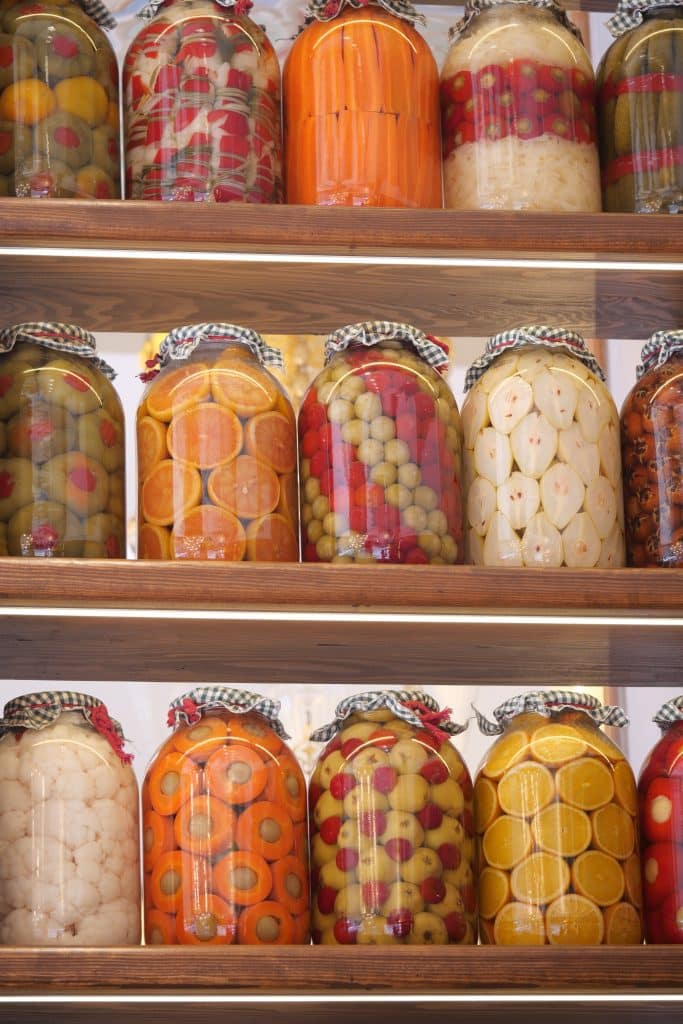
Fermentation is preservation that improves food instead of just pausing it. Salt plus time lets beneficial lactic acid bacteria (the same family behind yogurt and real pickles) convert sugars into acid, which preserves the vegetable, creates the sour flavor, and produces the live cultures that made the fermented foods your grandmother was right about a permanent fixture of nearly every traditional cuisine on earth.
The budget case is just as strong as the health case. A jar of raw sauerkraut at the store runs several dollars. A whole cabbage makes two to three jars for the price of one, which is exactly the kind of math that put fermenting on old-school frugal rotations alongside the money habits grandparents swore by.
| Store-bought raw kraut | Homemade | |
|---|---|---|
| Cost per jar | $6 to $10 | $1.50 to $3 |
| Live cultures | Yes, if refrigerated and raw | Yes |
| Flavor control | Whatever they made | Entirely yours |
| Effort | None | 20 minutes plus waiting |
One honesty note before the recipe: fermented foods are promising and well-loved, but they’re food, not medicine. Enjoy them for flavor and tradition first, and treat the health upside as a bonus, the same framing we used ranking gut-friendly foods by the strength of the science.

The Only Equipment That Matters
| Item | Required? | Notes |
|---|---|---|
| Wide-mouth glass jar (quart) | Yes | A clean pasta-sauce jar works |
| Non-iodized salt | Yes | Kosher, sea, or pickling salt |
| Kitchen scale | Strongly recommended | Turns guesswork into a formula |
| Something to weigh cabbage down | Yes, improvised is fine | A smaller jar, a zip bag of brine, a clean rock |
| Airlock lid or fermentation weights | No | The two upgrades worth buying if you continue |
That’s the entire list. Skip the $80 crock until jar three or four proves you actually enjoy this.
Trending Finds 🛍️
See What 3 Million+ Shoppers Are Discovering This Week
From clever kitchen gadgets to everyday problem solvers, The Grommet features new and unique products from independent makers — many made in the USA and under $50.
Browse Today's Trending Products →We may earn a commission if you make a purchase through this link.

Your First Ferment: Basic Sauerkraut
The formula
Everything in beginner fermentation hangs on one number: roughly 2 percent salt by weight of the vegetables.
🍭 Feeling nostalgic yet?
31 Childhood Snacks That Are Still 100% Worth Buying Today
The ones that taste exactly like you remember.
| Cabbage weight | Salt (2%) | Rough spoon equivalent |
|---|---|---|
| 500g (about half a head) | 10g | ~2 teaspoons |
| 800g (a small head) | 16g | ~1 tablespoon |
| 1kg (a medium head) | 20g | ~4 teaspoons |

The steps
- Shred. Remove the outer leaves (save one), quarter and core the cabbage, slice thin. Thinner ferments faster and softer, thicker stays crunchier.
- Weigh and salt. Weigh the shreds, add 2 percent salt, toss well in a big bowl.
- Squeeze. Massage and squeeze hard for 5 to 10 minutes until the cabbage goes limp and a pool of brine collects in the bowl. This step is the whole trick; the salt pulls the water out and the water becomes your brine.
- Pack. Stuff the cabbage into the jar in layers, pressing each layer down hard until brine rises above it. Leave an inch or two of headspace.
- Submerge. Everything under the brine, always. Lay the saved outer leaf on top as a cap, then weigh it down. Anything poking above the liquid is where trouble starts.
- Cover loosely. Lid barely tightened, or a cloth with a rubber band. Gas needs to escape. If the lid is tight, “burp” the jar daily.
- Wait somewhere room temperature and out of direct sun. Bubbles in a day or two means it’s working.
- Taste at day 5. Then every couple of days until the sourness suits you. Most people land between 1 and 3 weeks. Cooler rooms run slower, warmer rooms faster.
- Refrigerate. Cold nearly stops the ferment. It keeps for months in the fridge and keeps developing flavor slowly.

What’s normal vs. what’s a problem
This table is the entire safety education most beginners need:
| What you see | Verdict |
|---|---|
| Bubbles, fizzing, brine pushed up | Normal, it’s working |
| Cloudy brine | Normal |
| Sulfur/cabbage smell early on | Normal, mellows into sour |
| White film on the surface (kahm yeast) | Harmless but skim it, common and cosmetic |
| Brine level dropping | Top up with 2% salt water |
| Fuzzy mold (blue, green, black, pink) | Toss the jar, start over |
| Slimy, mushy kraut with a rotten smell | Toss |
| Anything above the brine discoloring | Remove that piece, keep the rest submerged |
What makes all of this lower-risk than it sounds is that submerged vegetables in properly salted brine are a genuinely hostile environment for the microbes you fear.
Fermentation fails visibly and smells like it failed. When in doubt, the nose vote is final, same rule as the pantry: toss it and lose three dollars, not a debate.

Troubleshooting the Three Common Fails
| Problem | Cause | Fix next time |
|---|---|---|
| Not enough brine to cover | Under-squeezed or dry cabbage | Squeeze longer; top up with 2% salt water (10g salt per 500ml) |
| Mushy kraut | Too warm, too little salt, or too long | Cooler spot, weigh the salt, taste earlier |
| Nothing happening after 3 days | Room too cold or salt way over | Move somewhere warmer, verify the math |

Where to Go After Jar One
Once basic kraut works, the same formula and rules cover almost everything, with small adjustments:
| Next ferment | Change from kraut | Ready in | Difficulty |
|---|---|---|---|
| Kraut with caraway or juniper | Add spices at packing | Same | Same |
| Fermented carrots or green beans | Use a 2-3% brine you mix (no squeezing) | 1 to 2 weeks | Same |
| Real dill pickles | Brine method plus dill and garlic; use small firm cucumbers | 1 to 2 weeks | Slightly harder (crunch is the challenge) |
| Kimchi-style cabbage | Add chili, garlic, ginger paste | 1 to 2 weeks | Medium |
| Fermented hot sauce | Ferment chilies in brine, then blend | 2 to 4 weeks | Medium |
| Giardiniera mix | Mixed vegetables in brine | 1 to 2 weeks | Easy |
The brine-method ferments (carrots, beans, pickles) are arguably even easier than kraut, since mixing salt water replaces all the squeezing: dissolve roughly 20 to 30 grams of salt per liter of water, pour over packed vegetables, submerge, wait.
Cheap garden overflow and marked-down produce are ideal candidates, which pairs nicely with growing your own from kitchen scraps you can regrow, keeping the beds productive with plants that repel garden pests chemical-free, and keeping the rest of the shelf stocked per the pantry staples ranked by shelf life.

What Week One Actually Looks Like, Day by Day
The waiting is where beginners lose their nerve, mostly because nobody tells them what normal looks like on a Tuesday. For a first kraut at typical room temperature:
| Day | What you’ll likely see | Your job |
|---|---|---|
| 0 | Packed jar, brine over cabbage, smells like salted cabbage | Nothing |
| 1 | Maybe a few bubbles, brine may rise | Press everything back under if it lifted |
| 2 to 3 | Active bubbling, cloudier brine, cabbage smell peaks | Burp the lid if tight; ignore the smell, it passes |
| 4 to 5 | Bubbling slows, sour smell replaces cabbage smell | First taste |
| 6 to 10 | Steady souring, brine settles | Taste every day or two |
| 10 to 21 | Flavor deepens from “salty cabbage” to genuinely sour | Fridge it whenever it tastes right to you |
The day 2 to 3 smell deserves its own warning because it sends more first jars to the trash than any actual problem: fermenting cabbage produces sulfur compounds early, the kitchen briefly smells like cooked cabbage with opinions, and it’s completely normal. It fades as the sourness takes over.
Trust the checklist tables, not your roommate’s commentary.
🛋️ While you're here, check this out:
69 of the Most Insane Things Found on Facebook Marketplace
You won't believe what people are selling!

The Questions Every Beginner Asks
Do I need to sterilize everything?
No. Clean with hot soapy water, rinse well, done. Fermenting works differently from canning. You’re cultivating a living colony rather than sealing a void, and the salt-plus-acid environment handles the protective work. This is one of the biggest myths keeping people from starting.
I used iodized salt by accident. Is the batch ruined?
Probably not. Iodine and anti-caking agents can slow fermentation or cloud the brine, which is why non-iodized is the recommendation, but plenty of accidental-iodized batches turn out fine. Let it run and judge by the normal-vs-problem table.
Can I use a metal lid?
Prolonged contact between salty acidic brine and reactive metal is a bad pairing; brine touching a metal lid can corrode it. Keep the brine level below the lid, use a plastic lid, or put parchment between jar and lid. Stainless steel bowls and knives during prep are fine.
Why is my brine level dropping?
Evaporation plus absorption, both normal. Top up with fresh 2 percent brine (about 10g salt dissolved in 500ml water) so everything stays submerged.
How much should I eat?
🪐 Ready for a quick escape?
33 Real Places on Earth That Look Like Another Planet
No spaceship required — these are all real photos.
Start small, a forkful or two with meals, and let your gut adjust; jumping to a bowl a day on an unaccustomed stomach is a famous rookie move with predictable consequences. Beyond that, it’s food: eat what you enjoy.
Is this the same as the probiotic supplements aisle?
Different delivery, overlapping idea, and the fermented-food version comes with fiber, flavor, and a price measured in cabbage. The strain-by-strain science is still maturing, which is the honest read we gave the whole category in the gut-friendly foods ranking.
Can I ferment in summer without air conditioning?
Yes, it just runs fast. At warm room temperatures a kraut can be table-ready in under a week, and the crunch suffers a little. Find the coolest closet in the house, or lean into quick small batches.

The One-Table Summary
| Rule | Why it’s the rule |
|---|---|
| 2% salt by weight | The whole formula |
| Everything under the brine | The whole safety system |
| Room temperature, out of sun | The right speed |
| Taste from day 5 | Done means “sour enough for you” |
| Fridge when happy | Pause button |
| Fuzzy mold or rot smell = toss | The only hard stop |
Keep reading: wondering what else to ferment? 37 Underrated Fruits and Vegetables You’re Walking Right Past at the Grocery Store is a brine-ready shopping list hiding in plain sight, and 31 High-Fiber Vegetables Ranked From Most to Least covers the fiber half of the gut equation.
Twenty minutes of active work, a week of patience, and a few dollars of cabbage is the entire cost of finding out whether this hobby is for you. Most people who get one good jar never fully stop, because the second jar is even easier and the flavor genuinely beats the store version.
And if it turns out fermenting isn’t your thing, you’re out one cabbage, which as failed hobbies go is about as cheap as they come.
Enjoyed this article? Here are more fun reads:
