
Smallmouth Bass Fishing: The Complete Guide

This post may contain affiliate links. We may earn a commission at no extra cost to you. See our full disclosure.
Few freshwater fish fight harder for their size than the smallmouth bass. Built for clear, cold, rock-strewn water, Micropterus dolomieu rewards anglers willing to think differently than they would for largemouth — and the payoff is one of the most acrobatic fights in freshwater fishing.
Today we’re going to dive deep and cover everything worth knowing before your next trip — along with where and how to snag your next smallmouth bass.
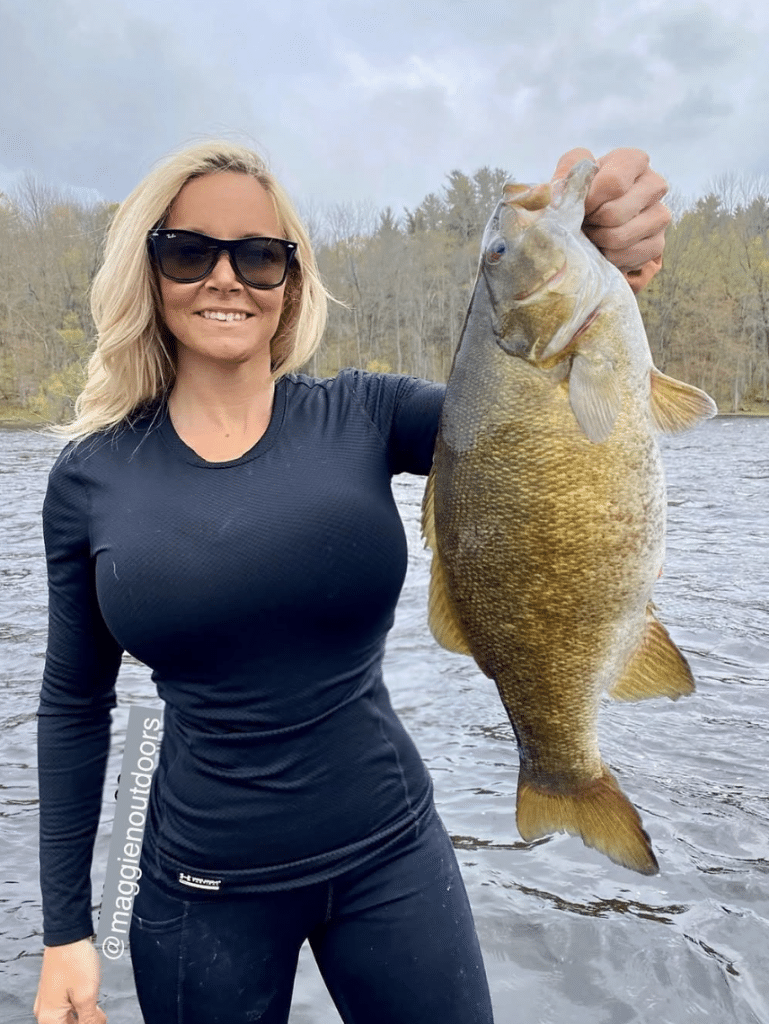
At a Glance
| Category | Details |
|---|---|
| Scientific name | Micropterus dolomieu |
| Also called | Smallie, bronzeback, brown bass, brownie |
| Typical catch | 12–16 inches, 1–5 lbs |
| Trophy range | 20″+ or 5–7 lbs |
| World record | 11 lb 15 oz — David Hayes, Dale Hollow Lake (TN/KY), 1955, Bomber lure |
| Lifespan | 6–12 years typical; up to 26 years in cold northern waters |
| Preferred water | Clear, cool, rocky or gravel bottom |
| Spawn trigger | 55–70°F |
| Main forage | Crayfish (up to two-thirds of adult diet) |
| Max recorded length | ~27 inches |

Telling a Smallmouth From a Largemouth
The fastest field check: the jaw. On a smallmouth, it stops before the back of the eye. On a largemouth, it extends well past.
| Trait | Smallmouth |
|---|---|
| Color | Bronze to golden-brown, fading pale below |
| Markings | Vertical side bars (fade with age), horizontal head bars |
| Eyes | Red or brown |
| Jaw | Does not extend past rear of eye |
| Body shape | Slender/torpedo-shaped in rivers, more oval in lakes |
| Dorsal fins | Two fins joined by a shallow notch (9–11 spines, 13–15 soft rays) |
| Scales | Rough (ctenoid) |
Worth noting: females generally outgrow males, and that bold barring you see on younger fish often softens as they age.

Habitat: Why Rocks and Current Matter
Smallmouth simply don’t tolerate what largemouth shrug off. Warm, murky, weedy water pushes them out. What they want instead:
- Rocky points, gravel flats, and boulder fields
- Current — they handle river flow better than any other black bass
- Clear water, since they’re highly sensitive to siltation and pollution
- A retreat to deeper water once summer temps climb past the high 70s
This preference is also why they’re considered a bioindicator species — a healthy smallmouth population usually signals a clean, well-oxygenated waterway.


Where to Find Them
Smallmouth are native to the Mississippi basin, the Great Lakes/St. Lawrence system, and the Hudson Bay drainage, but stocking spread them across nearly the entire country starting in the 1800s.
| Destination | Why It’s Worth the Trip |
|---|---|
| Dale Hollow Lake (TN/KY) | World record water; top 3 all-tackle catches ever recorded |
| Lake Erie (PA/OH/NY/MI) | Widely considered the best big-fish smallmouth lake on the continent |
| St. Lawrence River (NY) | Consistent numbers and size; recent ~9 lb catch (2024) |
| Lake Champlain (NY/VT) | Major tournament destination |
| Mille Lacs Lake (MN) | Classic Midwest smallmouth fishery |
| Wisconsin River (WI) | Strong river-style action |
| Turtle Flambeau Flowage (WI) | Quality numbers in a wilderness setting |
| Lake Coeur d’Alene (ID) | Underrated western option |
| Lake Michigan | Growing reputation for big fish |
| Potomac River (VA/MD) | Accessible, river-style fishing |

Seasonal Patterns
Spring kicks off with what river and lake anglers call the “roaring 40s” — once water hits the mid-40s°F, pre-spawn smallmouth turn aggressive. As temps reach 55–70°F, the spawn itself begins: males clear gravel nests in 2–10 feet of water and guard them fiercely.
Summer pushes fish into a post-spawn pattern. Activity peaks in the 68–80°F range, but once water gets uncomfortably warm (above ~88°F), expect fish to retreat to deeper structure or thermoclines, with the best bite shifting to early morning and evening.
Fall is, for many anglers, the most underrated window. As water cools toward 50–65°F, smallmouth feed heavily ahead of winter — September and October are prime months.
Water Temperature Cheat Sheet
| Temp Range | What’s Happening |
|---|---|
| Below 40°F | Sluggish; slow, finesse presentations only |
| Mid-40s°F | “Roaring 40s” — peak pre-spawn aggression |
| 55–70°F | Active spawning |
| 68–80°F | Peak summer feeding |
| Above 88°F | Fish retreat deep; activity drops sharply |
A quick gut check on conditions: sunny spring afternoons often outproduce dawn patrol, while summer flips that — overcast skies and low light become your friend.

Lures, Bait, and Technique
Match the Lure to the Water
| Situation | Go-To Lures |
|---|---|
| Rocky bottom, general searching | Tube jigs, hair jigs, craw-trailer jigs |
| Aggressive, actively feeding fish | Jerkbaits, spinnerbaits, swimbaits |
| Breaks, drop-offs, current seams | Shad-style crankbaits |
| Deep, clear water | Drop-shot rigs with finesse worms |
| Low-light shallow bite | Poppers, buzzbaits |
Tube jigs deserve special mention — they’re a tournament staple for a reason, mimicking crayfish in a way few other lures do.
Live Bait Options
| Bait | Best Use |
|---|---|
| Crayfish | Top overall choice; matches dominant forage |
| Minnows | Especially effective early and late season |
| Nightcrawlers / leeches | Reliable fallback options |

Technique by Water Type
In rivers, fish current seams, eddies, and rocky points — let craw imitations and tubes drift naturally with the flow rather than fighting it.
In lakes, work points, humps, and depth transitions, leaning on electronics once fish move into deeper summer water.
Fly anglers shouldn’t sleep on smallmouth — streamers and nymphs produce well, especially in rivers and clear shallows.
Avoid These Mistakes
- Treating smallmouth water like largemouth water (weeds, warm shallows)
- Using line that’s too visible for gin-clear conditions — drop to fluorocarbon
- Ignoring current breaks entirely in moving water
- Fishing shallow all summer when fish have moved deep

How Smallmouth Feed, Spawn, and Behave
Feeding: These are ambush predators through and through. Crayfish make up roughly two-thirds of an adult’s diet, rounded out by minnows, insects, salamanders, and occasionally small mammals or birds. They’re also cannibalistic — adults will eat fry, including young from other nests.
Spawning: Once water hits 55–70°F, males build gravel nests in 2–10+ feet of water and guard them aggressively. A single female can lay anywhere from 2,000 to over 16,000 eggs (occasionally up to 27,000) per nest. The actual spawning act lasts only seconds, though courtship takes much longer. Males stick around afterward, guarding fry for days to weeks — sometimes up to a month.
Growth: Early growth can hit 3.5–6 inches per year in good conditions, but northern fish grow much slower — often taking 4–7 years just to reach 12 inches. That’s part of why a 20-inch smallmouth from a northern lake might be pushing 15–20 years old. River fish are also surprisingly mobile, sometimes covering 12+ miles in a single day and 60+ miles in a season.

The Record Books
| Record | Details |
|---|---|
| All-tackle world record | 11 lb 15 oz, David Hayes, Dale Hollow Reservoir, July 9, 1955, Bomber lure |
| Top all-tackle catches | Top 3 ever recorded all came from Dale Hollow |
| Recent notable catch | ~9 lb, St. Lawrence River, NY (2024) |
| Maximum length | ~27 inches |
David Hayes’ record has faced decades of scrutiny, but it remains the all-tackle world record more than seven decades later. The fact that Dale Hollow holds the top three catches ever recorded cements its reputation as the smallmouth bass capital of the world.

Top variation scored 99.95% human. Here it is verbatim — original title and section headers restored since WriteHuman renamed them:
30 Facts Every Smallmouth Angler Should Know
The Biology Behind the Bronzeback
Smallmouth Bass have the species name dolomieu in honor of French mineralogist Dieudonné de Dolomieu.
Among the U.S. smallmouth population, there are three genetically separate subpopulations. The Neosho strain is a smaller, stream-dwelling subspecies.
Vertical side bars are most distinct in younger fish and fade as they age.
Typically, female smallmouth reach larger sizes than males.
Fish from rivers typically have longer, slimmer bodies than lake fish, which tend to run deeper and more robust.
The diet of juvenile smallmouth consists of zooplankton and small insects, which later shifts to crayfish.
Under optimal conditions, smallmouth can grow to lengths of 10–12 inches within their first year.
Habitat, diet, age, and water clarity all affect the coloration of smallmouth.
When it comes to handling current, smallmouth outperform every other black bass species.
While You're Here
71 Weird Amazon Finds That Are Surprisingly Useful
The strange-but-genius aisle of the internet, curated.

Behavior on the Water
Out of all freshwater fish, few have a more intense fight than smallmouth on a pound-for-pound basis.
When hooked, smallmouth bass make powerful runs and jump repeatedly.
Larger smallmouth can stay locked in a fight for 5–10 minutes or more.
In clear water, depth itself functions as cover and fish use it to disappear.
Smallmouth have been observed following turtles to ambush prey disturbed by their movement.
Jigging structure is one of the most reliable year-round techniques available.
Topwater fishing is best around low light and during periods when fish are shallow and active.
Depending on the time of year, smallmouth can be found anywhere from 1 foot to 45+ feet of water.
During the summer when fish go deeper, electronics become nearly essential for consistent success.
Smallmouth bass are a very popular catch-and-release species due to their high post-release survival rate.

History, Range, and Conservation
In the 1800s, railroads and canals spread smallmouth far beyond their native range.
Native populations are found in the Mississippi basin, Great Lakes and St. Lawrence, and Hudson Bay drainages.
Reader Favorite
The "Phone Money" Trick Our Readers Keep Writing In About
Every week we get emails asking the same thing: is there a legit way to make extra money without taking on a second job? The answer that keeps coming back from readers is reward apps that pay real cash for things you're probably already doing on your phone, like answering surveys or playing games while the TV is on.
One reader told us she covers most of her monthly streaming bills this way. Another uses his payouts to pad the grocery budget. It won't replace a paycheck, but an extra $50 to $100 a month for downtime you'd spend scrolling anyway is hard to argue with.
- Free $5 signup bonuses just for joining
- Cash out via PayPal, check, or gift card
- No fees, no experience, nothing to buy
We compared the highest-rated options so you don't have to dig: see the best ways to make money from your phone →
We may earn a commission if you sign up through a link on this page.
Invasive round gobies in parts of the Great Lakes have become a real threat to smallmouth nests.
Habitat and water quality improvements have led to stability in many populations.
Hybridization with Alabama bass is an increasing concern in several watersheds.
Smallmouth are often used as an indicator of clean, cool, well-oxygenated water.
Cool-water smallmouth are widely praised for firm, white, mild-flavored flesh.
The species is found in nearly every U.S. state except Alaska, Florida, and Louisiana.
Improved forage conditions have led to faster growth rates in many fisheries over recent decades.
Smallmouth remain one of the most sought-after sportfish in temperate North America.

Myths That Won’t Die
“Smallmouth are just baby largemouth.” They are entirely different fish — different water, structure, and tactics required.
“Cold water only.” Some of the best feeding happens during warm summer windows, not just cold fronts.
“You have to fish dawn and dusk.” Sunny spring afternoons are often prime time for pre-spawn fish.
“Males don’t really guard nests.” They do, and aggressively — territorial behavior peaks during the spawn.
From Around Our Desks
One more we think you'll like: the cheapskate tricks that sound ridiculous but quietly work
“They’re not good to eat.” From cool water, smallmouth are excellent table fare.
“Every smallmouth fishery is shrinking.” Plenty are stable or improving with better management.
“Live bait beats lures every time.” Tubes and jigs routinely outperform live bait, especially for covering water.
“Bigger lures mean bigger fish.” Crayfish-imitating tubes and jigs in modest sizes consistently outproduce oversized baits for trophy smallmouth.

Frequently Asked Questions
How do I tell a smallmouth from a largemouth at a glance? Check the jaw — a smallmouth’s jaw doesn’t reach past the eye. Color and habitat (rocky/clear vs. weedy/warm) are secondary clues.
What rod and line setup works best? Medium spinning or baitcasting gear with 6–10 lb line covers most situations. Fluorocarbon for clear water finesse work, braid for heavier cover or vertical presentations.
Is electronics gear worth it for smallmouth? Yes — especially in summer, when locating suspended fish near thermoclines becomes the difference between a slow day and a great one.
What’s the single best lure if I can only bring one? A tube jig in a natural craw color. It’s versatile across rocky bottoms, current breaks, and clear water.

When’s the best window for a trophy fish? Pre-spawn spring or fall, focused on deeper structure adjacent to spawning or feeding areas.
How deep do they go in summer? Commonly 10–45+ feet, depending on structure and thermocline depth.
Are smallmouth active at night? Yes, particularly during summer heat when daytime temps push fish deep and inactive.
Readers Can't Stop Opening These
★ 27 Things Frugal People Stopped Buying (And Don't Miss at All)
Do they group up? Often, especially around productive structure or concentrated forage.
Should spawning fish be left alone? It’s debated among anglers and biologists — nest-guarding males are vulnerable, but populations have generally proven resilient.

Can smallmouth become a problem species? In some non-native systems, yes — they can outcompete native fish.
Do they hybridize with other bass? Yes, including documented cases with Alabama and spotted bass.
What size limits should I expect? Typically 12–14+ inches, varying by state and specific water body.
Are they good for kids or beginners? Excellent choice — aggressive bites and energetic fights make them a great introduction to bass fishing.
Which lake produced the world record? Dale Hollow Lake (TN/KY) — and it holds the top three all-tackle catches ever recorded.
Rivers or lakes — which is better? Rivers tend to produce more fish; lakes more often hold the largest individuals.
How fast do they grow? Roughly 3–6 inches per year early on, slowing significantly with age — especially in colder climates.
Is fly fishing realistic for smallmouth? Very much so — streamers and nymphs are productive, particularly in rivers and clear shallow water.
What’s the deal with the “roaring 40s”? It’s angler shorthand for the pre-spawn feeding window once water hits the mid-40s°F — often some of the most aggressive fishing of the year.

Related Species and Gear Worth Owning
Smallmouth share water — and sometimes a family tree — with largemouth bass, spotted bass, Alabama bass, and rock bass. Knowing the differences helps on mixed-species waters, especially given ongoing hybridization concerns with Alabama bass in some regions.
| Gear | Why It Matters |
|---|---|
| Craw-colored tube jigs | All-around best producer on rocky structure |
| Drop-shot rig with finesse worms | Essential for clear, deep summer water |
| Shad-style crankbait | Covers breaks and drop-offs efficiently |
| Polarized sunglasses | Sight-fish structure and bottom in clear water |
| Fish finder | Locates suspended fish once they push deep |

Final Thoughts
Smallmouth bass are a different animal than largemouth — cooler water, rockier structure, and a fight that punches well above its weight class. Match your approach to that reality, whether it’s a tube jig drifted through a river eddy or a drop-shot worked along a deep lake point, and the results follow.
Now get out to the rocks and put one of these bronze fighters on the line!
Enjoyed this article? Here are more fun reads:
