
Alabama’s 21 Most Legendary Fishing Holes (From Hidden to Hall-of-Fame)

Alabama deserves more recognition in national fishing discussions, which is frustrating for anglers that have fished here, and it’s easy to see why. The state has some of the best freshwater fishing opportunities in the South, and Lake Guntersville is more than enough reason to put Alabama on any angler’s bucket list. Weiss Lake is famous for crappie, Lewis Smith Lake has stripers over 50 pounds, the Mobile-Tensaw Delta is world class, and rivers loaded with catfish make this a state that delivers variety across nearly every freshwater species you can name.
Every year, Lake Guntersville is the reigning champion of Alabama fishing and it has well earned that title. As one of the leading lakes for bass fishing in the country, Guntersville’s status is widely recognized by anglers and Bassmaster alike. Fish normally weigh between 3 and 5 pounds and the lake is known for producing trophy largemouth from February through April. There are over 950 miles of shoreline with diverse structure to keep visiting anglers occupied for an entire week.
There is no stretch in calling Weiss Lake the Crappie Capital of the World. This nearly 30,000 acre lake holds crappie in abundance in the brush piles and submerged timber that define the fishery. Visiting anglers are often in disbelief at how many fish are here until they actually show up and fish it. Weiss Lake is even known for some of the best crappie fishing in the state during the spring spawn.

If you are looking for huge striper catches head to north-central Alabama and Lewis Smith Lake. This deep clear lake produces fish over 50 pounds and big catches in this area draw anglers from surrounding states year after year. The spotted bass fishing in the clear rocky waters is also exceptional and Smith Lake is widely considered one of the most beautiful lakes in the state.
Lake Eufaula on the Georgia border at 45,000 acres rounds out the top destinations with excellent largemouth bass, crappie, catfish, and white bass in a fertile reservoir that produces consistently across every season. This guide covers all of it.
21. Lewis Smith Lake (Cullman, Walker, and Winston Counties)
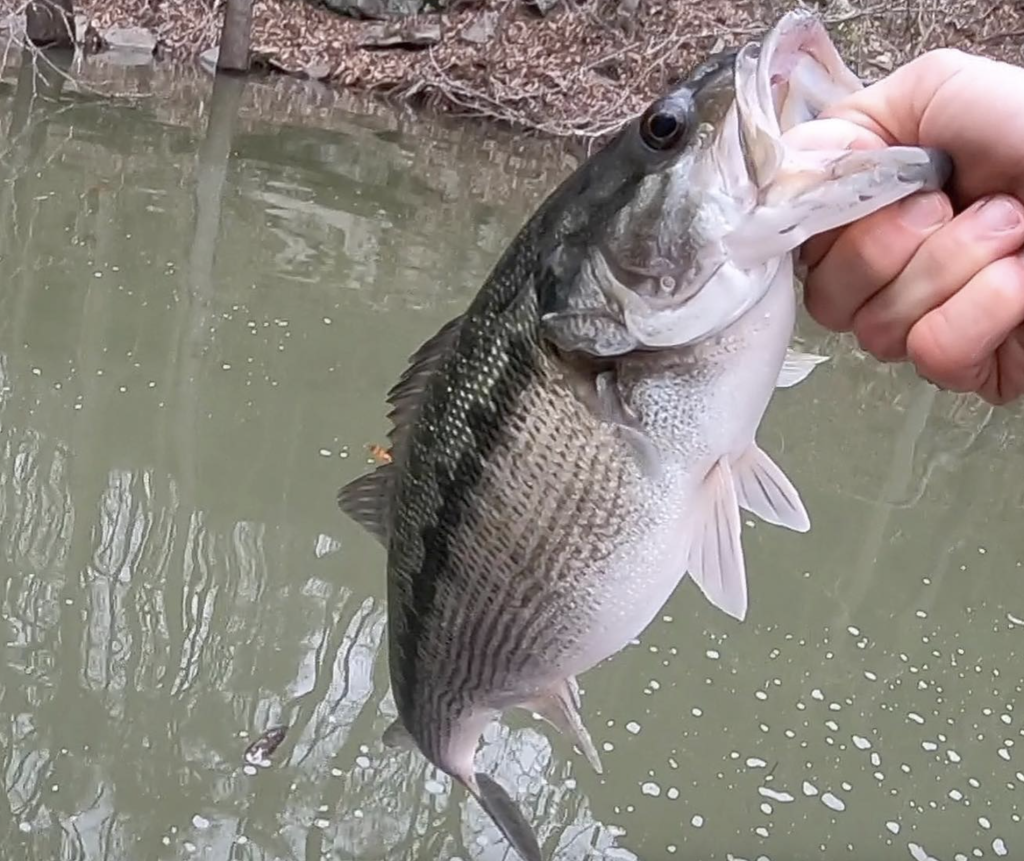
Lewis Smith Lake covers 21,000 acres in north-central Alabama and looks like something you’d expect to find in the Appalachian highlands rather than the Deep South. Clear water, rocky bluffs, submerged timber, and depth that drops fast from the shoreline create a fishery that rewards anglers who understand structure fishing over those who just show up and cast toward the bank.
Spotted bass are the dominant species here and they’re the reason serious bass anglers make the trip. The fish run smaller on average than largemouth in more heavily vegetated lakes, but they’re aggressive, they fight hard for their size, and the topwater action in spring mornings is as good as anything in the state. Crappie, striped bass, and white bass round out a fishery that holds up through the warmer months when shallower lakes slow down.
The steep rocky banks make this essentially a boat fishery. Bank fishing opportunities are limited compared to most Alabama lakes and the depth means you need electronics to find fish consistently. OutdoorAlabama’s reservoir pages cover access and current regulations.
Best timing: March through May for bass, year-round for striped bass in deeper water.
20. Weiss Lake (Cherokee County)
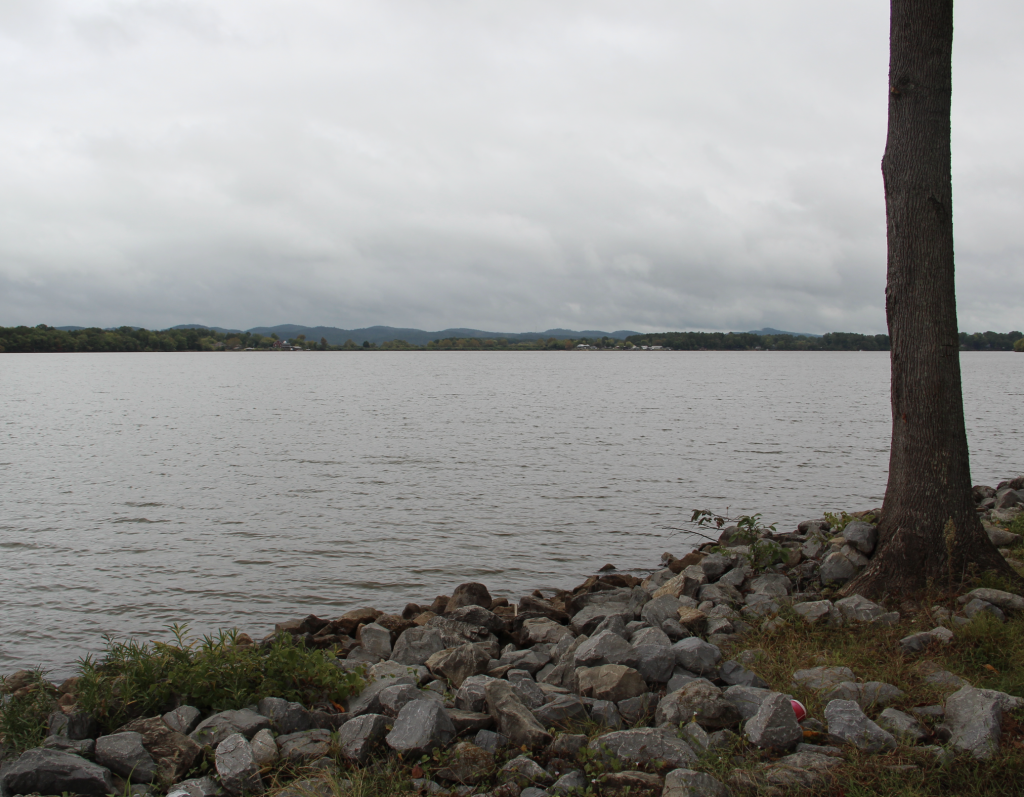
Weiss Lake calls itself the Crappie Capital of the World and the claim isn’t empty marketing. The 30,000-plus acres of shallow, vegetation-heavy water in Cherokee County produce crappie fishing that draws anglers from multiple states every spring, and slab crappie in the two-pound-and-up range are genuinely common here during peak season rather than exceptional catches worth photographing.
Largemouth and spotted bass, catfish, and bluegill round out the fishery, and the relatively easy shore access makes this one of the more beginner and family-friendly lakes on this list. The infrastructure around the lake supports multi-day trips without logistical headaches.
The honest limitation is pressure. Spring crappie season on Weiss Lake is crowded in a way that can genuinely affect the experience, particularly at the well-known access points and dock areas. Water level swings from dam operations can also shift where fish are holding quickly enough to make a productive morning turn frustrating by afternoon if you don’t adapt. FishingBooker’s Alabama guide covers guide options on Weiss Lake if you want local knowledge for a first trip.
Best timing: February through April for crappie, spring and fall for bass.
19. Lake Martin (Elmore and Tallapoosa Counties)
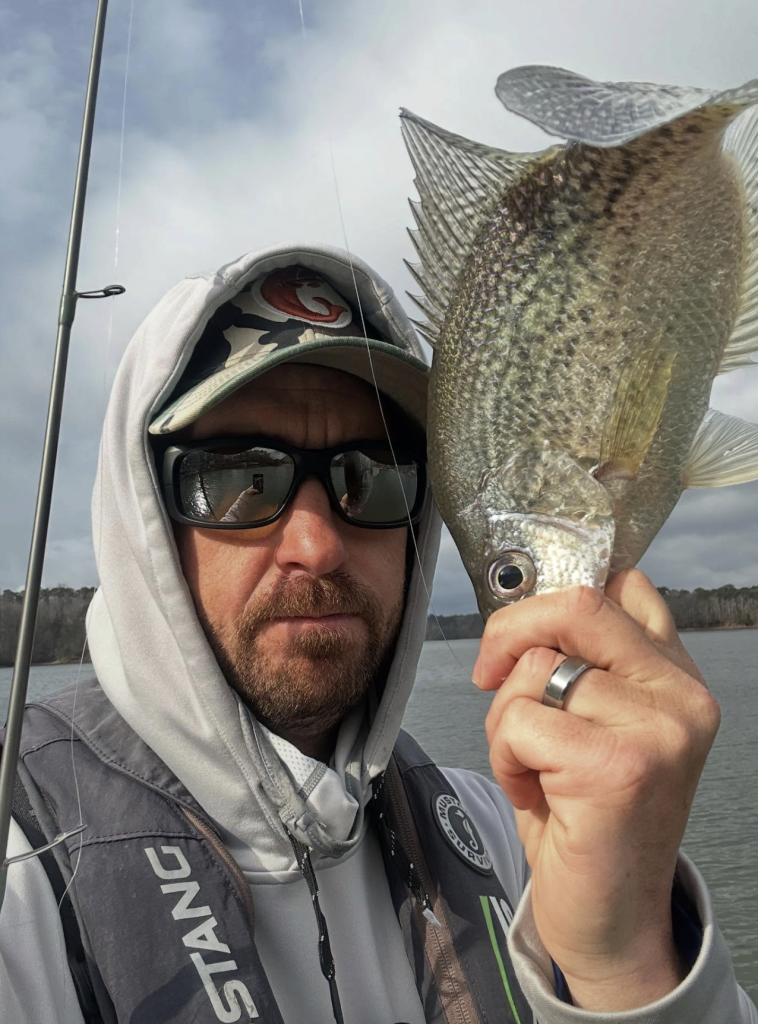
Lake Martin covers 39,000 acres near Alexander City in east-central Alabama and has the kind of cove and channel structure that produces consistent bass fishing across multiple seasons. Largemouth and spotted bass are the primary targets, with crappie, striped bass, and catfish adding depth to what’s available throughout the year. The scenic bluffs and clear water make it visually striking in a way that not every Alabama reservoir is.
Summer recreational boat traffic is the primary fishing challenge here. Lake Martin is popular with swimmers, boaters, and vacationers in a way that pushes serious fishing to early mornings, evenings, and the shoulder seasons when the pleasure boats thin out. The striped bass fishery has specific management rules in some areas that are worth understanding before you target them.
Best timing: Spring for bass during the spawn, fall for topwater action when water temperatures drop.
18. Lay Lake (Coosa and Chilton Counties)
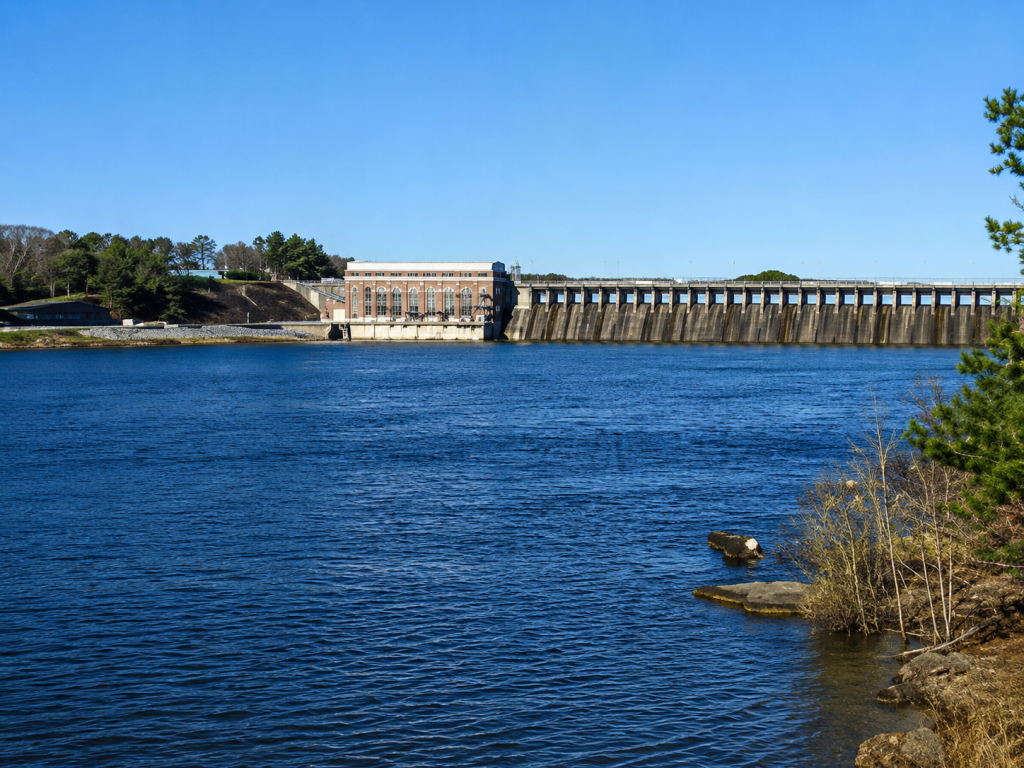
Lay Lake is part of the Coosa River chain and produces the kind of clear, structure-heavy fishing that the Coosa system is known for throughout Alabama. Spotted bass are the signature species and they use the rocky points, submerged timber, and channel edges in ways that reward anglers who learn the specific water. Largemouth, crappie, and catfish are all present in meaningful numbers.
Tournament anglers have fished Lay Lake seriously for years, which tells you something about the consistent quality of the bass population. Stump fields create real navigation hazards for anglers who don’t know where they are, which is worth taking seriously on a first visit. Weekend pressure at the popular access points can be significant during tournament season.
Best timing: April through June for peak bass fishing, year-round for catfish.
17. Logan Martin Lake (St. Clair and Talladega Counties)
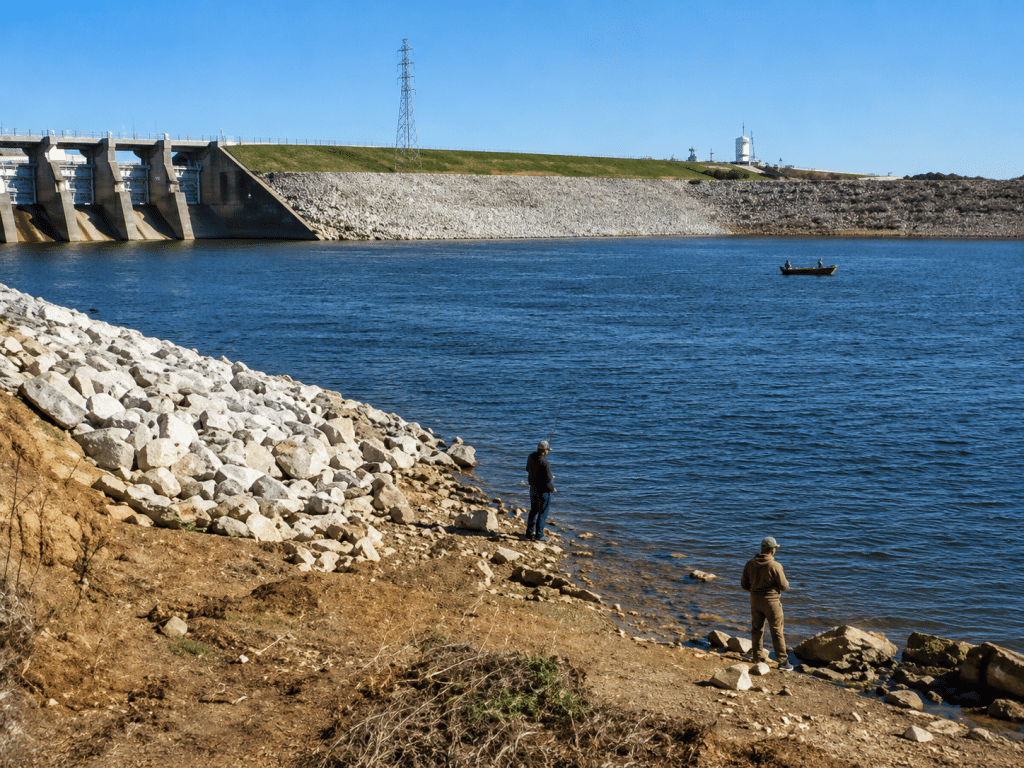
Logan Martin is a 15,000-acre reservoir on the Coosa River with rocky bluffs and clear water that produces some of the best smallmouth bass fishing in Alabama, which is not a sentence most people expect to read about a state more commonly associated with largemouth. The bluff fishing here specifically rewards anglers who work vertical presentations along steep structure, and the spotted bass fishing is consistently strong alongside it.
Crappie and catfish fill out the species list and both produce well. Increasing shoreline development and the associated boat traffic are the honest trade-offs for a lake close enough to Birmingham to attract consistent weekend pressure. Go on a weekday if you can and work the less obvious structure away from the main lake access points.
Best timing: Spring and fall for bass, year-round for crappie.


16. Neely Henry Lake (Etowah and Calhoun Counties)
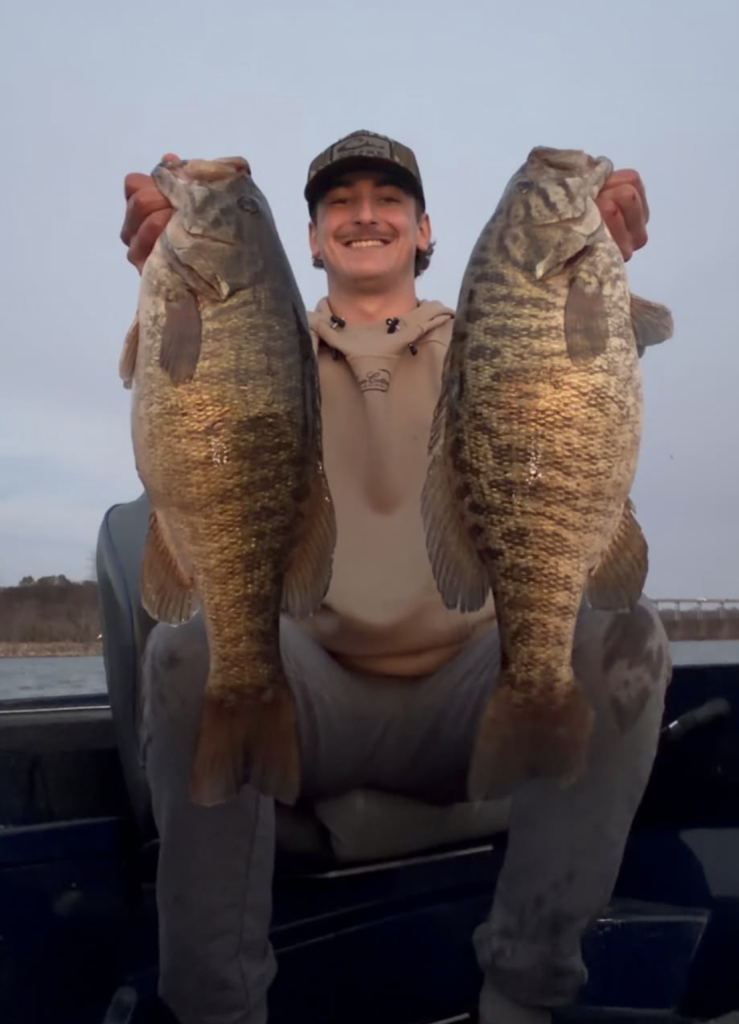
Neely Henry sits in the Coosa River chain below Weiss Lake and produces bass, crappie, catfish, and hybrid striped bass across a fishery that benefits from the weed beds and creek channels that define the upper Coosa impoundments. It doesn’t have the national profile of Guntersville or Eufaula but it holds fish consistently and the pressure is lower than most comparable Alabama lakes.
Variable water clarity and level fluctuations tied to dam operations are the variables to plan around. The lake fishes best when water clarity is reasonable and levels are stable, which typically means spring and fall over the murkier summer months. It earns its place near the bottom of this list for being a reliable option in the Coosa chain without the crowds that come with the lakes further up the rankings.
Best timing: Spring peaks for all species, fall for bass and hybrid stripers.
15. Wheeler Lake (North Alabama, Tennessee River Chain)
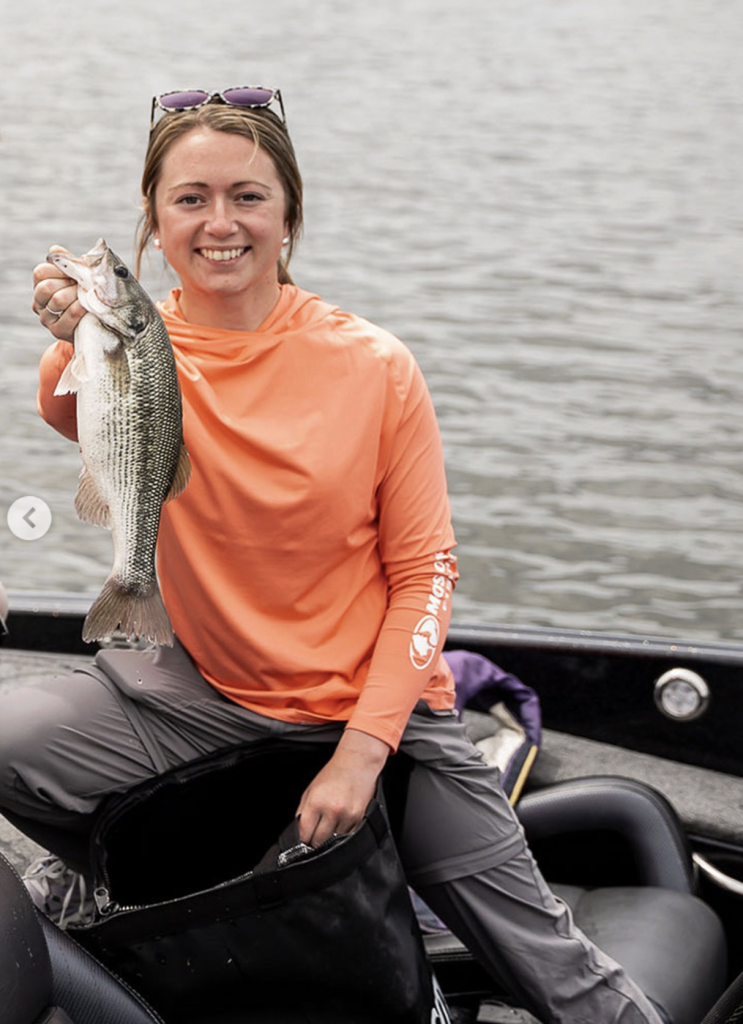
Wheeler Lake is a 67,000-acre reservoir on the Tennessee River in north Alabama and the fishing variety here is broader than most Alabama lakes. Largemouth and smallmouth bass, crappie, catfish, sauger, and walleye all inhabit different sections of the lake, and the tailwater fishing below the dams produces sauger and walleye in winter that Alabama anglers don’t associate with their home state until they try it.
The scale of Wheeler is both the opportunity and the challenge. At 67,000 acres the lake has enough water to hold a lifetime of exploration, and without local knowledge the productive sections aren’t obvious. Heavy commercial barge traffic on the Tennessee River navigation channel is a constant factor for boaters, and water levels fluctuate with TVA dam management in ways that can shift the fishery significantly.
Best timing: Spring for bass, winter for sauger near the dams.
14. Pickwick Lake (Lauderdale and Colbert Counties)
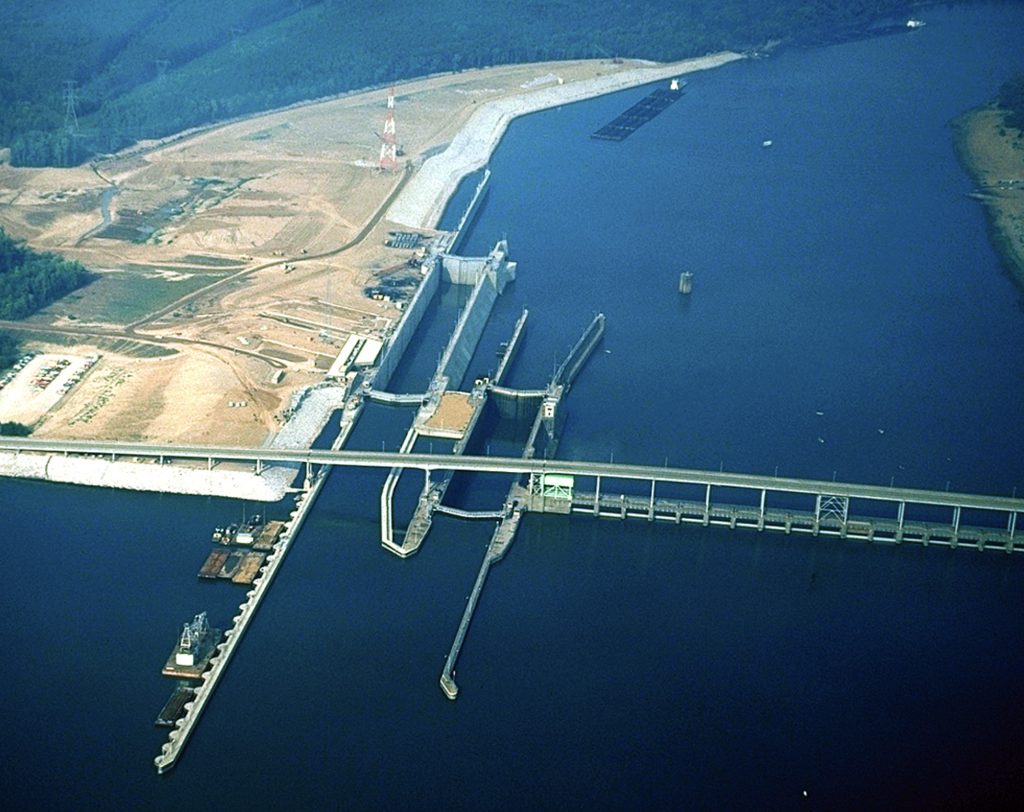
Pickwick Lake sits where Alabama, Tennessee, and Mississippi come together at the southern end of the Tennessee River chain, and the 43,000 acres of water here produce some of the most underrated trophy bass fishing in the Southeast. Largemouth, spotted, and smallmouth bass all inhabit the lake, which is relatively unusual for a southern reservoir. Walleye and crappie fishing are also strong.
The tailwater fishing below Wilson Dam is the specific draw that separates Pickwick from most Alabama lakes. The current and oxygenated water below the dam concentrate fish in ways that create exceptional fishing in a relatively small area, and anglers who learn that section specifically tend to catch fish at a rate that surprises them.
The multi-state reality means regulations from Alabama, Tennessee, and Mississippi potentially apply depending on where you are on the water. Understanding which state’s rules govern which section before you launch is worth the fifteen minutes it takes.
Best timing: March through May for bass, year-round for tailwater fishing below Wilson Dam.
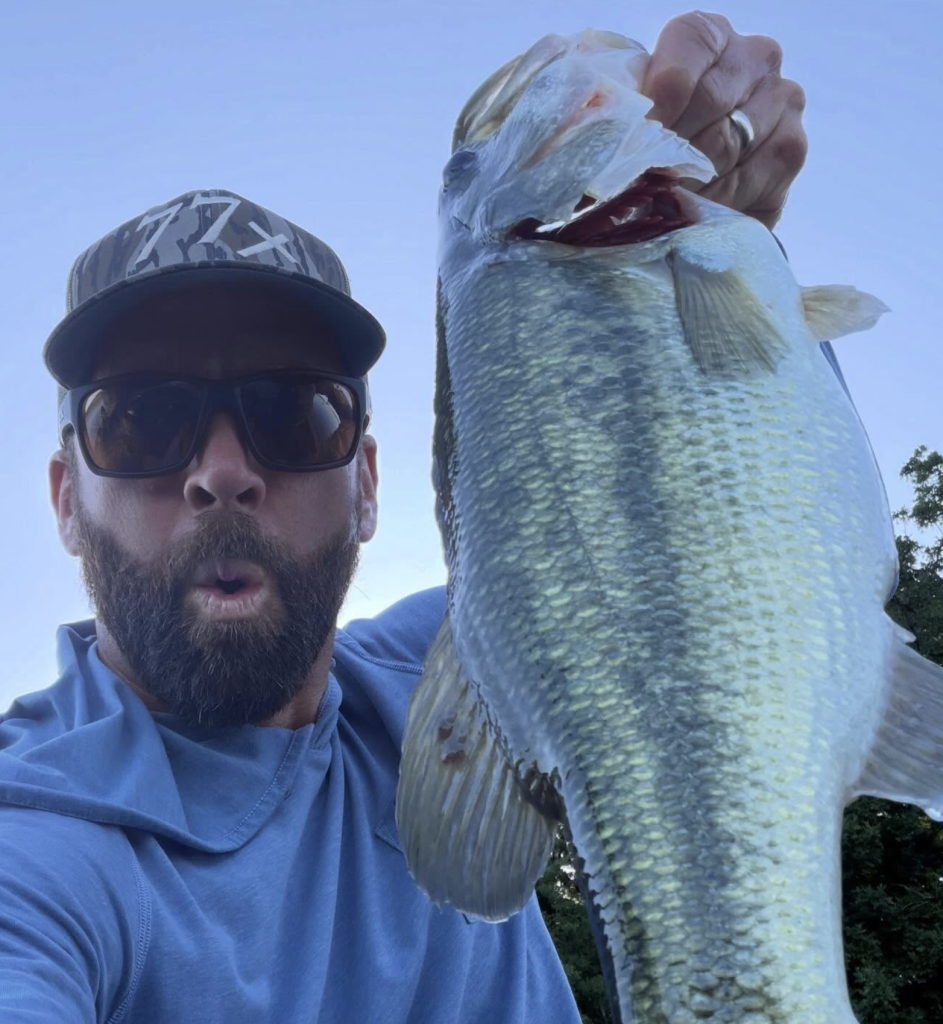
13. Lake Eufaula (Walter F. George Reservoir, Barbour and Russell Counties)
Lake Eufaula is known as the Bass Capital of the World and while every major bass lake in the South has a similar claim, Eufaula’s is backed up by decades of tournament results and consistent trophy fish production. The 45,000-acre reservoir sits on the Georgia-Alabama border and holds largemouth bass in the grass beds and timber that define the character of the lake, along with excellent crappie, catfish, and bluegill.
The grass fishing here specifically is what separates Eufaula from most Alabama reservoirs. Anglers who know how to work aquatic vegetation for largemouth consistently put fish in the boat in ways that open-water anglers don’t. A local guide for a first trip on Eufaula is money well spent.
The cross-border situation is worth understanding before you go. Alabama and Georgia both require valid licenses for their respective waters and tournament pressure on peak weekends is significant enough to affect the experience at the most productive access points.
Best timing: Spring and fall for bass, year-round for crappie and catfish.
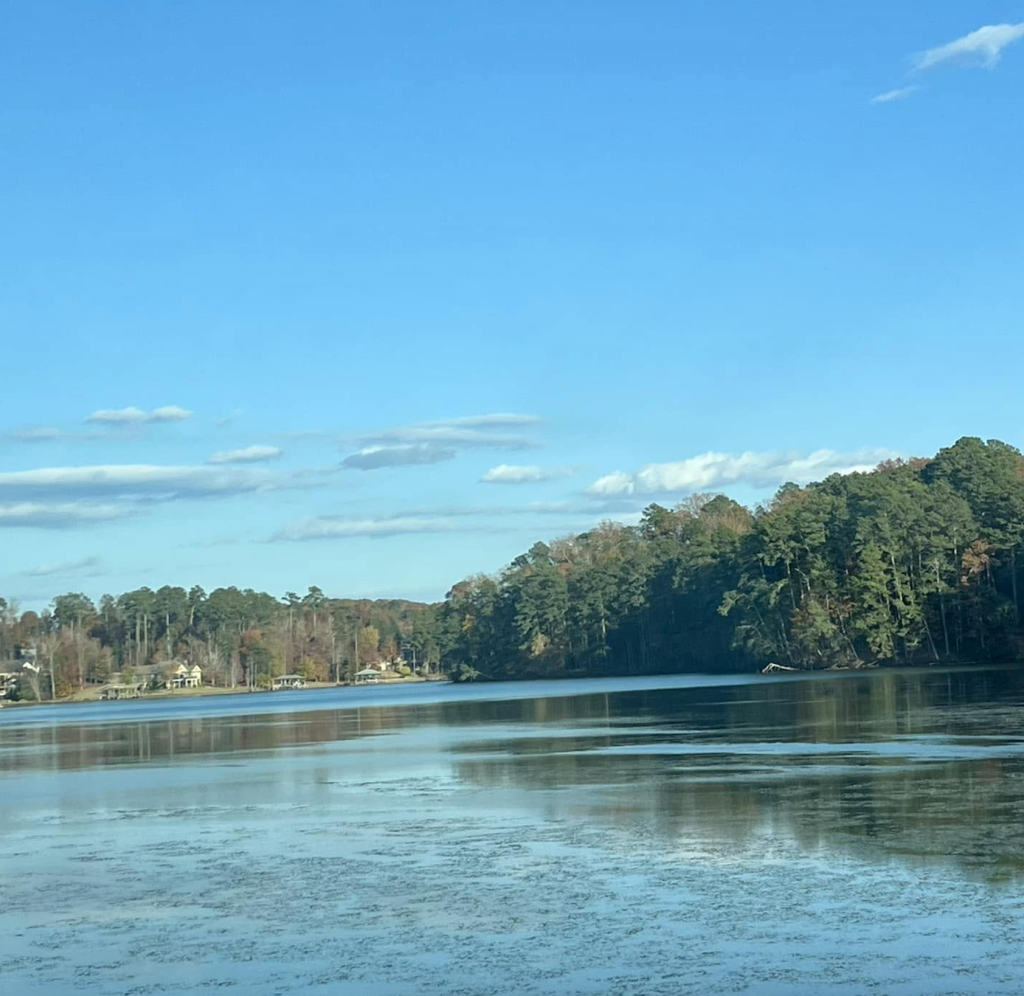
12. Guntersville Lake (Marshall and Jackson Counties) — First Appearance
Guntersville is Alabama’s most famous bass lake and it earns that reputation before you’ve finished tying on a lure.
The 69,000 acres of Tennessee River impoundment in north Alabama holds more diverse habitat than any other lake on this list: massive grass flats, creek channels, deep ledges, stump fields, and open water that transitions between all of it in ways that hold bass year-round rather than seasonally. Trophy largemouth in the double-digit range are caught often enough here that serious tournament anglers treat it as an expectation rather than a surprise.
Crappie, catfish, striped bass, and hybrid stripers round out what’s available, and the infrastructure around the lake is as good as it gets in Alabama. Multiple public ramps, marinas, guides, and nearby lodging make it one of the most logistically straightforward major reservoirs in the state.
The honest reality of Guntersville is the pressure. This lake hosts more bass tournaments than almost any other body of water in the country, and peak season weekends can feel more like a boat show than a fishing trip. The aquatic vegetation management debates between anglers who want the grass for fish habitat and those concerned about navigation and water quality are an ongoing part of the lake’s story. Go on a weekday in late winter or early spring and you’ll understand why it keeps showing up at the top of every Alabama fishing list.
Best timing: Late February through April for the prespawn largemouth bite, fall for topwater.
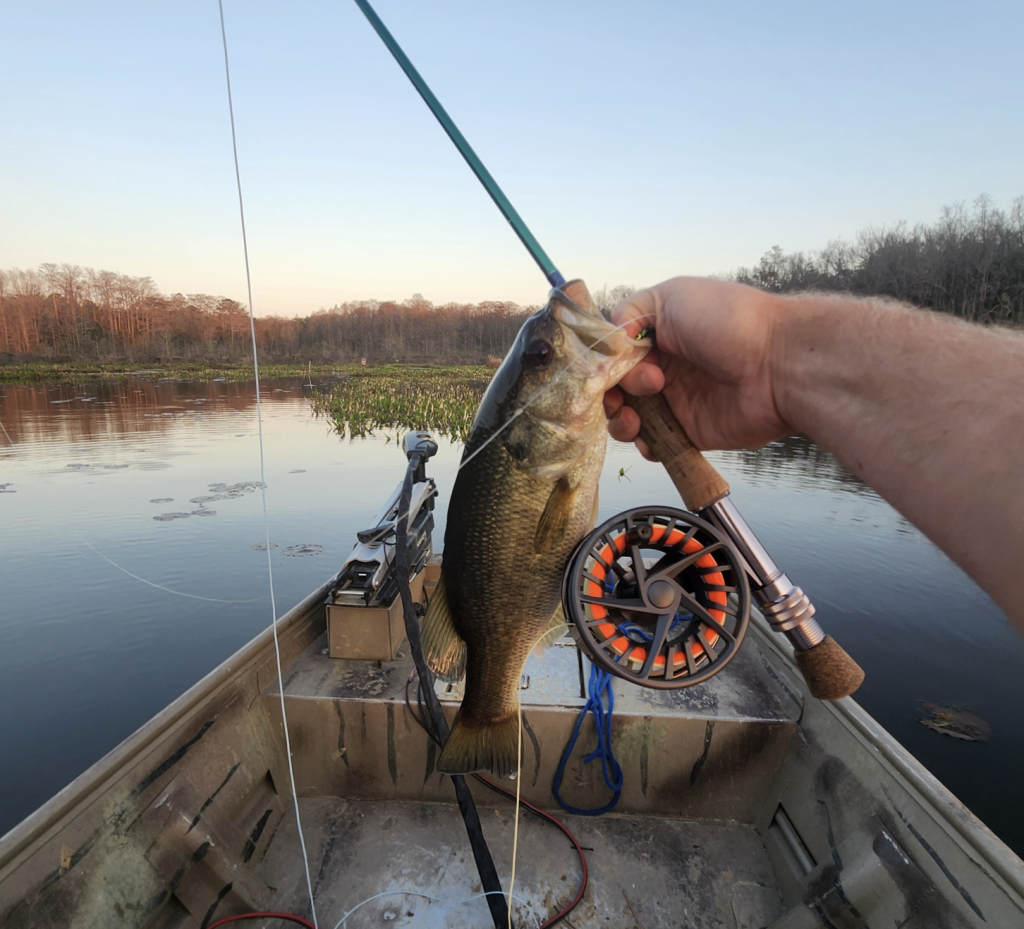
11. Mobile-Tensaw River Delta
The Mobile-Tensaw Delta is one of the most biologically diverse places in North America and the fishing reflects that. The braided channels, backwaters, and brackish transition zones where the Alabama and Tombigbee rivers meet Mobile Bay support a fishery that doesn’t exist anywhere else in the state. Largemouth bass in freshwater sections, redfish and speckled trout moving into the brackish areas with the tides, flounder along the bottom, and catfish throughout the system create a multi-species experience that can shift completely depending on which channel you’re in.
The navigation complexity is real. This is not a place to launch a boat for the first time without a map, a local guide, or both. The channel network is extensive, tidal influence affects water levels and fish location in ways that require understanding, and some sections remain affected by hurricane recovery impacts.
Fall is the prime season when redfish and speckled trout are most active in the brackish sections, but the largemouth bass fishing in the freshwater backwaters holds up year-round. OutdoorAlabama maintains current regulations for the delta system which spans both freshwater and coastal fishing rules depending on location.
Best timing: Fall for redfish and speckled trout, year-round for bass and catfish in freshwater sections.
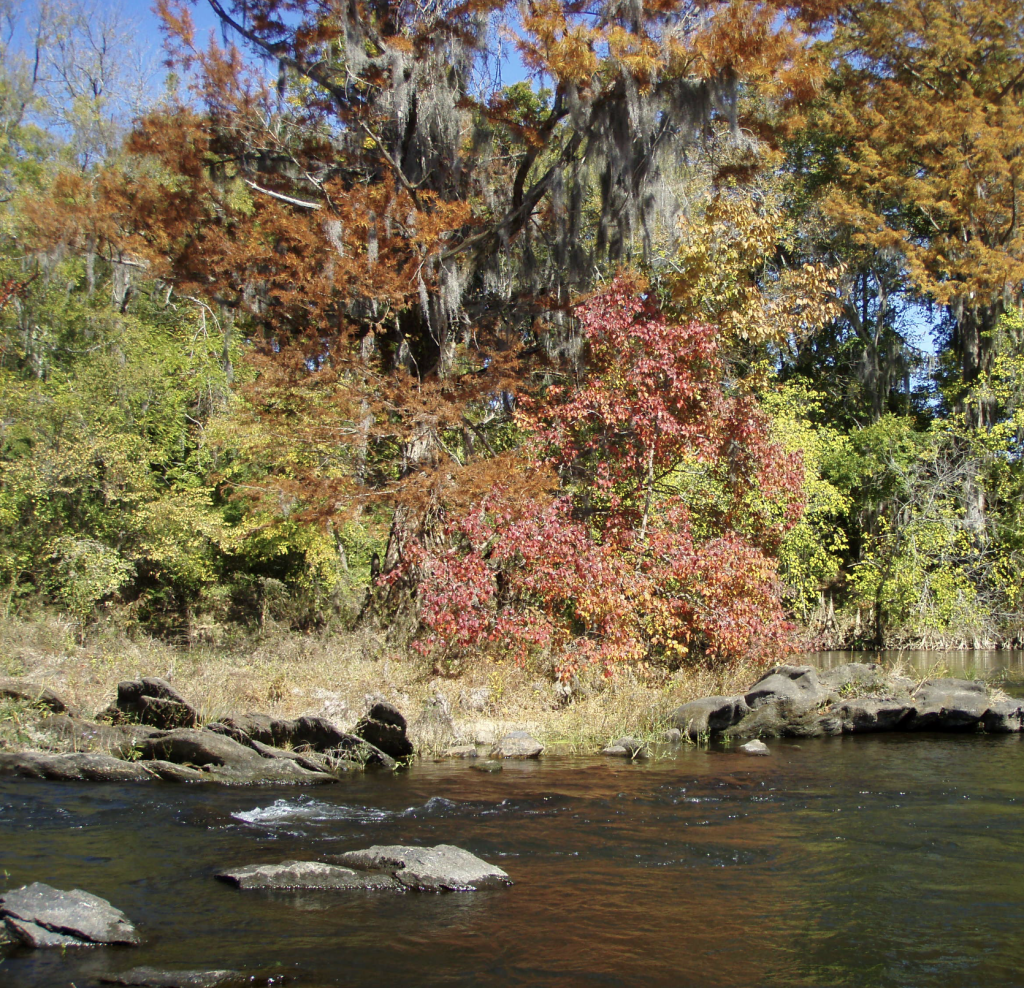
10. Coosa River (Full Chain)
The Coosa River runs from Georgia through central Alabama and its series of impoundments, from Weiss in the north down through Neely Henry, Logan Martin, Lay, Mitchell, and Jordan near Montgomery, creates a connected chain of fishing that gives anglers multiple distinct experiences within a single river system. Spotted bass are the defining species of the Coosa chain and they’re as consistently available and technically interesting as any bass fishery in the state.
Crappie and striped bass are strong throughout the chain, and the specific character of each impoundment, from the shallow vegetated water of Weiss to the clearer rocky sections of Logan Martin, means that anglers who learn the full system have options regardless of season or conditions.
Dam-influenced flows are the constant variable across the chain. Water levels and temperatures respond to generation schedules at each dam, which affects fish behavior in ways that local knowledge addresses more effectively than any general guide can.
Best timing: Spring through summer for spotted bass, year-round for crappie.
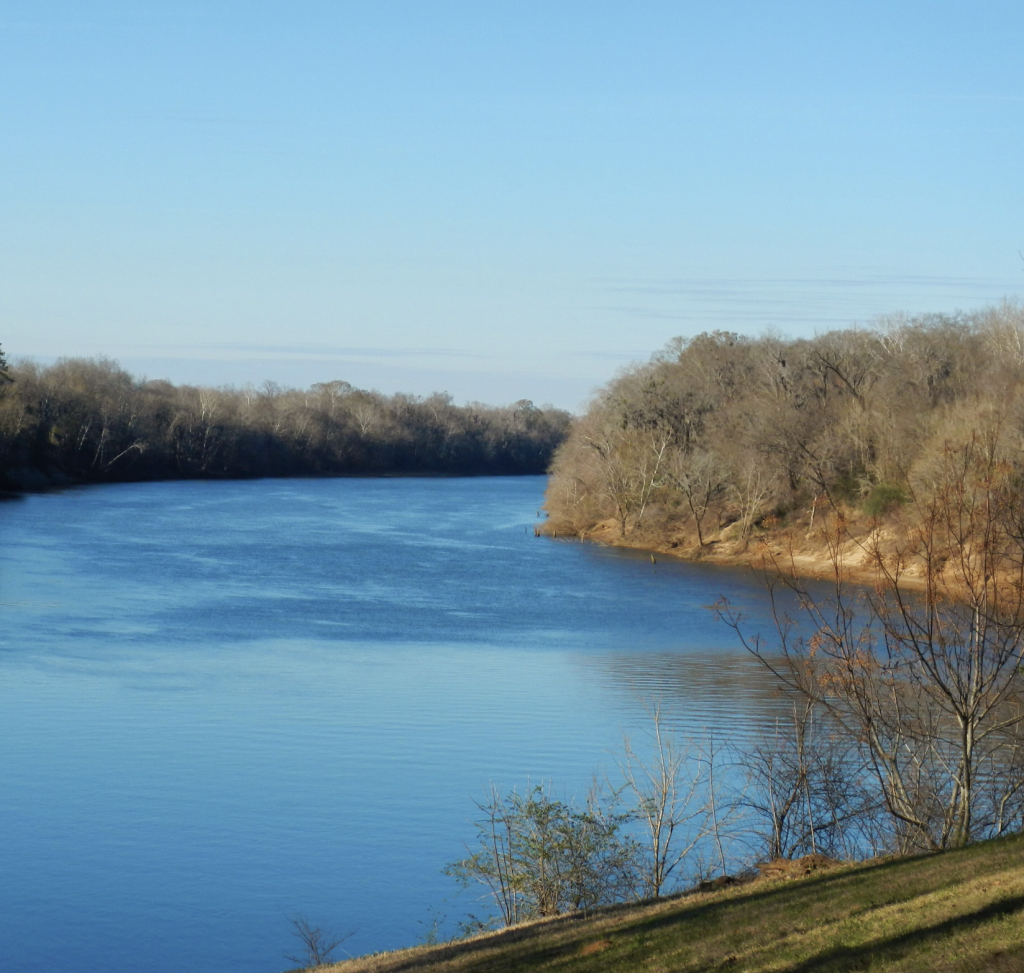
9. Alabama River
The Alabama River runs roughly 315 miles from the confluence of the Coosa and Tallapoosa rivers near Wetumpka to the Mobile-Tensaw Delta, and across that length it produces largemouth and spotted bass, crappie, and catfish in water that sees considerably less pressure than the major reservoirs to the north.
The lower sections of the river near the delta transition are where the fishing gets most interesting, with species diversity increasing as the water moves toward brackish influence. Catfish in the lower Alabama River can be exceptional, with flathead and blue catfish reaching sizes that would be notable on any water.
Water quality varies downstream in ways that are worth checking before a trip, and access in the more remote sections requires more planning than a simple boat ramp stop. The river rewards anglers willing to explore it rather than those looking for easy guaranteed access.
Best timing: Year-round for catfish, spring for bass and crappie.
8. Tennessee River (Guntersville, Wheeler, and Pickwick System)
The Tennessee River itself, as distinct from the individual reservoirs it feeds, is worth understanding as a corridor rather than just a series of lakes. The tailwaters below each dam, the river channel sections between impoundments, and the transition zones where lake and river character blend create fishing opportunities that don’t exist inside the reservoirs themselves.
Walleye and sauger specifically are caught in Tennessee River tailwaters in Alabama in winter numbers that most anglers outside the region don’t associate with southern fishing. Bass, catfish, and crappie round out what’s available throughout the system.
Commercial barge traffic on the navigation channel is a real consideration for boaters on the main river. The productive fishing water is often off the main channel in the backwaters, side channels, and tailrace areas that require navigating around the commercial traffic rather than through it.
Best timing: Winter for walleye and sauger below dams, spring for bass throughout the system.
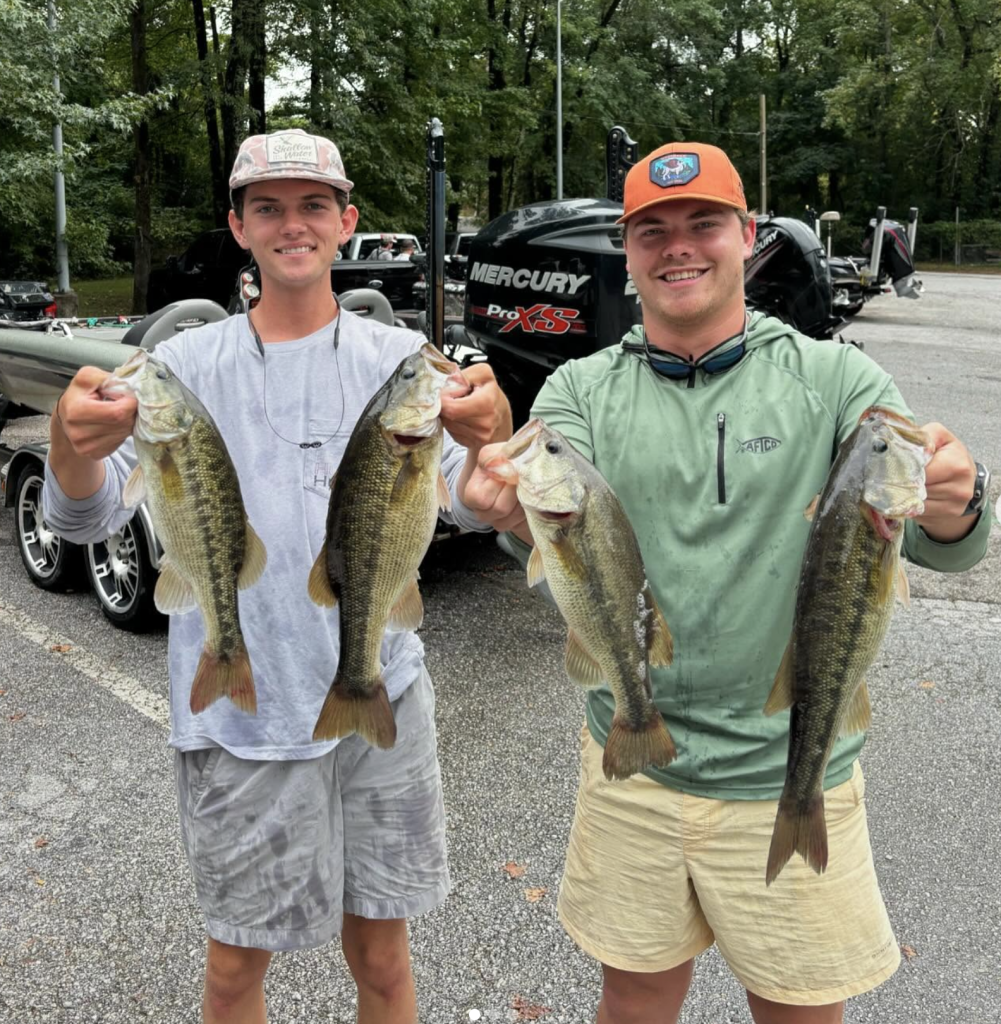
7. Black Warrior River
The Black Warrior River runs through west-central Alabama from the coal fields near Birmingham to its confluence with the Tombigbee near Demopolis, and the lower sections produce reliable bass, crappie, and catfish fishing in a river that doesn’t get the profile it deserves relative to what it holds.
The industrial history of the upper river near Birmingham has affected water quality in sections that are still recovering, and anglers fishing the upper reaches should check current advisories before keeping fish. The lower river sections are considerably cleaner and more productive.
Spring is the peak season for bass and crappie when fish move shallow and the river’s backwater areas become actively productive. The river fishes best from a boat given the bank access limitations, but productive sections are reasonably accessible for anglers who know where to launch.
Best timing: Spring for bass and crappie, year-round for catfish in deeper holes.
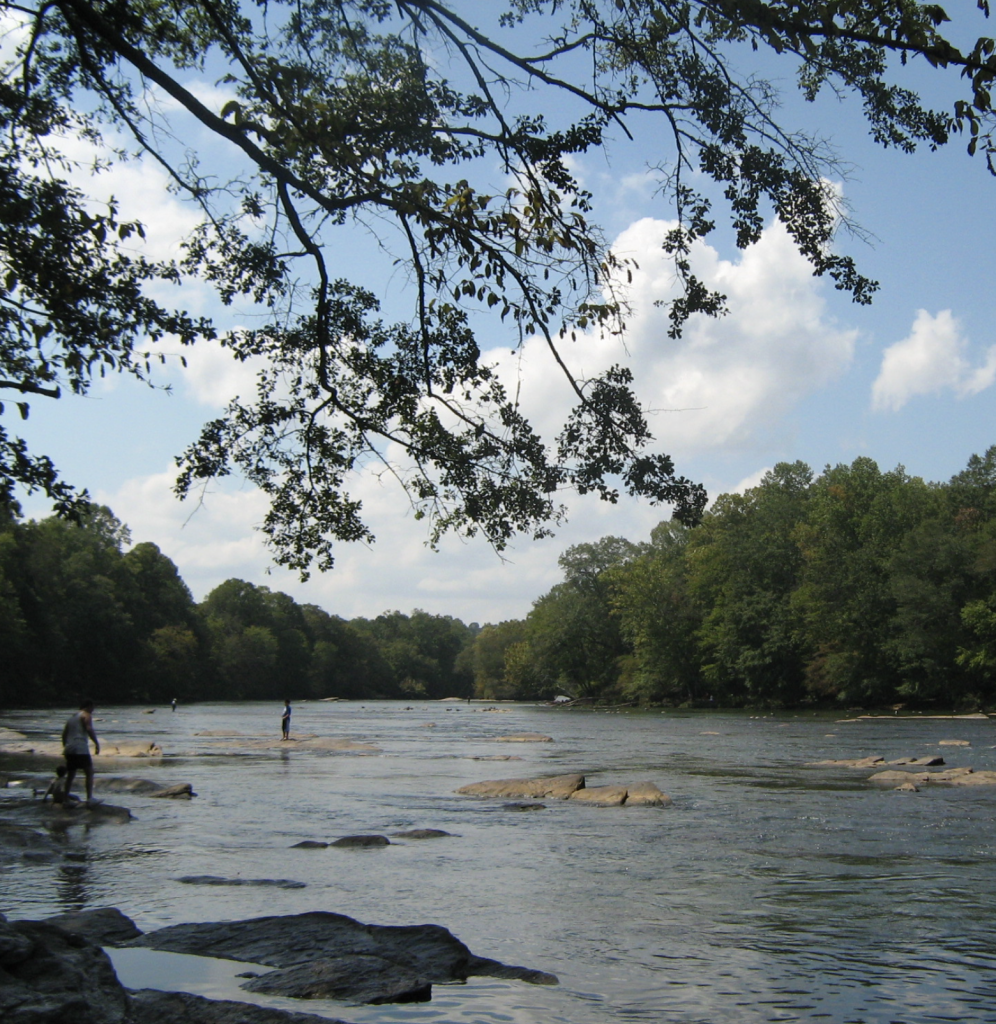
6. Chattahoochee River (Near Lake Eufaula)
The Chattahoochee forms the Alabama-Georgia border in the southeastern part of the state and connects directly to the Lake Eufaula system, which means anglers fishing the reservoir have access to river character that the lake itself doesn’t provide. Bass, crappie, panfish, and catfish are consistent throughout the accessible Alabama sections.
The river fishing during drawdown periods on Eufaula can be genuinely exceptional as fish concentrate in moving water and become easier to pattern than they are in the full lake. Anglers who time a trip to the river sections during a Eufaula drawdown and understand current fishing have an advantage that most visiting anglers miss entirely.
The cross-border regulation situation applies here the same as it does on Lake Eufaula proper. Alabama requires a valid Alabama license for Alabama waters and Georgia requires a Georgia license for Georgia waters, with the state line running through the middle of the river. Know which side you’re on before you drop a line and bring both licenses if you plan to fish both banks.
Best timing: Spring through fall for bass, year-round for catfish, during drawdowns for concentrated fish in moving water.
5. Tombigbee River
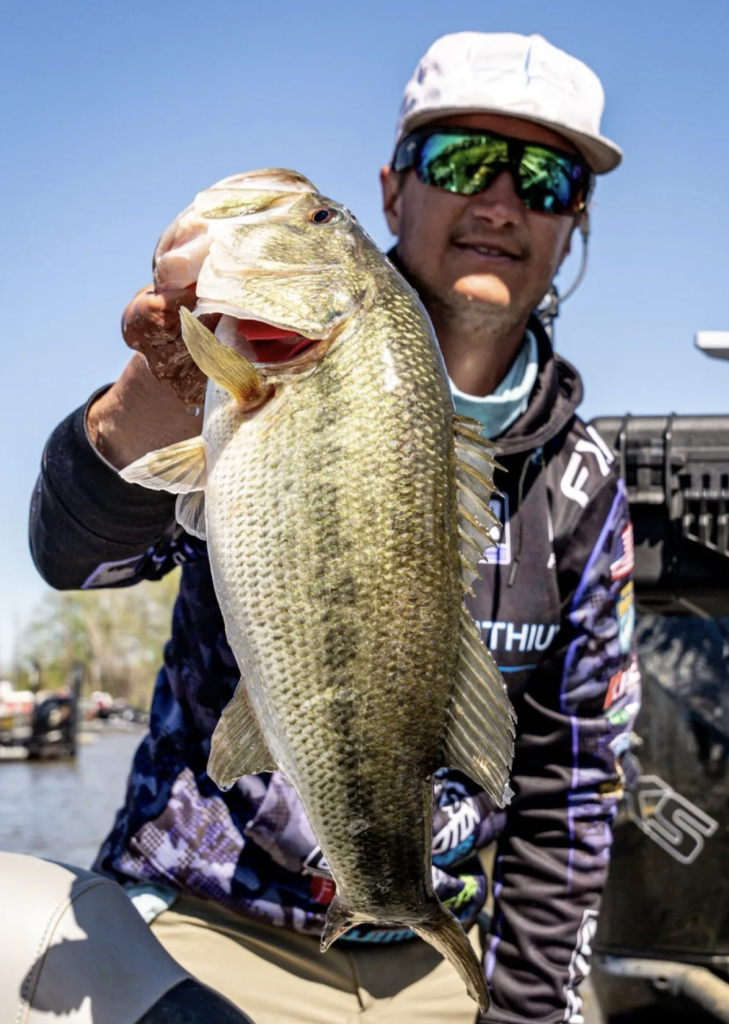
The Tombigbee runs through western Alabama from the Mississippi border south to its merger with the Alabama River, and it produces catfish fishing that serious flathead and blue cat anglers drive significant distances for. The river’s deep holes, submerged structure, and strong current breaks create the kind of habitat that grows large catfish, and the less-pressured lower sections produce fish in the 50-plus pound range with enough regularity to build a reputation.
Bass and crappie are also present and consistently available, but the catfish are the reason the Tombigbee earns its position on this list. The scenic character of the river through the Alabama Black Belt adds something to the experience beyond just the fishing.
Remote access in the upper sections requires more planning than a quick ramp stop. The lower river near Demopolis and below is more accessible and more productive for most visiting anglers.
Best timing: Year-round for catfish, spring for bass and crappie.
4. Sipsey River (Bankhead National Forest)
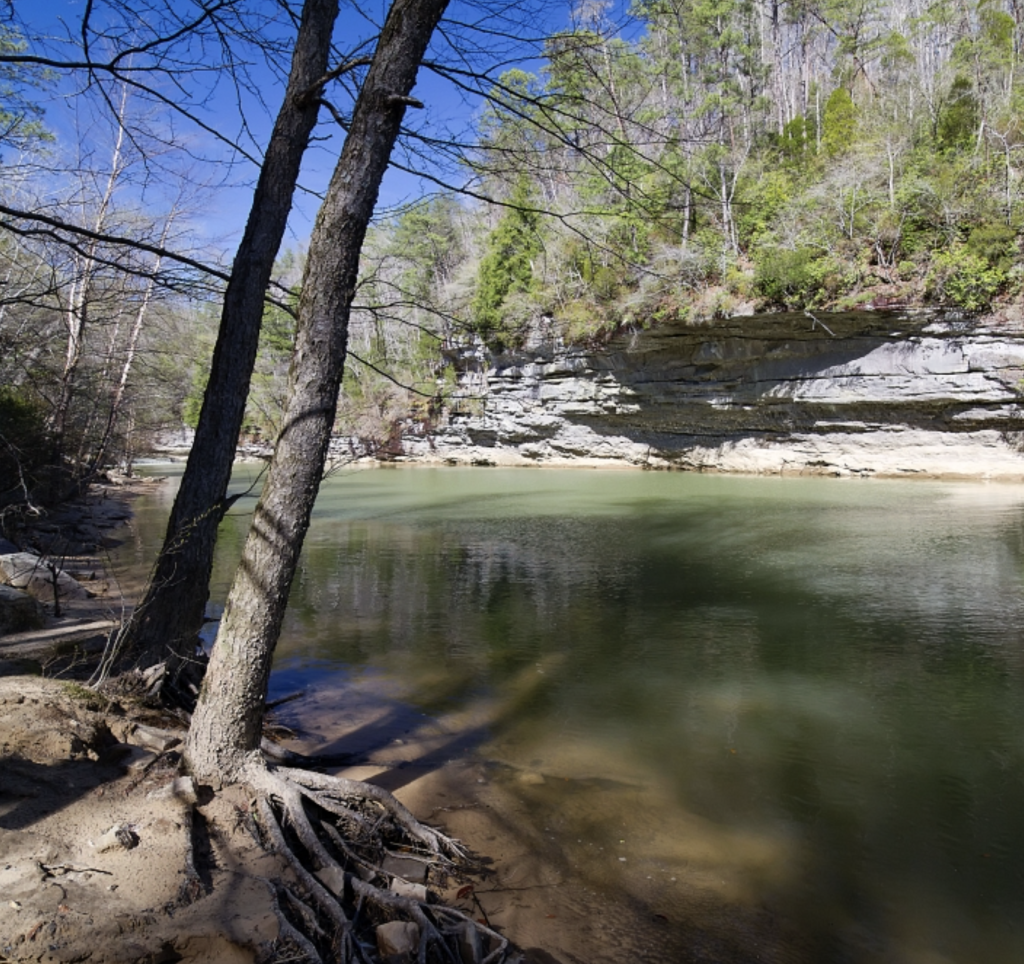
The Sipsey River flows through William B. Bankhead National Forest in northwest Alabama and is one of the most visually remarkable fishing experiences in the state. The river runs through sandstone canyon country with rock overhangs, clear water, and the kind of wilderness character that most people don’t expect to find in Alabama.
Smallmouth bass are the signature species and the river produces them in a setting that rewards anglers willing to wade and paddle rather than run a boat. The wild character here is the point. Sunfish, bream, and various panfish round out the species list in ways that make a full day on the Sipsey productive even when the smallmouth aren’t cooperating.
Limited public access and the requirement to paddle or wade most of the productive water are the honest limitations. This is not a drive-and-fish destination. It’s a destination for anglers who treat the experience as part of what they’re there for, not just an obstacle to getting to the fish.
Best timing: Spring through early summer before water drops too low, fall as temperatures cool.
3. Gulf Coast and Mobile Bay Inshore
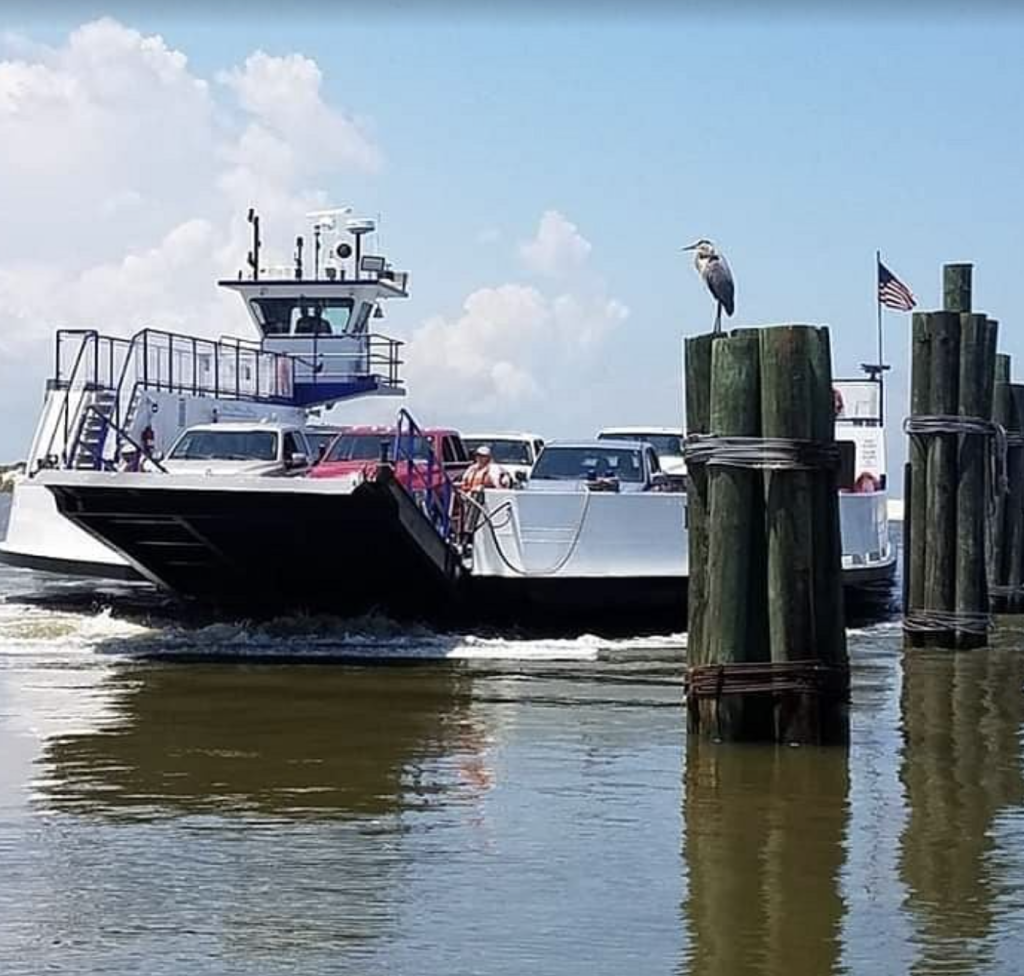
Alabama’s Gulf Coast fishery doesn’t get the national attention that Florida and Louisiana attract, which is partly geography and partly the fishing community’s general preference for not advertising what they have. The inshore fishing around Mobile Bay, the barrier islands, and the connected bays and bayous produces redfish, speckled trout, flounder, and sheepshead in water that’s accessible by relatively modest boats.
Redfish are the anchor species and the slot fishing for bull reds in the fall is as good as anything along the northern Gulf. Speckled trout over the grass flats from late spring through summer, flounder in the passes, and sheepshead around structure give anglers multiple legitimate targets across the same geography.
Red snapper season adds an offshore dimension for those willing to run farther out, with seasonal limits and federal management creating a compressed fishing window that makes the open days intensely productive. Weather dependency and the federal regulation complexity around snapper are the honest challenges.
OutdoorAlabama covers the current saltwater licensing requirements and season dates, which change annually based on allocation decisions.
Best timing: May through September for redfish and speckled trout, fall for bull redfish, spring for flounder.
2. Lake Eufaula (Second Look — Why It’s Nearly #1)
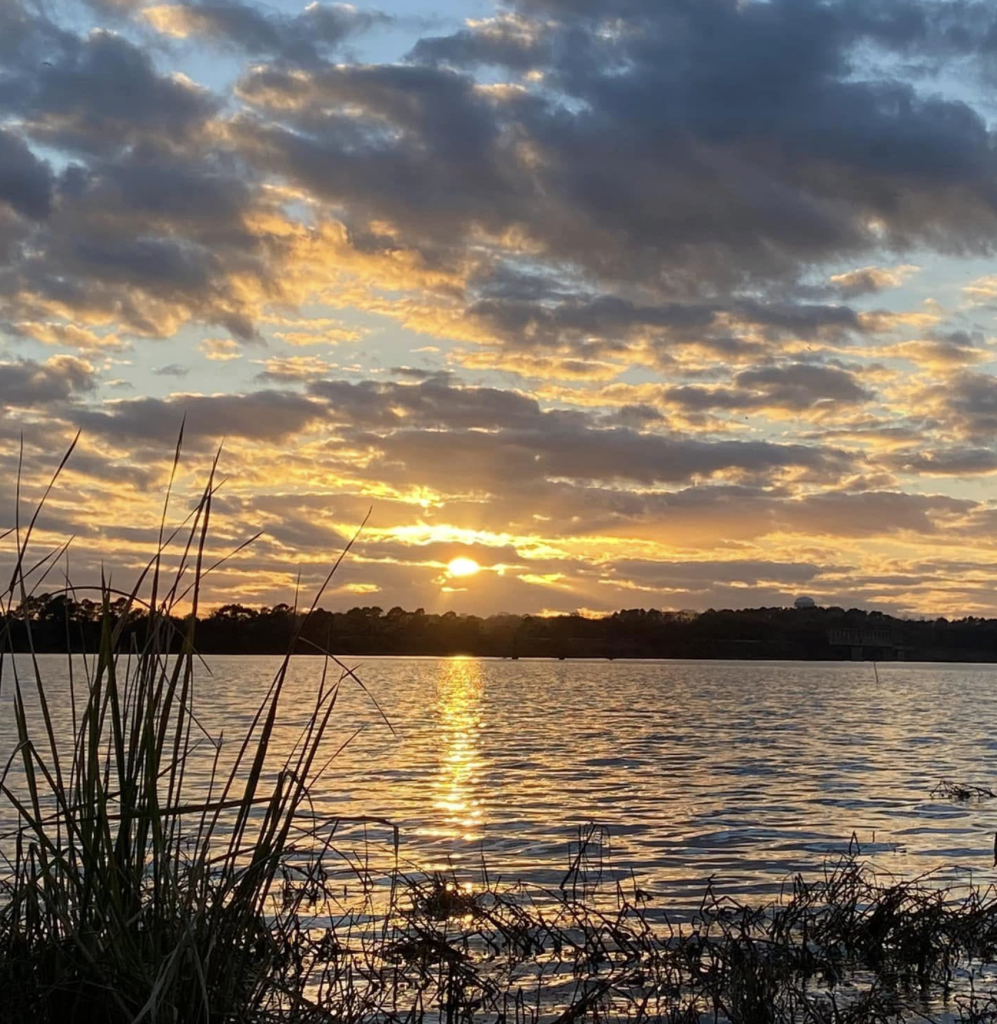
Eufaula deserves a second look because the first mention at #13 covered the basics but didn’t fully account for what makes this lake capable of competing with Guntersville for the top spot in a different year.
The grass fishing specifically on Eufaula is a masterclass in largemouth bass habitat. When the hydrilla and other vegetation is healthy and at the right stage of growth, anglers who can work it effectively catch fish in numbers and sizes that rival any lake in the country. Multiple B.A.S.S. Elite and Major League Fishing events have been decided on Eufaula, and the winning weights reflect a lake that produces at the top of the national scale.
The cross-state access, the range of techniques the habitat supports, and the fact that it fishes well from February through November rather than peaking in a narrow window are what keep it this high. What keeps it at #2 rather than #1 is consistency. Guntersville produces trophy fish across more conditions and more seasons, and the Alabama infrastructure around it is simply more developed. On a great Eufaula week in early spring, though, the conversation is closer than the rankings suggest.
Best timing: Late February through May for the best bass fishing, fall for topwater over grass.
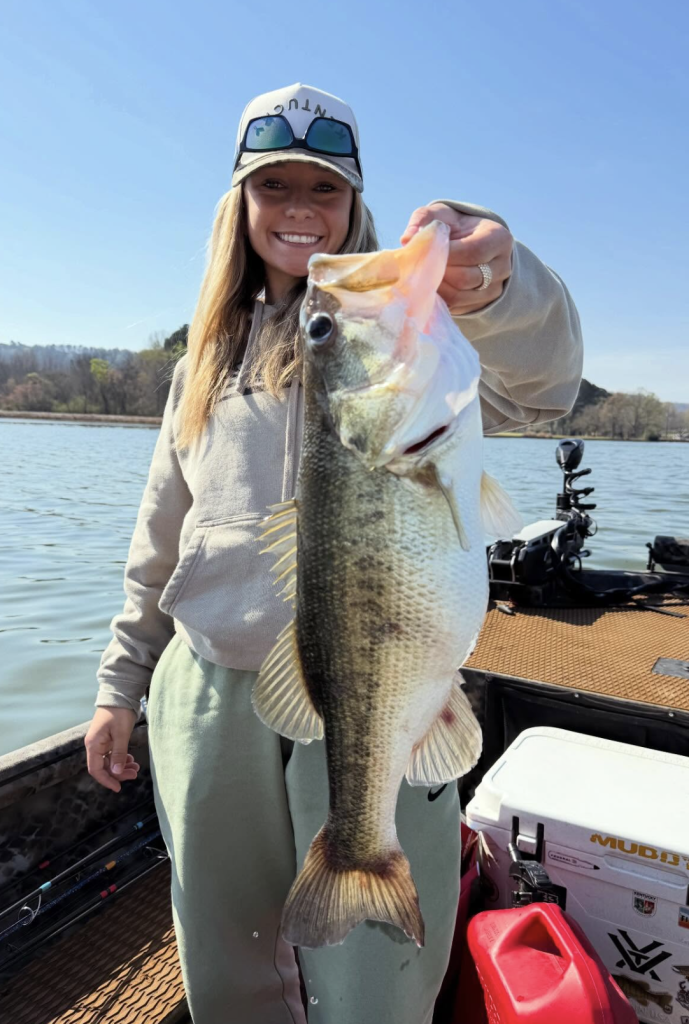
1. Lake Guntersville (Marshall and Jackson Counties)
Guntersville is not the biggest lake in Alabama. It is not the most scenic. It is not the easiest to navigate. It is the best bass lake in the state by a margin that most serious anglers don’t argue about for very long.
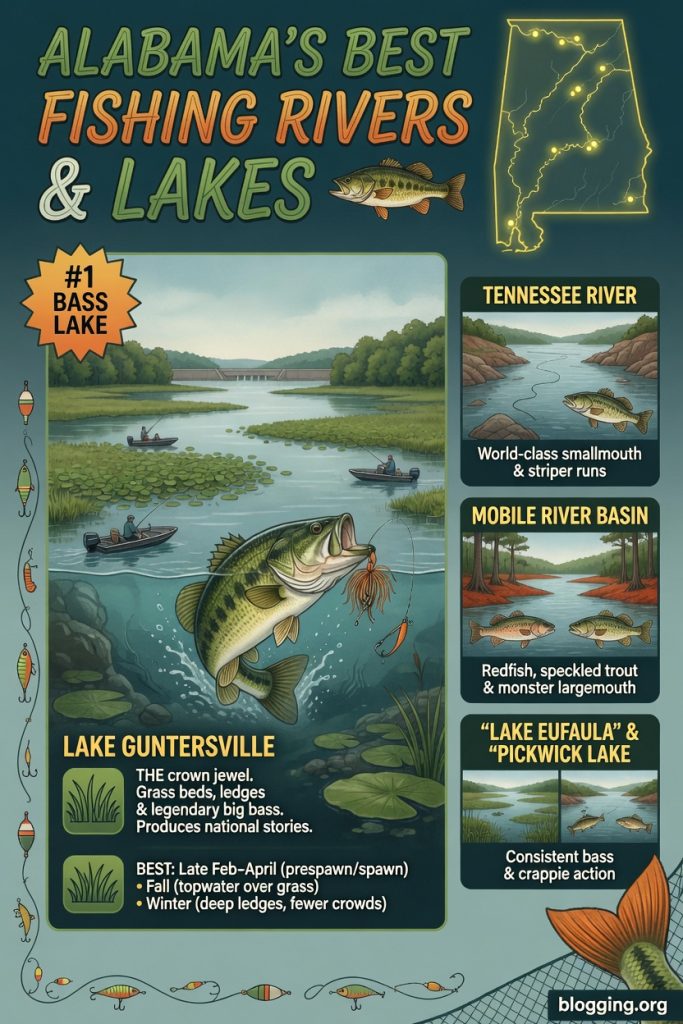
The 69,000 acres of Tennessee River impoundment in north Alabama have produced more tournament wins, more double-digit largemouth, and more return trips from serious anglers than any other water in the state. The habitat variety is the reason. Grass flats that hold fish in spring before the spawn, creek channels that funnel fish movement in summer, deep ledges where bass suspend in the heat, and stump fields that hold fish year-round give Guntersville a productive answer for every season and every technique.
What makes it exceptional beyond the bass: The crappie fishing on Guntersville is world-class and almost secondary in the conversation given the bass reputation. Striped bass and hybrid stripers add a big-fish dimension that anglers targeting largemouth often miss. Catfish in the deeper channels produce through the summer when bass fishing slows in the heat.
What it actually costs to fish it right: A guided full-day trip on Guntersville runs $350 to $500 for two anglers with an experienced local guide. That’s the honest price of getting on the right water in the right conditions on your first trip. Bass tournaments on the lake run most major weekends from February through April, which affects boat traffic and access at ramps significantly. Plan around tournament weekends if you’re looking for an uncrowded experience.
The honest complications: Guntersville is famous enough that it absorbs fishing pressure from multiple states every spring. Invasive aquatic vegetation management is an ongoing challenge, and the debate between anglers who want maximum grass coverage for fish habitat and those managing the lake for navigation and water quality is not resolved. Emergency orders and regulation changes are possible during any season and checking OutdoorAlabama before a trip is not optional.
None of that changes what the lake is. It’s the reason Alabama belongs in the national conversation about bass fishing, the kind of place that produces stories worth telling. If you fish one Alabama lake this year, make it Guntersville. And if you’ve already been, you already know you’re planning to go back.
Best timing: Late February through April for the peak prespawn and spawn largemouth bite. Fall for topwater over the grass. Winter for deep ledge fishing when the crowds thin and the serious anglers remain.
Heart of Dixie Fishing: Trophy Bass, Crappie Capital of the World, and Giant Stripers All in One State
Alabama fishing earns repeat visits. The bass lakes in the Tennessee River valley are some of the best in the country and the crappie and striper fishing across the state is genuinely underrated by out of state anglers who have never made the trip. The variety available within one state is hard to match anywhere else in the southeast.
Lake Guntersville and Wheeler Lake are the two Tennessee River reservoirs that most visiting bass anglers target and both deliver every season. Guntersville for the quality and quantity of largemouth in the grass and structure. Wheeler at over 68,000 acres for the combination of bass, sauger, walleye, and catfish in a lake with enough variety to keep any angler busy for a full week. Pickwick Lake on the Tennessee River where Alabama, Tennessee, and Mississippi meet is another one worth knowing about with trophy largemouth, spotted bass, and crappie in moving TVA water.
Weiss Lake is the destination for crappie anglers from the surrounding states and it produces year after year. The timber fishing in spring when fish stack in the brush is some of the most fun fishing in the southeast and even beginning anglers have outstanding days when the bite is on. The lake also holds largemouth bass and catfish that add variety when the crappie are not cooperating.
Lewis Smith Lake is the sleeper that serious anglers outside Alabama have not fully discovered yet. Striped bass over 50 pounds in clear mountain reservoir water is a completely different fishing experience from anything you find on the Tennessee River reservoirs and the spotted bass fishing on the rocky structure here is some of the best in the state.
Check regulations before any Alabama fishing trip at the Alabama Department of Conservation and Natural Resources at outdooralabama.com. Fishing licenses are required for anyone 16 and older and regulations vary by lake for bass size limits and striper possession rules. Lewis Smith Lake and Lake Martin both have special size and possession limits for striped bass that are worth knowing before you go.
Alabama fishing rewards the anglers who dig past the most obvious destinations. There are lakes and river systems in this state that see very little pressure from out of state anglers and produce fish at a level that would surprise most people. Come with a plan and leave with a longer list of water you still need to fish.

Species Guides Worth Reading
Alabama has an excellent mix of species and these guides are worth reading before your trip.
The Largemouth Bass Fishing Guide covers the seasonal patterns and grass and structure presentations that work on the Alabama Tennessee River reservoirs like Guntersville and Wheeler where bass respond differently to the changing vegetation and current conditions throughout the year.
Crappie fishing is the most beloved pursuit at Weiss Lake and across dozens of other Alabama reservoirs and the Complete Crappie Fishing Guide covers the timber fishing techniques and jig and minnow presentations that produce the most consistent catches in the submerged brush that defines the best Alabama crappie fishing.
The Catfish Fishing Guide is worth reading before fishing the Tennessee River, Wheeler Lake, or any of the Alabama river systems for blue and flathead catfish. Alabama rivers produce trophy sized catfish and the guide covers the live bait and skipjack herring presentations that produce the biggest fish.
The Bluegill Fishing Guide is worth reading before targeting bream across Alabama’s lakes and reservoirs. Alabama bream get big in the warm fertile water and the light tackle presentations in the guide work well in the grass beds and timber that hold the biggest fish in lakes like Guntersville and Weiss.

More Fishing Resources
If Alabama has you planning a fishing trip a few of these posts are worth bookmarking before you go.
The Best Fishing Locations in America covers the top freshwater destinations across the country and Alabama deserves to be on that list for Lake Guntersville alone which is considered one of the best bass lakes in America.
If you are building a Fishing Bucket List, Alabama is a solid state for knocking species off the list. Trophy largemouth from Guntersville, a 50 pound striper from Lewis Smith Lake, world class crappie from Weiss Lake, and giant catfish from the Tennessee River are all realistic targets here. That post covers the species every serious angler should catch at least once.
