
The 21 Best Fishing Lakes and Rivers in West Virginia

This post may contain affiliate links. We may earn a commission at no extra cost to you. See our full disclosure.
Not talking about fishing in West Virginia when discussing excellent fishing states is a mistake. The Mountain State has incredible fishing opportunities that deserve far more attention. Trophy smallmouth bass in the New River, record-setting catfish from the Kanawha, the state record muskie from Stonecoal Lake at 52.7 inches, wild brook trout in the mountain headwaters, and Summersville Lake earning the nickname Little Bahamas of the East for its clear water and walleye fishing. There is a lot here for any serious angler.
Summersville Lake has earned its reputation for a reason. At 2,700 acres and with 60 miles of shoreline, Summersville Lake is the largest in the entire state. The waters are often likened to the Caribbean and the state record walleye at nearly 19 pounds came from these waters. The fishing is great for smallmouth and largemouth bass as well as crappie and it is an excellent destination for year-round fishing. The scenic limestone cliffs make it one of the best fishing destinations in the entire Appalachian region.

For enthusiasts in the mid-Atlantic region, the New River is the ultimate destination for smallmouth bass. This National Park river running through a deep scenic canyon in Fayette County produces trophy smallmouth in numbers that few rivers east of the Mississippi can match. A protected slot limit keeps the bigger fish in the river and walleye fishing is also excellent with multiple quality sections running through Raleigh and Fayette counties.
The Kanawha River flows through nearly 100 miles of the state and has become a premier catfish fishery by any measure. Flathead and blue catfish over 40 pounds are caught regularly and the blue catfish state record has been broken here multiple times in recent years. The tailwater areas below Marmet and Winfield Locks and Dams are the most productive spots and the fishing is best at night when big catfish are actively feeding.
Stonecoal Lake remains one of the top muskie lakes in the state, having produced the record muskellunge at 52.7 inches in 2017. The lake has a 10 horsepower limit that keeps the water undisturbed and fish growing to trophy sizes. The Elk River below Sutton Dam is where the trout fishing shines with around 10,000 trout stocked annually and excellent fly fishing at spots like Sulphur Run and Clay Banks. This guide covers all of it.

21. Boley Lake (Babcock State Park, Fayette County)
Boley Lake is a small, quiet lake inside Babcock State Park, and it earns its place on this list mainly because of how approachable it is. Bass, panfish, and stocked trout make it a workable spot for a half-day trip, and the state park setting means the surrounding area is maintained and accessible in a way that some more remote spots aren’t. It’s genuinely pretty in the way that Fayette County tends to be.
The honest truth is that this is a recreational lake more than a serious fishing destination. You’re not going to pull a trophy out of Boley. But for families, beginners, or anyone who wants a low-pressure afternoon near the water, it delivers exactly what it promises. The Gold Rush stocking events that WVDNR runs bring trout in during cooler months, which gives it a short window where the fishing gets considerably more interesting.
🎣 What You’ll Catch
- Largemouth Bass ⭐⭐⭐⭐
- Bluegill / Panfish ⭐⭐⭐⭐
- Rainbow Trout (stocked) ⭐⭐⭐⭐
- Channel Catfish ⭐⭐⭐
📅 Best Time To Fish
- Spring: Excellent (stocking + active fish)
- Summer: Good
- Fall: Good (lingering trout)
🏆 Trophy Potential – 5/10 (Small lake, more recreational/family-focused; no big trophies expected.)

20. Beech Fork Lake (Wayne County)
Beech Fork sits in Wayne County in the southwestern corner of the state, tucked into a state park that most people outside the region have never heard of. It covers around 720 acres and holds largemouth and hybrid bass, crappie, catfish, sauger, and bluegill. The state park has decent amenities and the setting is pleasant without being dramatic.
There are a few things worth knowing before you go. Horsepower restrictions on motors limit what kind of boat makes sense here, so plan accordingly. Some anglers describe stretches of it as shallow and murky depending on conditions, which affects visibility fishing and can make certain techniques less effective. It’s not a destination lake but it’s a solid option if you’re in the Huntington area and don’t want to drive two hours for a fishing fix.
🎣 What You’ll Catch
- Largemouth Bass / Hybrids ⭐⭐⭐⭐⭐
- Crappie ⭐⭐⭐⭐
- Channel Catfish ⭐⭐⭐⭐
- Bluegill ⭐⭐⭐
- Sauger / Saugeye ⭐⭐⭐
📅 Best Time To Fish
- Spring: Excellent
- Summer: Good
- Fall: Excellent
🏆 Trophy Potential – 6/10 (Solid bass/crappie; horsepower limits and murkiness cap bigger potential.)

19. Cacapon Lake (Morgan County)
Cacapon Lake sits inside Cacapon Resort State Park in the Eastern Panhandle and is the kind of spot that gets used more by park guests than by dedicated anglers making a special trip for it. Bass, panfish, and stocked trout are all present, and the access is easy enough that you don’t need a boat to have a productive time along the shoreline.
The main limitation here is that it’s a park lake first and a fishing destination second. Weekend pressure from general recreation can make it feel crowded, and the fish don’t have the size potential of the bigger reservoirs and rivers elsewhere in the state. But the Eastern Panhandle is beautiful country and if you’re already in the area, it’s worth bringing a rod.
🎣 What You’ll Catch
- Largemouth Bass ⭐⭐⭐⭐
- Bluegill / Panfish ⭐⭐⭐⭐
- Rainbow Trout (stocked) ⭐⭐⭐⭐
- Channel Catfish ⭐⭐⭐
📅 Best Time To Fish
- Spring: Excellent (stocking)
- Summer: Good
- Fall: Good
🏆 Trophy Potential – 5/10 (Park lake with recreation pressure; decent panfish/bass but not trophy-sized.)

18. Mountwood Park Lake (Wood County)
Mountwood is a 72-acre lake in Wood County near Parkersburg, inside a park system that’s more commonly used for hiking and mountain biking than fishing. But the bass fishing here is better than the size suggests, and because most people show up for the trails, you often have the water almost entirely to yourself. That alone makes it worth knowing about.
Kayak or canoe fishing is ideal here. The lake is too small for a big boat to make sense, but paddling the shoreline and working structure in the coves produces consistent largemouth action. If you’re in the Parkersburg area and you want somewhere quiet that doesn’t require sharing water with a crowd, Mountwood is one of those places you file away and keep coming back to.
🎣 What You’ll Catch
- Largemouth Bass ⭐⭐⭐⭐⭐
- Bluegill ⭐⭐⭐⭐
- Channel Catfish ⭐⭐⭐
- Rainbow Trout (stocked) ⭐⭐⭐
- Tiger Muskie ⭐⭐⭐
📅 Best Time To Fish
- Spring: Excellent
- Summer: Good (kayak/canoe)
- Fall: Excellent (muskie)
🏆 Trophy Potential – 6/10 (Surprisingly good bass for size; muskie adds interest but low pressure helps.)

17. North Bend Lake (Ritchie County)
North Bend covers about 235 acres near Parkersburg and punches a little above its weight for a lake that doesn’t get much outside attention. The flooded timber provides solid structure for bass and crappie, muskie show up with enough regularity to keep things interesting, and catfish are consistent through the warmer months. The family-friendly atmosphere and good state park amenities make it a reasonable destination if you’re traveling with people who want options beyond just fishing.
What it lacks is the size to produce the kind of big-water variety you get further up this list. On a busy summer weekend it can feel more crowded than a 235-acre lake should. But on a weekday in early fall when the crappie are moving shallow and the muskie are getting active, it’s a genuinely pleasant place to spend the day.
🎣 What You’ll Catch
- Largemouth Bass ⭐⭐⭐⭐⭐
- Crappie ⭐⭐⭐⭐
- Channel Catfish ⭐⭐⭐⭐
- Muskie ⭐⭐⭐
📅 Best Time To Fish
- Spring: Excellent
- Summer: Good
- Fall: Excellent (crappie/muskie)
🏆 Trophy Potential – 7/10 (Punches above weight with structure; muskie and bass quality.)


16. Burnsville Lake (Braxton County)
Burnsville in Braxton County gets overshadowed by nearby Stonewall Jackson, which is understandable given Stonewall’s reputation, but Burnsville deserves more credit than it gets. It covers roughly 1,000 acres depending on pool levels, holds bass including some legitimate trophy-sized fish, muskie, crappie, walleye, and catfish, and the tailwaters below the dam add a completely different fishing experience in the same visit.
The tailwater section holds stocked trout during cooler months and is fishable from the bank without a boat, which makes it unusually accessible by West Virginia standards. WV Tourism covers it but it doesn’t get the same traffic as the bigger names. If you’re planning a central West Virginia trip around Stonewall Jackson, add a half day at Burnsville. The drive is short and the experience is different enough to be worth it.
🎣 What You’ll Catch
- Largemouth Bass ⭐⭐⭐⭐⭐
- Muskie ⭐⭐⭐⭐
- Crappie ⭐⭐⭐⭐
- Walleye ⭐⭐⭐
- Catfish ⭐⭐⭐
📅 Best Time To Fish
- Spring: Excellent (bass)
- Summer: Good
- Fall: Excellent
🏆 Trophy Potential – 8/10 (Trophy bass and state-record muskie potential; tailwaters add variety.)

15. Tygart Lake (Taylor and Barbour Counties)
Tygart Lake sits in the Allegheny foothills and covers around 1,750 acres of deep, clear reservoir water with the kind of structure that bass and muskie like. The muskie fishing specifically has a following among people who make long drives just for the chance at a big fish, and the coves hold quality largemouth that don’t see as much pressure as some of the more publicized lakes in the state. Crappie fishing is consistently good in spring.
The depth that makes Tygart good for certain species also makes it harder for bank anglers to find productive water. A boat helps significantly here. Water level fluctuations tied to dam operations can shift where fish are holding from trip to trip, which is worth knowing before you plan a specific approach. The Tygart Lake State Park has lodging if you want to stay close to the water and fish it over multiple days.
🎣 What You’ll Catch
- Largemouth / Smallmouth Bass ⭐⭐⭐⭐⭐
- Muskie ⭐⭐⭐⭐⭐
- Crappie ⭐⭐⭐⭐
- Walleye ⭐⭐⭐
📅 Best Time To Fish
- Spring: Excellent
- Summer: Good (smallmouth)
- Fall: Excellent
🏆 Trophy Potential – 8/10 (Strong muskie following and quality bass in deep structure.)

14. Spruce Knob Lake (Pendleton County)
Spruce Knob Lake is only about 23 acres, sitting near the summit of Spruce Knob at nearly 4,000 feet elevation. It holds stocked trout, some bluegill, and small smallmouth, and it fishes like you’d expect a high mountain lake to fish: calm, cold, and unhurried. You’re not going to put in a long day here. It’s more of a destination you build a hike around.
What earns it a spot on this list is the setting, which is genuinely unlike anything else in West Virginia. Red spruce forest, high elevation views, and water that looks almost alpine make it the most atmospheric fishing experience in the state. The WV Tourism Potomac Highlands section covers the area well if you’re planning a trip. Go for the scenery, stay for a few hours of trout fishing, and leave feeling like you were somewhere most people will never bother to reach.
🎣 What You’ll Catch
- Rainbow / Brown Trout (stocked) ⭐⭐⭐⭐⭐
- Bluegill / Small Smallmouth ⭐⭐⭐
📅 Best Time To Fish
- Spring: Excellent (stocking)
- Summer: Good (high elevation cold water)
- Fall: Excellent
🏆 Trophy Potential – 7/10 (Trophy trout possible due to cold water/carryover; scenic but small lake.)

13. Blackwater River (Tucker County)
The Blackwater River runs through Tucker County and the Blackwater Falls State Park area through canyon terrain that makes accessing the best water an event in itself. It holds trout in the deeper pools and canyon sections, and the scenery is the kind that makes you want to fish slowly just to stay in it longer. Catch-and-release is recommended in certain sections, which keeps the fish population in better shape than many similar streams.
The high elevation and cold water limit the season in a practical sense. This is not a year-round destination. Come in late spring through early fall and work the canyon pools carefully. The remote feel is real here even though you’re close to state park infrastructure, which is a combination that’s harder to find than it sounds. Check WVDNR for the current catch-and-release boundaries before you go, because they matter on this one.
While You're Here
69 of the Most Insane Things Found on Facebook Marketplace
Real listings. Real people. Unreal decisions.
🎣 What You’ll Catch
- Rainbow / Brown Trout ⭐⭐⭐⭐⭐
- Brook Trout ⭐⭐⭐⭐
📅 Best Time To Fish
- Spring: Excellent
- Summer: Good (colder canyon sections)
- Fall: Excellent
🏆 Trophy Potential – 7/10 (Catch-and-release helps quality; canyon access limits pressure.)
12. Cranberry River (Monongahela National Forest)
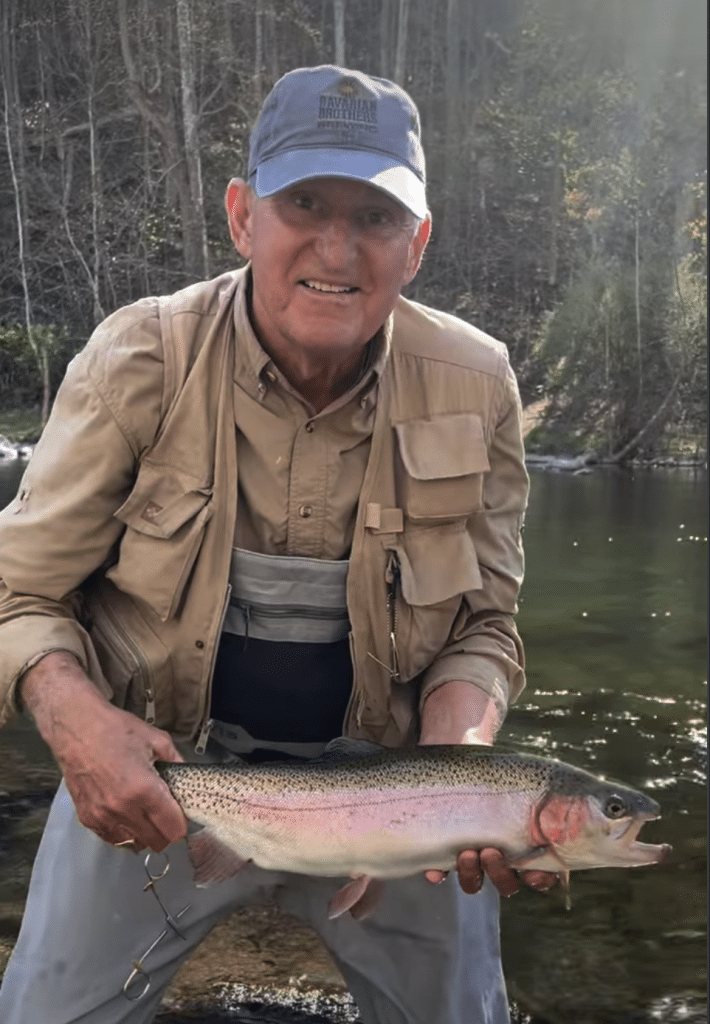
The Cranberry River in Nicholas and Webster counties is one of those trout streams that fly fishers find and then get quiet about. It runs through the Monongahela National Forest with fly-fishing-only sections that hold rainbow, brown, and brook trout in water that stays cold and clear even in summer. The insect hatches are legitimate, the fish are educated, and the surroundings feel as remote as anything you’ll find in the eastern United States.
The backstory matters here: parts of the Cranberry were historically acidic from natural and mining sources, and WVDNR has done liming work over the years to restore the pH and bring the fish back. That recovery is ongoing, which means it fishes better now than it did a decade ago and will likely continue to improve. Getting there takes effort. That’s exactly the point. WVDNR’s rivers and streams page has the specifics on access and regulations.
🎣 What You’ll Catch
- Rainbow / Brown / Brook Trout ⭐⭐⭐⭐⭐
📅 Best Time To Fish
- Spring: Excellent (hatches + stocking)
- Summer: Good (fly fishing)
- Fall: Excellent
🏆 Trophy Potential – 8/10 (Restored, educated fish, remote sections produce quality.)

11. Potomac River (WV Section)
The stretch of the Potomac forming West Virginia’s eastern border gets overlooked because most of the fishing conversation about this river happens in Maryland and Virginia. But the West Virginia sections hold smallmouth bass, largemouth, walleye, channel and flathead catfish, and the trophy catfish potential in the deeper pools is the kind of thing that brings anglers back year after year without making a lot of noise about it.
Access varies by section and the best water usually requires a boat to reach effectively. The river is large enough that bank fishing alone won’t show you everything it has to offer, and it can be unforgiving if you’re not reading the structure correctly. Fish consumption advisories exist in some areas, so check current WVDNR guidance before keeping anything. At its best the Potomac fishes like a big river should: varied, unpredictable, and capable of genuinely surprising you.
🎣 What You’ll Catch
- Smallmouth Bass ⭐⭐⭐⭐⭐
- Largemouth Bass ⭐⭐⭐⭐
- Walleye ⭐⭐⭐
- Channel / Flathead Catfish ⭐⭐⭐⭐⭐
📅 Best Time To Fish
- Spring: Excellent
- Summer: Good
- Fall: Excellent
🏆 Trophy Potential – 9/10 (Trophy catfish in pools; solid smallmouth.)

10. South Branch Potomac River (Eastern Panhandle)
The South Branch runs through the Eastern Panhandle and Pendleton County through terrain that makes you want to pull over every half mile. It’s primarily a smallmouth river with some stretches that feel genuinely remote even though you’re never that far from a paved road. The smallmouth here aren’t enormous by West Virginia standards, but they’re plentiful, and the river is beautiful enough that a slow day still feels like a good day.
Wading is the move on the South Branch. The bottom is rocky, the current is manageable in most places during normal flows, and you can cover a lot of good water on foot without needing a boat. Trout show up in the upper sections where the water stays cooler. It sits in the middle of this list mainly because the fish size doesn’t quite match what you’ll find on the rivers further down, but for a wade-fishing experience in a setting this pretty, it’s hard to argue against.
🎣 What You’ll Catch
- Smallmouth Bass ⭐⭐⭐⭐⭐
- Trout (upper sections) ⭐⭐⭐⭐
📅 Best Time To Fish
- Spring: Excellent
- Summer: Good
- Fall: Excellent (wading)
🏆 Trophy Potential – 7/10 (Plentiful smallmouth; not the biggest but scenic wading.)

9. Kanawha River
The Kanawha is not a pretty river in the way that some West Virginia water is. It runs through Charleston and the industrial Kanawha Valley, and the landscape along its banks tells the story of the state’s chemical and manufacturing history plainly and without apology. None of that changes the fact that it produces some of the biggest catfish in the entire state. Blue catfish, flathead catfish, and channel cats all live here, and the state records tell you something real about the size of fish this river holds. Lock tailwaters concentrate fish in predictable spots that experienced anglers work hard.
The honest conversation about the Kanawha involves fish consumption advisories that have been in place for years due to dioxin and other industrial contaminants. Most serious anglers here practice strict catch and release, which is easy to commit to when you’re handling a fish that big anyway. The WVDNR fall fishing guide covers walleye and catfish timing specifically. If trophy catfish are what you’re after and you can make peace with the industrial setting, this river is exceptional at what it does.
Reader Favorite
The "Phone Money" Trick Our Readers Keep Writing In About
Every week we get emails asking the same thing: is there a legit way to make extra money without taking on a second job? The answer that keeps coming back from readers is reward apps that pay real cash for things you're probably already doing on your phone, like answering surveys or playing games while the TV is on.
One reader told us she covers most of her monthly streaming bills this way. Another uses his payouts to pad the grocery budget. It won't replace a paycheck, but an extra $50 to $100 a month for downtime you'd spend scrolling anyway is hard to argue with.
- Free $5 signup bonuses just for joining
- Cash out via PayPal, check, or gift card
- No fees, no experience, nothing to buy
We compared the highest-rated options so you don't have to dig: see the best ways to make money from your phone →
We may earn a commission if you sign up through a link on this page.
🎣 What You’ll Catch
- Channel / Blue / Flathead Catfish ⭐⭐⭐⭐⭐
- Walleye ⭐⭐⭐⭐
📅 Best Time To Fish
- Spring: Excellent
- Summer: Good
- Fall: Excellent (catfish)
🏆 Trophy Potential – 9/10 (Some of the biggest catfish in the state; lock tailwaters.)

8. Cheat Lake (Monongalia County)
Cheat Lake has one of the more remarkable comeback stories in West Virginia fishing. Acid mine drainage essentially killed it for decades. The water was so acidic that almost nothing could survive in it. Conservation work turned it around, and today it holds smallmouth bass, largemouth, walleye, yellow perch, and crappie in water that actually supports a functioning fish population again. Knowing that history makes fishing it feel different in a way that’s hard to explain.
It’s best from a boat given the shape of the 26-mile shoreline and how it sits in the surrounding hills. It can get choppy in wind and a small boat will know it. The smallmouth recovery is genuinely impressive, and the walleye fishing holds up well through the colder months. Cheat Lake’s fishing resources are worth reading before a first trip. People who write this lake off based on its old reputation are missing out on one of the better all-around lake fisheries in the state.
🎣 What You’ll Catch
- Smallmouth Bass ⭐⭐⭐⭐⭐
- Largemouth Bass ⭐⭐⭐⭐
- Walleye ⭐⭐⭐⭐
- Crappie ⭐⭐⭐⭐
📅 Best Time To Fish
- Spring: Excellent
- Summer: Good
- Fall: Excellent
🏆 Trophy Potential – 8/10 (Strong smallmouth recovery; all-around fishery.)

7. Gauley River
The Gauley is known mostly for whitewater, which means the fishing gets overlooked by people who haven’t dug into it. Below the rapids and in the calmer stretches, there’s legitimate smallmouth bass action with walleye mixed in and some sections that hold muskie. The scenery is spectacular in a way that feels almost unfair for a river that most people think of as a rafting destination.
Access requires more effort than most spots on this list. Getting to the best water means hiking or floating, and floating the Gauley is not something you do casually without experience or a guide. But the anglers who put in the work to reach the less accessible sections tend to find less pressure and bigger fish. The WVDNR rivers and streams page covers access points and regulations. If you like your fishing to feel like an adventure rather than a day trip, the Gauley is the river for that.
🎣 What You’ll Catch
- Smallmouth Bass ⭐⭐⭐⭐⭐
- Walleye ⭐⭐⭐
- Muskie ⭐⭐⭐
📅 Best Time To Fish
- Spring: Excellent
- Summer: Good
- Fall: Excellent
🏆 Trophy Potential – 8/10 (Adventure access yields less pressure/bigger fish.)

6. Shenandoah River (Eastern Panhandle)
The Eastern Panhandle section of the Shenandoah flowing through West Virginia surprises people who come expecting a small stream and find a wide, wadeable river holding a lot of smallmouth bass. The stretches between Jefferson and Morgan counties are the ones to know. Fall is the best time. The foliage is absurd, the water drops and clears, and the smallmouth are feeding aggressively before winter. If you’ve never fished a West Virginia river in October, this is a good place to start.
There’s a conversation worth having about fish consumption advisories here. Agricultural runoff has affected parts of the Shenandoah over the years and catch-and-release is the recommended approach in some sections. Look up current WVDNR advisories for the specific stretch you’re targeting before you go. The fishing itself is legitimately good. The advisory situation is manageable as long as you know it exists going in.
🎣 What You’ll Catch
- Smallmouth Bass ⭐⭐⭐⭐⭐
📅 Best Time To Fish
- Spring: Good
- Summer: Good
- Fall: Excellent
🏆 Trophy Potential – 7/10 (Good smallmouth numbers; advisories noted.)

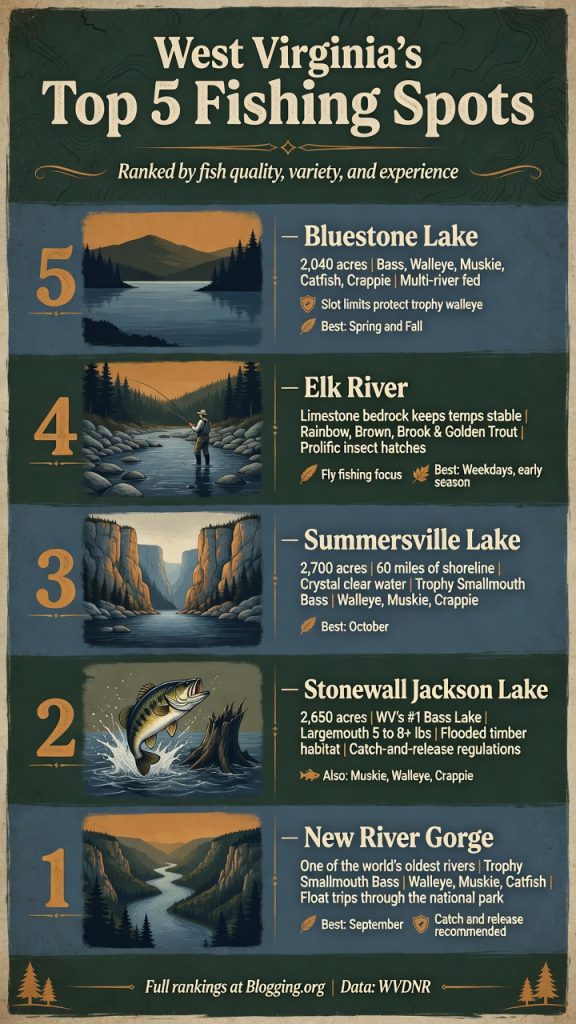
5. Bluestone Lake (Summers, Monroe, and Mercer Counties)
Bluestone sits in the southern part of the state where three counties come together, and it fishes like a lake and a river at the same time because it essentially is both. Multiple rivers feed it, which creates different water conditions in different parts of the lake on any given day. Bass, catfish, walleye, crappie, and muskie all live here, and the multi-species variety means you can change targets completely without moving very far.
The walleye fishing gets the most attention and has earned it. Slot limits protect the trophy fish and the population is in good shape because of it. The mountain setting is genuinely beautiful, and Bluestone State Park provides solid public access without requiring a long hike to reach fishable water. Water clarity varies depending on what the tributary rivers are doing after rain, which is the main variable to pay attention to when planning a trip. Time it right and it’s one of the best multi-species lakes in the entire region.
From Around Our Desks
One more we think you'll like: the cheapskate tricks that sound ridiculous but quietly work
🎣 What You’ll Catch
- Bass (Largemouth/Smallmouth) ⭐⭐⭐⭐⭐
- Walleye ⭐⭐⭐⭐⭐
- Catfish ⭐⭐⭐⭐
- Crappie ⭐⭐⭐⭐
- Muskie ⭐⭐⭐⭐
📅 Best Time To Fish
- Spring: Excellent
- Summer: Good
- Fall: Excellent
🏆 Trophy Potential – 9/10 (Multi-species with slot limits protecting walleye trophies.)

4. Elk River
The Elk River is a trout fisherman’s answer to the question of where to go in West Virginia. Limestone bedrock keeps water temperatures stable through seasons when other rivers warm up and slow down, which supports the kind of prolific insect hatches that make fly fishing here feel purposeful and rewarding. Stocked rainbows, browns, brook trout, and golden trout all make appearances throughout the season. The upper sections feel remote enough that you can spend a full day on the water without seeing another angler if you’re willing to walk.
The honest drawback is weekend crowds at popular access points, especially during stocking periods when the word gets out. Saturday mornings in April can feel like a different river than what you’d find on a Tuesday in September. Go on a weekday when you can, get there early, and look for the stretches that require a little more effort to reach. WVDNR maintains stocking schedules that help you time your trip around fresh fish or avoid the post-stocking crowds depending on what you’re after.
🎣 What You’ll Catch
- Rainbow / Brown / Brook / Golden Trout ⭐⭐⭐⭐⭐
📅 Best Time To Fish
- Spring: Excellent (stocking/hatches)
- Summer: Good (limestone stability)
- Fall: Excellent
🏆 Trophy Potential – 8/10 (Prolific hatches and quality trout; weekday access best.)

3. Summersville Lake (Nicholas County)
Summersville is West Virginia’s largest lake and it looks like something from a different part of the country. Clear blue water, dramatic limestone cliffs, 60 miles of shoreline broken up by coves and submerged structure. The smallmouth bass fishing here is as good as it gets in a lake setting anywhere in the region, and the deep clear water makes it fishable year-round for anglers willing to adjust technique for the season. WVDNR’s Summersville map is worth downloading before a first trip.
The downside is the same thing that makes it popular: everybody knows about Summersville. Summer weekends bring heavy recreational boat traffic that disrupts fishing and makes the lake feel more like a theme park than a fishery. Tailwaters below the dam hold trout and give you an option when the main lake gets too busy.
Come in spring or fall if you can. The smallmouth fishing on this lake in October, when the water has cooled and the crowds have gone home, is one of those days you try to describe and can’t quite do justice to.
🎣 What You’ll Catch
- Smallmouth Bass ⭐⭐⭐⭐⭐
- Walleye ⭐⭐⭐⭐
- Muskie ⭐⭐⭐⭐
- Catfish ⭐⭐⭐
📅 Best Time To Fish
- Spring: Excellent
- Summer: Good (avoid crowds)
- Fall: Excellent
🏆 Trophy Potential – 9/10 (Top smallmouth lake; clear water/structure.)

2. Stonewall Jackson Lake (Lewis County)
Stonewall Jackson Lake is consistently called the best bass lake in West Virginia, and the people saying that have the catch photos to back it up. The 2,650-acre reservoir in Lewis County has everything largemouth bass need to grow big: flooded timber, stumps, varied depth, and a catch-and-release regulation that protects quality fish over time. Largemouth in the 5 to 8 pound range are realistic targets here, not lucky accidents. WVDNR dedicated a page to it and the case is hard to argue with.
Muskie, crappie, walleye, and catfish round out a fishery that could keep a visiting angler busy for a long weekend without repeating the same experience twice. The Stonewall Resort sits on the lake and makes it a legitimate destination trip with lodging right there. The one thing that keeps it at number two instead of the top is pressure. Word is fully out on Stonewall Jackson and you’re rarely going to have it to yourself. The fish are worth sharing the water for, but the off-season is when you’ll find it closest to what it can be.
🎣 What You’ll Catch
- Largemouth Bass ⭐⭐⭐⭐⭐
- Muskie ⭐⭐⭐⭐
- Crappie ⭐⭐⭐⭐
- Walleye ⭐⭐⭐⭐
- Catfish ⭐⭐⭐
📅 Best Time To Fish
- Spring: Excellent
- Summer: Good
- Fall: Excellent
🏆 Trophy Potential – 9/10 (Premier bass lake with catch-and-release; 5-8 lb common.)

1. New River (New River Gorge)
The New River is one of the oldest rivers in the world and it fishes like it’s been practicing for a very long time. The smallmouth bass in the gorge section are the main event: big, aggressive, and living in water so scenic that first-time visitors sometimes forget to pay attention to their line.
Readers Can't Stop Opening These
★ 29 Dollar-Store Items That Beat the Name Brand
Pools and runs stretch for miles through the national park with no shortage of structure and room to work. A trophy smallmouth here isn’t a once-in-a-trip thing. It’s a realistic expectation if you know how to read water and you put in the time to find the right runs.
Walleye, muskie, and catfish add real depth to what’s already an exceptional fishery. Float trips down the gorge are one of those experiences people try to describe to you and you nod politely and then you actually do it and understand immediately why they kept bringing it up.
Outdoor Life covered the New River smallmouth fishery in a way worth reading before a first trip. The WVDNR fall fishing guide covers timing and access points. Water levels matter: too high and wading becomes genuinely dangerous, too low and some of the best pools go flat.
The one thing to know before you plan to eat anything out of the New River is that consumption advisories exist in some sections tied to historical pollution. Most serious anglers here practice catch and release anyway, and the fishing is good enough that keeping fish feels almost beside the point. This is the river you fish because of what it is, not what you’re taking home from it.
If you make one fishing trip to West Virginia this year, make it the New River Gorge. Go in September when the water has dropped and cleared, the crowds have thinned out, and the smallmouth are doing what they do in fall. You’ll understand within the first hour why this river ends up at the top of every list written by people who have actually been here.
🎣 What You’ll Catch
- Smallmouth Bass ⭐⭐⭐⭐⭐
- Walleye ⭐⭐⭐⭐
- Muskie ⭐⭐⭐⭐
- Catfish ⭐⭐⭐⭐
📅 Best Time To Fish
- Spring: Excellent
- Summer: Good
- Fall: Excellent (top choice)
🏆 Trophy Potential – 10/10 (Trophy smallmouth realistic; world-class scenery and variety.)
Almost Heaven for Anglers: West Virginia’s Best Fishing Runs Deep
West Virginia might just be the most underrated fishing state in the mid-Atlantic and the anglers who have fished it know exactly why. Small state, loud mountains, quiet reputation. But trophy smallmouth in a National Park river, record catfish in the Kanawha, clear lake walleye at Summersville, and mountain brook trout in streams that have been wild for generations are the kind of fishing that earns repeat visits.
The New River and Summersville Lake are the two destinations most visiting anglers make the trip for and both deliver. The New River for the big smallmouth that run through clear rocky canyon water and the float fishing that covers miles of productive river in a single day. Summersville for the walleye, the bass, and the scenery that makes you want to come back even when the fish are not cooperating.
The Kanawha River is where the catfish story gets interesting. Multiple state records broken in recent years tells you something about the quality of fish in this system right now. With 97 miles of river and numerous public access points there is always somewhere new to explore. The South Branch of the Potomac River in the Eastern Panhandle is another one worth knowing about with excellent smallmouth bass and channel catfish and 17 boating access sites from Petersburg to the Maryland border.
Stonecoal Lake and the Elk River round out the must-fish list. Stonecoal for the muskie fishing in calm clear mountain water where the horsepower limit keeps things quiet and fish grow to legitimate trophy sizes. The Elk River below Sutton Dam for the trout fishing that draws fly fishermen from across the mid-Atlantic and the muskie and walleye fishing below the dam that most visiting anglers never bother to explore.
Check regulations before any West Virginia fishing trip at the West Virginia Division of Natural Resources at wvdnr.gov or purchase licenses at wvfish.com. Fishing licenses are required for anyone 15 and older. The New River has special regulations for smallmouth bass with a protected slot limit of 14 to 22 inches that must be released. Catfish on the Kanawha River also have specific size and daily limit rules worth knowing before you go.
West Virginia fishing rewards the anglers who look past the surface and explore what the rivers and mountain lakes have to offer. Come once with a plan and you will leave with a longer list of water you still need to fish and a much better understanding of why the people who live here are so protective of what they have.

Species Guides Worth Reading
West Virginia has a solid mix of species worth targeting and these guides are worth reading before your trip.
The Complete Trout Fishing Guide covers the fly fishing presentations and stocking schedules that produce fish on the Elk River, the South Branch of the Potomac, and the mountain headwater streams across the state. West Virginia trout fishing peaks in spring and fall and the guide covers techniques that work in both tailwater and wild stream situations.
The Smallmouth Bass Fishing Guide is worth reading before fishing the New River or the South Branch of the Potomac. West Virginia smallmouth in clear rocky river water respond to specific current seam and structure presentations that the guide covers in detail and understanding the feeding behavior of fish holding in canyon river pools makes a real difference in how many quality fish you land.
For anyone targeting muskellunge at Stonecoal Lake, North Bend Lake, or any of the other WV muskie waters the Muskie Fishing Guide covers the big lure presentations and fall timing that consistently produce fish in the calm clear mountain lake environments where West Virginia’s best muskie fishing happens.
The Catfish Fishing Guide is worth reading before fishing the Kanawha River, the Ohio River, or the Monongahela for blue and flathead catfish. West Virginia river catfish grow to trophy sizes and the guide covers the live bait and cut bait presentations and nighttime fishing strategies that produce the biggest fish in the state’s major river systems.

More Fishing Resources
West Virginia has more to offer than most anglers realize and these posts are worth bookmarking before your trip.
The Best Fishing Locations in America covers the top freshwater destinations across the country and West Virginia deserves to be on that list for the New River smallmouth fishing and the Kanawha catfish fishery that keeps producing record fish year after year.
If you are building a Fishing Bucket List, West Virginia is a solid state to knock species off the list. Trophy smallmouth from the New River, a state record muskie from Stonecoal Lake water, giant catfish from the Kanawha, and wild brook trout from a mountain headwater stream are all realistic targets here. That post covers the species every serious angler should catch at least once.
Enjoyed this article? Here are more fun reads:
